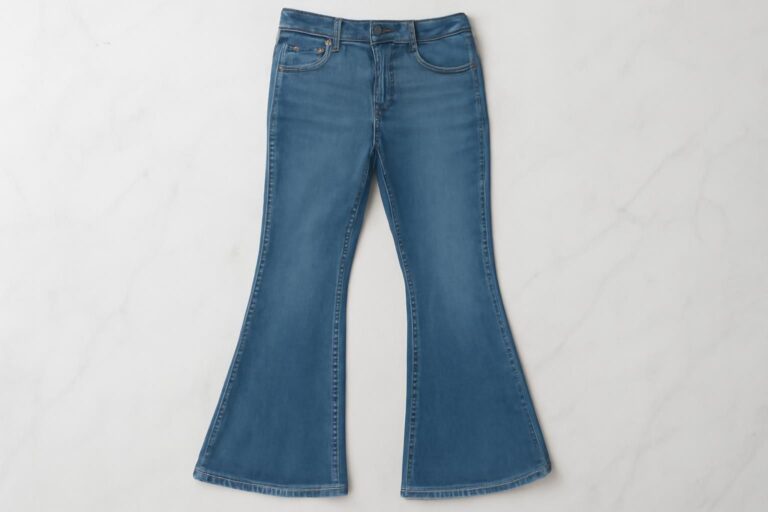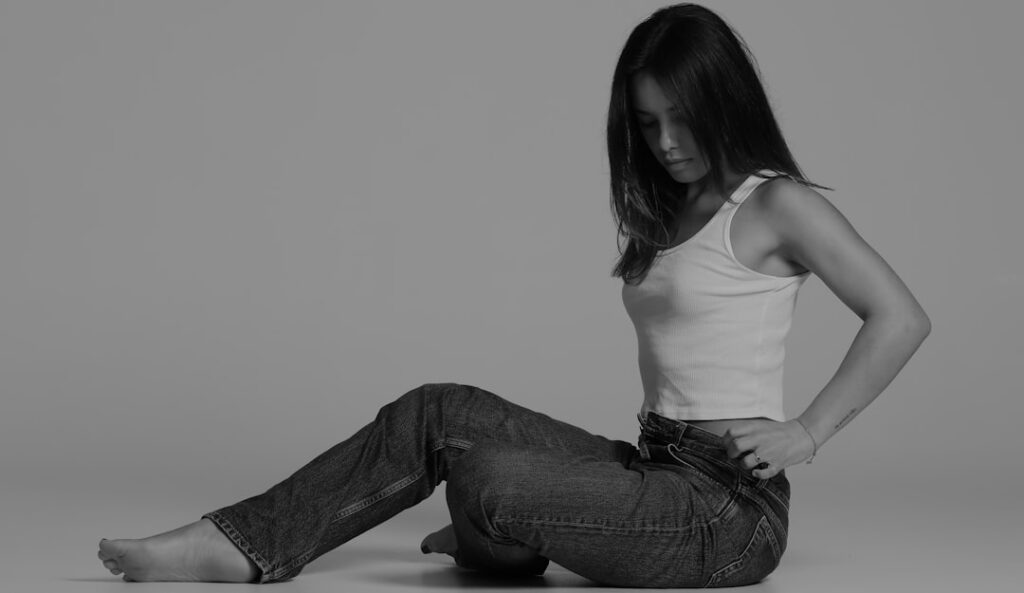
If you’ve only bought one pair of Vervet jeans, it was probably a mid-rise blue wash. Here’s why that’s also the smart starting point.
This guide sits inside our broader Affordable Fashion Brands coverage and is the detailed companion piece to the main Vervet Jeans Review. If you haven’t read the main piece yet, start there, because it explains the Vervet-Flying Monkey relationship that colors this entire brand. This article is about one specific product decision: the blue wash, and whether it’s the right first Vervet purchase.
Why blue is Vervet’s foundation wash
Most denim brands release their season’s lineup in a blue wash first because blue is the wash that sells most reliably across every cut, every body type, and every outfit. Vervet is no different. Blue is the foundation color of the catalog and the one you’ll see repeated across nearly every fit they sell. It’s also the wash we’d suggest a first-time Vervet buyer start with, for the same reason: it’s the lowest-risk purchase and the easiest way to judge whether the brand suits you.
Vervet’s blue washes vary by style, so look closely at product photos for what separates a considered wash from a flat one: subtle tonal fading across the thighs, slight variation in tone across different parts of the garment, and light sanding or whisker detail that gives the pair visual life. A flat, uniform blue is the hallmark of a cheaper wash. Finish detail like this is where a boutique label has to justify its price over a basic pair, and blue is the color where that detail is most visible.
The mid-rise blue fit breakdown
Sizing-wise, start with your usual Vervet size and check it against the brand’s size chart; Vervet is sized 24 to 32. On a mid-rise style, the waistband should sit slightly below the navel. Check the listed rise to make sure the style is a genuine mid-rise rather than something closer to high rise.
Through the thigh, a good mid-rise blue should be clean without being tight. You want enough room to sit comfortably through a full day, stretch that allows movement rather than compression, and a waistband that holds its position. If you find yourself pulling a pair up through the afternoon, the fabric lacks recovery or the rise is wrong for your torso.
Many of Vervet’s mid-rise blues use a modern straight-leg silhouette with a very slight taper that keeps the line clean under a boot. A leg like that works with a sneaker, a loafer, or an ankle boot. That versatility is part of why the mid-rise blue makes sense as a starter: it doesn’t lock you into one styling direction.
How they hold up: what to expect over time
Stretch blue denim changes in predictable ways over months of wear and washing. Here’s what to watch for.
Color: expect some indigo bleed in the first washes, which is normal for blue denim. A color-catch sheet in the first couple of cycles shows you when the bleed has stopped. Tonal fade detail should stay visible but subtle. Patchy fading or uneven color drop early on is a sign of a weaker wash.
Stretch recovery is the quiet test of any stretch jean. The waistband should sit in the same spot late in the day as it does in the morning, the knees should not bag out, and the hip-to-waist shape should not shift. If you’re paying a mild premium over basic denim, shape retention is where that premium should show up.
Stitching: check for loose threads at the inseam, fraying at the pocket corners and strain at the button, and make sure the rivets feel tight.
Small details like back-pocket embroidery or branding can age differently from the rest of the wash and may not develop the same faded character. That’s a minor cosmetic point, but worth checking in product photos if it matters to you.
A good care routine for stretch blue denim: inside-out cold wash, color-catch sheet, short spin, hang dry with the legs straight rather than folded over a hanger bar. Skip the dryer. Stretch denim holds its shape best without heat, and a detailed wash holds its color best without heat, so there’s no reason to use the dryer at all. A hot wash and hot dryer will shorten the life of any stretch jean, whatever the brand.
Blue wash vs. black wash on Vervet
Vervet also sells black wash pairs and a handful of other colorways. The blue versus black question comes up often enough to answer here.
Black wash Vervets come in the same cuts, so the choice is mostly about wash and styling. Black has less tonal variation because a black base leaves less room for visible fade, and black denim reads dressier and more narrowly styled than blue denim. If you want a pair of Vervets for evening outfits or a more polished daytime look, black is the buy. If you want versatility and the full visual benefit of Vervet’s wash detail work, blue is the buy.
Start with blue, and consider adding black if you’re building out a Vervet rotation. For the broader Vervet-versus-Kancan comparison that matters when you’re deciding whether to go up a tier from your other denim, the Vervet vs Kancan Jeans walks through it in more detail.
Related reading: Women's Vervet Jeans Review
Related reading: Vervet Jeans Women Review
The verdict
Buy the mid-rise blue if you’re new to Vervet. It’s the pair that best showcases the brand’s finish detail, the pair that takes the least sizing guesswork, and the pair that gives you the widest styling range from a single purchase. It’s also the first Vervet pair we’d suggest to anyone crossing over from another affordable denim brand who wants to understand what the step up in price actually buys.
Don’t buy the blue if you specifically want a statement pair. The blue is a workhorse color, and if you’re after drama, Vervet’s other washes or the barrel cut in a deeper blue will serve you better. Don’t buy the blue if your wardrobe is already dominated by mid-blue denim and you need variety more than versatility. For current listings, Vervet Blue Jeans on Amazon is the Amazon starting search, and Vervet Jeans on Poshmark is the Poshmark fallback for lightly-worn pairs at a discount. Check measurements and photos in resale listings, since condition varies.
Shop the look on Amazon
Everything you need to build a secondhand-style wardrobe, delivered. We may earn a commission on purchases.
Browse picks on Amazon →FAQ
Do Vervet blue jeans fade?
Some fading is normal. Expect a little indigo bleed and tonal settling in the first washes, after which a well-made wash should hold steadily. Washing inside out on cold and skipping the dryer keeps fading slow and even. Patchy fading or early color drop points to a weaker wash.
What’s the difference between Vervet blue and Kancan blue?
Vervet’s blue wash has more dimensional detail — tonal variation, subtle hand-sanding, slightly more polished finish work. Kancan’s blue wash is more straightforward and more utilitarian. Both are good. Vervet wins on finish detail. Kancan wins on fit range and cut variety across the catalog. For most buyers the decision comes down to one priority: finish work, or more cuts to choose from.
Where are Vervet blue jeans sold?
Mainly through boutiques, plus larger retailers such as Buckle, which has listed Vervet styles like the Kate barrel. Amazon marketplace sellers carry some inventory with the usual authorization caveats. Poshmark is a reliable secondary market. Boutique websites remain the best channel for trying specific cuts.
Are Vervet blue jeans true to size?
Start with your usual size on the mid-rise skinny and straight-leg cuts. Wider and curved cuts such as the wide leg and barrel are drafted with more room through the hip and thigh, so check the size chart and the specific listing before deciding whether to size down. The mid-rise blue is the easiest first purchase because it takes the least guesswork.