Two shirts can be the same fabric, the same color, and the same fit, and still send completely different signals, because the collar is doing the talking. The types of shirt collars are the detail most shoppers overlook and the one that quietly decides whether a shirt reads sharp, sporty, retro, or resort.
This guide is a plain-language visual tour of the collar styles you will actually meet on the rack, what each one looks like, and, most usefully, what each pairs with. It supports our Collared Shirts umbrella guide and our Men’s Shirts + Casual hub, and it serves men’s and women’s wardrobes alike, since collar shape is a unisex language. We track the types of shirt collars for Tumbleweed Thrift readers so that the next time you are choosing between two near-identical shirts, you can read the collar and know what you are buying.
How a collar is built
Every collar has the same two parts, and naming them makes the rest of the guide easier to follow. The stand is the band that wraps up around the neck and holds the collar off the shirt body. The fall or leaf is the part that folds down over the stand. The height of the stand and the shape and spread of the leaf are what separate one collar style from another. On woven dress shirts the leaf is stiffened with interfacing or removable stays so it stays crisp; on knit polos and casual shirts the collar is softer and rolls on its own.
The single measurement that most defines a woven collar is the spread: the distance between the two collar points. A narrow spread reads classic and traditional; a wide spread reads modern and formal. Everything else is a variation on that theme.
The point collar
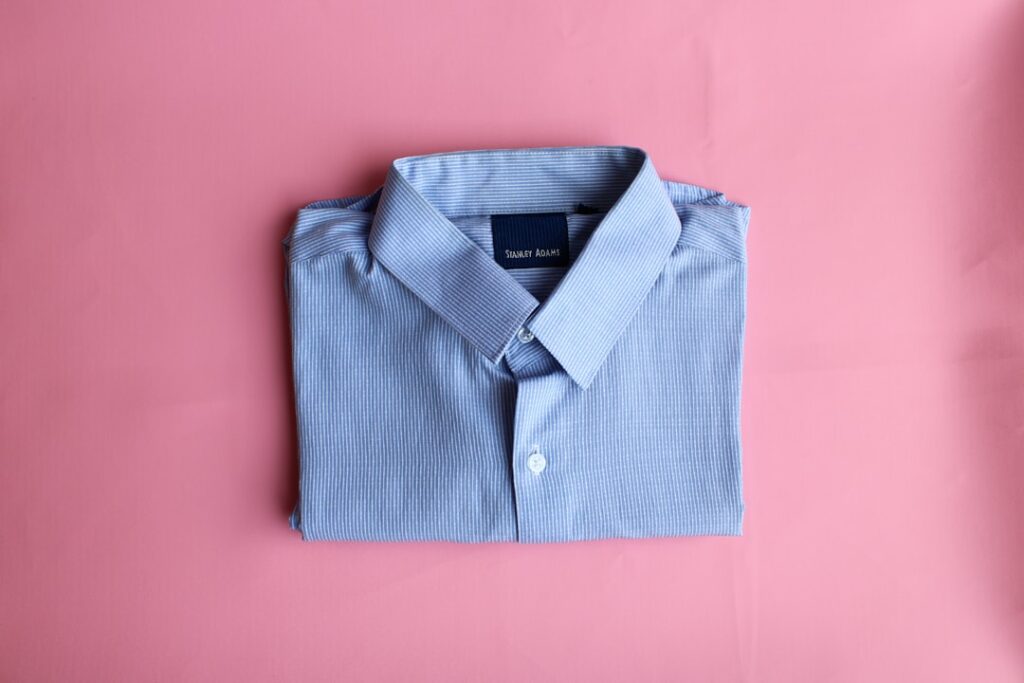
The point collar is the classic default and the one most people picture when they think of a dress shirt. The points sit relatively close together, angled downward, with a narrow spread. It is the safe, versatile all-rounder: it works with or without a tie, takes a standard four-in-hand knot cleanly, and suits rounder or broader faces because the vertical lines draw the eye down rather than out. If you want one collar that never looks wrong, this is it. Point collars anchor most affordable dress shirts and are the reliable choice for interviews and everyday office wear.
The spread and cutaway collar
The spread collar opens the points wider apart, leaving more of the shirt visible between them. It reads more modern and a touch more formal than a point collar, and it is built for a fuller tie knot such as a half- or full-Windsor. Crucially, the spread collar also looks intentional worn open at the neck with no tie, which is why it has become the go-to for the open-collar smart-casual look. The cutaway (or extreme spread) pushes the points nearly horizontal, the dressiest and most fashion-forward version, and it suits narrower faces because the horizontal line adds visual width. If your default look is a crisp shirt with no tie, a spread collar rewards you.
The button-down collar
The button-down collar is the one whose points fasten to the shirt body with small buttons. The detail is not decorative in origin: it was borrowed from polo players who wanted their collars to stop flapping during a match, which is why the button-down is inherently the sportiest, most casual collar. Paired with oxford cloth it becomes the oxford-cloth button-down, the smart-casual anchor that flexes from the weekend to the office. The soft roll of a button-down collar looks best a little relaxed and is one of the few collars that can look right without a tie by default. Our Button Down Shirts guide covers this style in full, and our Mens Oxford Shirts guide covers its most famous home.
The club and rounded collar
The club collar, sometimes called a rounded or Eton collar, replaces the sharp points with softened, curved ends. It carries a distinctly retro, early-twentieth-century flavor and reads as a deliberate style choice rather than a default. It pairs well with a slim tie and a vintage-leaning outfit, and it stands out precisely because it is uncommon. This is a personality collar: excellent when you want a shirt to be noticed, less versatile than a point or spread when you want a shirt to disappear into an outfit.
The band and mandarin collar
The band collar, also called a mandarin or grandad collar, keeps the stand but drops the fold-over leaf entirely, leaving a clean, low band around the neck. The effect is a minimal, almost collarless look that reads modern and relaxed. Because there is no leaf to frame a tie, band collars are worn open, which makes them a purely casual-to-smart-casual option. They suit lightweight cottons and linens and pair naturally with relaxed trousers and clean sneakers. A band-collar shirt is an easy way to look considered without looking formal.
The camp and Cuban collar
The camp collar, or Cuban collar, sits flat and open against the chest with a notch where the two sides meet, and it has no top button to close. It is the signature of resort and summer shirts, worn open over a plain tee or on its own, and it reads unmistakably relaxed. Camp collars live on short-sleeve woven shirts in cotton, linen, and rayon, often patterned, and they define the vacation-shirt look. This is the collar for heat and holidays, not for the office.
Types of shirt collars compared
| Collar style | Look | Tie friendly | Formality | Pairs with |
|---|---|---|---|---|
| Point | Narrow spread, classic | Yes, standard knot | Versatile, dressy to smart | Suits, everyday office, interviews |
| Spread / cutaway | Wide points, modern | Yes, fuller knot | Dressy, sharp open too | Open-collar smart-casual, Windsor knots |
| Button-down | Points button, soft roll | Optional, casual with tie | Smart-casual, sporty | Oxford shirts, blazers, weekend wear |
| Club / rounded | Curved retro ends | Yes, slim tie | Statement, vintage-leaning | Slim ties, deliberate retro outfits |
| Band / mandarin | Stand only, no leaf | No | Casual to smart-casual | Linen, minimal looks, worn open |
| Camp / Cuban | Open flat notch | No | Relaxed casual | Summer, resort, layered over a tee |
Read the table by the tie column and the formality falls into place. Collars built to frame a tie (point, spread, club) live at the dressier end, while collars worn open by design (band, camp) sit casual, and the button-down bridges the middle because it looks right either way.
What the grid cannot show is how a fabric shifts a collar’s register. A spread collar in crisp white poplin is boardroom-ready, while the same collar shape in soft washed cotton reads weekend. The collar sets the ceiling on formality; the fabric decides where within that range the shirt actually lands. When you shop, read both together. To see the range of collar styles side by side across dress and casual shirts, Mens Dress Shirt Point Spread Collar on Amazon surfaces a broad spread to compare collar shapes in person.
Top-selling match on Amazon

- Wrinkle Free: Developed for less wrinkles and easy care
- Regular Fit: A generous cut through the shoulders, chest and waist for total comfort and a…
- Point Collar: Classic collar thought to lengthen the face & allows for tie knot variety; can be…
How to choose a collar for your face and occasion
Two simple rules cover most decisions. First, match the collar’s line to your face for balance: narrower point and button-down collars suit rounder or broader faces, while wider spread and cutaway collars suit longer or narrower faces. This is about visual proportion, not flattering-or-hiding anything. Second, match the collar to the occasion by way of the tie: if you will wear a tie, a point or spread collar frames it; if you will always wear the shirt open, a spread, band, or camp collar is built for it and a stiff point collar can gape awkwardly. Our Mens Dress Shirts guide goes deeper on collars for formal settings, and our Men’s Collared Shirts guide covers the shirts these collars live on.
The verdict
If you want the short answer, a point collar is the safest single choice for versatility and a spread collar is the smartest if you mostly wear shirts open at the neck. Add an oxford button-down for everything smart-casual, since its soft collar looks right buttoned or open, and treat the club, band, and camp collars as personality pieces you buy once you know you want that specific look. The collar is the cheapest way to change what a shirt says, so learn to read it and you will make far fewer buying mistakes.
Shop the look on Amazon
Everything you need to build a secondhand-style wardrobe, delivered. We may earn a commission on purchases.
FAQ
What is the difference between a point and a spread collar?
The difference is the spread, the distance between the collar points. A point collar has a narrow spread and reads classic and versatile; a spread collar opens the points wider, reads more modern and formal, takes a fuller tie knot, and looks intentional worn open at the neck. Point suits broader faces, spread suits narrower ones.
Which collar style is the most formal?
Among everyday collars, the cutaway (an extreme spread) is the dressiest, followed by the standard spread and then the point. The button-down, band, and camp collars are all casual by nature. For the most formal events, a wing collar is worn with black tie, but that is a specialist collar outside daily wear.
Can you wear a button-down collar with a tie?
Yes, and it is a recognized preppy look, though it reads casual rather than formal. The button-down collar originated in sport, so pairing it with a tie lands in smart-casual territory, ideal with an oxford shirt and a blazer. For a strictly formal tie occasion, a point or spread collar is the safer choice.
What collar is best for wearing a shirt open, without a tie?
A spread collar or a button-down collar. The spread has enough structure to stand up cleanly when open, and the button-down holds its shape because the points are fastened down. A narrow point collar can collapse or gape when worn open, so it is the least ideal for the no-tie look.
Which collar styles are most common on shirts?
The main types of shirt collars are the point, spread, cutaway, button-down, club, band (also called mandarin or grandad) and camp (also called Cuban) collars. Point, spread and club collars are built to frame a tie and sit at the dressier end. Band and camp collars are worn open by design and read casual, while the button-down bridges the middle because it looks right with or without a tie.
What are tab and pin shirt collars?
Tab and pin collars are dress-shirt collars that hold the two points together beneath the tie knot so the knot sits raised and neat. A tab collar uses a small fabric strip that snaps or buttons behind the tie, while a pin collar uses a metal bar passed through holes in the collar points. Both are worn only with a tie and carry a formal, vintage-leaning look, so they are specialist choices rather than everyday collars.