This is the oldest fit debate in denim, and it comes down to one detail near your knee.
The straight vs bootcut jeans decision is really a question about the lower leg. A straight jean holds one consistent width from hip to hem, while a bootcut fits to the knee and then flares out slightly to clear a boot. Everything else, rise, seat, thigh, can be identical; the knee-down shape is what separates them. This guide sits inside our Denim Styles hub and walks through both cuts, plus the straight-fit-versus-regular-fit wrinkle that confuses shoppers even more, so you can read a listing and know precisely what you are getting.
What straight jeans are
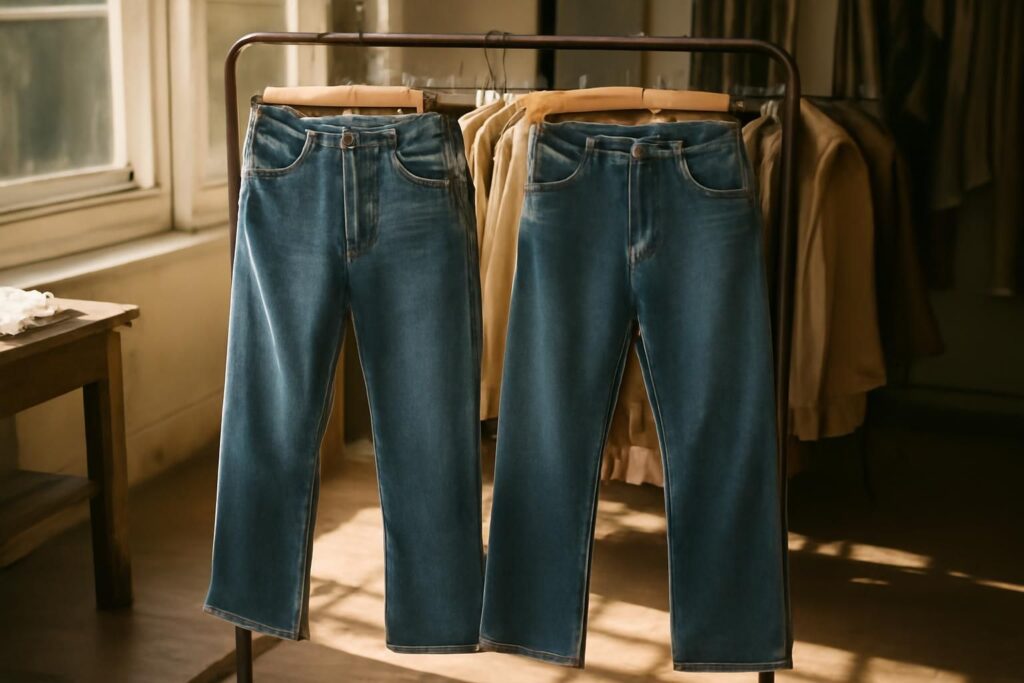
A straight jean has a consistent width from the hip all the way to the hem, with no taper and no flare. It fits through the seat and thigh, then drops in a clean vertical line to the ankle at the same width the whole way down. That single, uninterrupted line is the entire point: it reads timeless and neutral, and it works across nearly every rise and wash.
Straight is the most versatile silhouette in denim precisely because it does not commit to a shape at the ankle. It sits between skinny and wide, which is why it never really goes out of style. The High Waisted Straight Leg Jeans covers the high-rise version, and the Black Straight Leg Jeans covers the wardrobe-staple wash.
Width is where straight legs quietly differ from one another. A slim straight sits close to the leg without tapering, a classic straight leaves a normal amount of ease, and a wider straight edges toward a relaxed line while still holding a constant width. All three are technically straight because none of them taper or flare, but the leg opening measurement tells you which one you are looking at. That single number, listed on most spec sheets, is the fastest way to predict how a straight jean will actually wear before it arrives.
What bootcut jeans are
A bootcut fits through the seat and thigh, follows the leg to the knee, then adds a slight flare from the knee to the hem, usually around an 18 to 22 centimeter opening. That flare is subtle by design, just enough to sit over a boot without looking like a full flare. From the knee up, a bootcut and a straight can look almost identical; the split happens below the knee.
Because the flare is modest, bootcut reads modern and understated rather than retro. It balances a wider hem against a fitted thigh, which gives it a slightly leggier line than a straight. The Best Bootcut Jeans for Women guide sorts the strongest pairs, and the High Rise Bootcut Jeans covers the rise that pairs best with the cut.
The size of that opening is the whole personality of a bootcut. Toward the 18 centimeter end it barely reads as a flare and behaves almost like a straight leg with a touch of extra room at the hem. Toward the 22 centimeter end it starts to show real movement and edges closer to a subtle flare. Neither is dramatic, which is exactly why bootcut has outlasted trend cycles that swept true flares in and out. It gives a hint of shape at the ankle without committing to the full retro sweep, and that restraint is what keeps it wearable with almost any top.
Straight vs bootcut jeans: the one detail that matters
Everything hinges on the knee-to-hem section. A straight jean keeps the same width from knee to hem; a bootcut widens slightly from the knee to the hem. Run your eye down the lower leg: if the line stays parallel, it is straight; if it opens outward past the knee, it is bootcut. That is the whole distinction. Both can share the same rise, the same fitted thigh, and the same wash, so do not judge by the top half of the jean.
How straight vs bootcut jeans compares
| Fit | Rise | Thigh / seat | Knee | Leg opening / hem | Best for | Vibe |
|---|---|---|---|---|---|---|
| Straight | Any rise | Fitted to easy through seat and thigh | Same width, no change | Consistent width to the hem, no flare | Everyday versatility, sneakers or flats, timeless looks | Neutral, classic, clean |
| Bootcut | Any rise | Fitted through seat and thigh | Follows the leg, then starts to open | Slight flare from the knee, ~18–22 cm opening | Wearing over boots, a slightly leggier line | Modern, subtle, understated |
The knee and hem columns carry the whole comparison. A straight jean stays parallel; a bootcut opens outward. Everything else in the table can match, which is exactly why these two get confused on a rack. If you are ever unsure which you are holding, lay the leg flat and look at whether the outseam runs straight down or angles outward below the knee.
The practical difference shows up with footwear. A bootcut’s opening is built to sit cleanly over a boot shaft, so it drapes over taller footwear without bunching. A straight leg has a narrower, consistent opening that looks sharpest with sneakers, flats, or ankle boots. Shoppers consistently report that the choice often comes down to what they wear on their feet most days.
Straight fit vs regular fit: the other confusion
There is a second layer of terminology worth clearing up, because “straight” is not one thing. A regular fit is the classic, slightly roomier straight, cut with a bit more ease through the seat and thigh and a fuller straight leg. A straight fit, in modern usage, is a cleaner, slightly narrower straight, trimmer through the leg while still holding a consistent width down to the hem.
So both are straight, with no taper or flare, but regular fit gives you more room and straight fit gives you a sharper, closer line. If you want the roomier end for comfort, the Men’s Relaxed Fit Jeans guide covers where regular blends into relaxed, and the Mid Rise Straight Leg Jeans covers the everyday middle. When a brand lists both, read the measurements: the leg opening and thigh numbers will tell you which is trimmer. Regular fit is the older, more traditional label and shows up most in classic five-pocket workwear denim, while straight fit is the term brands reach for when they want to signal a cleaner, more contemporary line. If a listing gives you only the name and no measurements, assume regular runs roomier and straight fit runs closer, then check the return policy in case the cut lands differently than you expect.
Who each cut is for
Choose a straight jean if you want one versatile pair that goes with everything and never looks dated. It is the safest single denim purchase and the easiest to style across footwear. Within straight, pick regular fit for more room and an easy, classic line, or straight fit for a trimmer, more modern shape. Choose a bootcut if you regularly wear boots or want a slightly leggier line with a subtle flare. It is the better pick for taller footwear and for anyone who finds a pure straight leg a touch plain.
Neither is more formal by default; both scale from casual to dressy depending on wash and rise. The decision is mostly about the lower-leg shape you prefer and what you put on your feet.
Length changes each cut in its own way. A straight leg can be hemmed to almost any length and still look right, from a cropped ankle to a full break over a shoe, because the width never changes. A bootcut is more particular: it is designed to fall long enough for the flare to sit over the top of a boot, so hemming it too short cuts off the very opening that defines the cut and leaves it looking like an awkward straight. If you plan to tailor the length, a straight leg is the more forgiving choice, while a bootcut is best left close to its intended length. Shoppers report that getting the bootcut hem right is the difference between the cut looking deliberate and looking like a mistake.
Related reading: Petite Black Straight Leg Jeans
Related reading: White Straight Leg Jeans
The verdict
If you can only buy one, buy a straight jean. It is the most versatile fit in denim, it flatters the widest range of outfits, and it never falls out of style, which is why it is the classic default recommendation. Within that, go regular fit for comfort and room, or straight fit for a cleaner modern line. Add a bootcut when you wear boots often or want that subtle knee-down flare for a leggier look. For a reliable first pair, shop a clean straight leg with Straight Leg Jeans on Amazon and let your footwear guide whether a bootcut earns a spot next.
Top-selling match on Amazon

- Premium Material: These jeans for women trendy are crafted from a stretchy, durable, and breathable…
- Innovative Design: These womens jeans are designed with a convenient dual-button closure, trendy front…
- Flattering Features: With soft and comfortable fabric, these wide leg jeans are designed to flatter your…
Shop the look on Amazon
Everything you need to build a secondhand-style wardrobe, delivered. We may earn a commission on purchases.
Browse picks on Amazon →FAQ
What is the difference between straight and bootcut jeans?
A straight jean holds one consistent width from hip to hem with no taper or flare, while a bootcut fits to the knee and then flares slightly to the hem to clear a boot. The knee-to-hem section is the only real difference.
Is straight fit the same as regular fit?
Both are straight cuts with no taper or flare, but they are not identical. Regular fit is the classic, slightly roomier straight, while a modern straight fit is trimmer and cleaner through the leg. Check the measurements to see which is narrower.
Are bootcut jeans out of style?
No. Bootcut has stayed in rotation because its slight flare is subtle and versatile, and it works especially well over boots. It reads modern rather than retro, unlike a dramatic flare.
Can you wear bootcut jeans with sneakers?
Yes, though the slight flare is designed to sit over a boot, so it looks most intentional with taller footwear. A straight leg is the easier pick if you mostly wear sneakers or flats.
Can you wear straight-leg jeans with cowboy boots?
Straight-leg jeans can work with cowboy boots when the leg opening is wide enough to sit over the boot shaft, which classic and wider straight cuts usually manage. A slim straight often bunches on top of a tall shaft or has to be tucked in. If boots are a regular part of your week, a bootcut is the easier choice, since its slight knee-down flare is built to drape cleanly over taller footwear.
Do bootcut or straight jeans make legs look longer?
Bootcut jeans usually make legs look longer, because the slight flare below the knee balances a fitted thigh and creates a leggier line. Keep the hem long enough to fall over the top of a boot or heel, since hemming a bootcut too short cuts off the flare and leaves it looking like an awkward straight. A straight leg reads clean and neutral but adds less visual length.