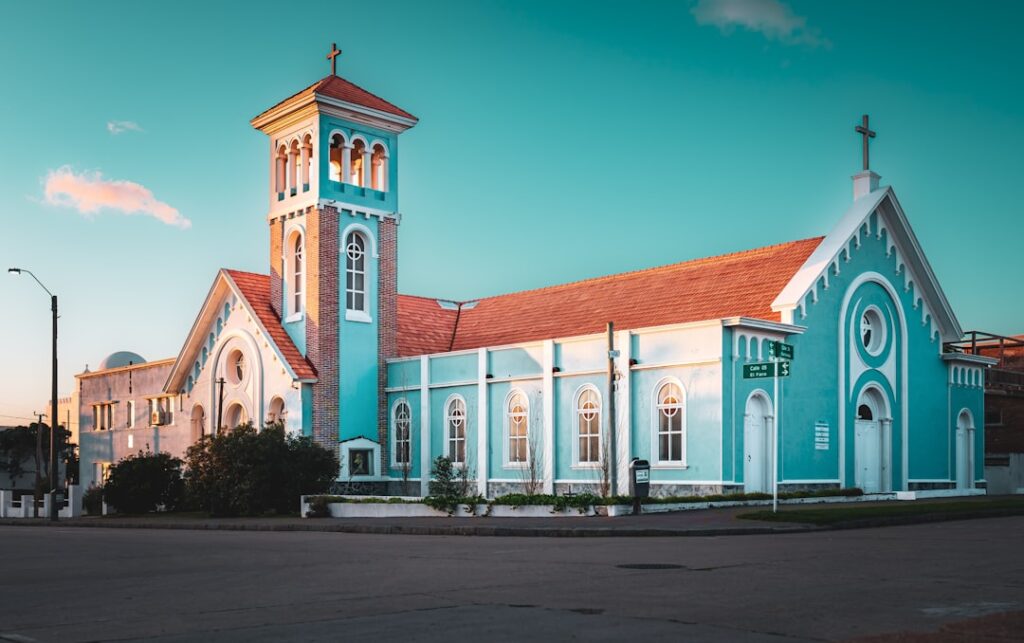
“St. Mary’s Thrift Store” is a name used by dozens of parish-affiliated and nonprofit thrift shops across the country — some tiny church-basement operations, some larger food-bank-affiliated stores, and some genuinely impressive diocesan thrift programs.
If you searched for “St. Mary’s thrift store” and got dropped at a random result, this guide is for you. The name is common across Catholic parishes, hospital auxiliaries, and Catholic charity networks, which means the shopping experience varies widely depending on which specific St. Mary’s you’re looking at. This article sorts the pattern — who runs these shops, what to expect by type, and how to evaluate one you haven’t visited. For the wider pillar context see our Thrift Store Chains hub; for the related St. Vincent de Paul national umbrella see our companion St. Vincent Thrift Store guide.
The main St. Mary’s-branded operations
St. Mary’s Food Bank Alliance Thrift Store (Arizona) is one of the largest and best-known. Based in Phoenix and supporting the St. Mary’s Food Bank — one of the original American food banks, founded in 1967 — the thrift store directly funds the food bank’s operations. Multiple locations across the Phoenix metro. Pricing is mid-aggressive, volume is real, and the mission connection is unusually strong.
Diocesan St. Mary’s thrift shops exist across many US Catholic dioceses — typically parish-based operations where St. Mary of (parish) runs a retail thrift shop to fund local church ministries. These are usually small, volunteer-run, and unevenly staffed. Stock quality depends on the parish demographic.
Hospital auxiliary St. Mary’s thrifts exist in cities with St. Mary’s Hospital (which is a common hospital name — Rochester MN, Madison WI, various others). These fund hospital volunteer services, children’s programs, or patient assistance. Quality varies widely.
Generic storefronts named “St. Mary’s Thrift” with no clear parish or nonprofit affiliation. A few are Catholic ministry-adjacent; others are independently owned with the name chosen for local association. Check tax status and mission before assuming charitable intent.
How to tell which St. Mary’s you’re dealing with
The first check: is it affiliated with an active parish, a hospital, a food bank, or something else? Google the exact store name plus the city — the first page of results usually surfaces which institution runs it. A 501(c)(3) affiliation is typically easy to verify.
The second check: how professionalized is the operation? Parish-basement shops run on volunteer schedules (often 2-3 days a week, shorter hours, closed on holy days). Hospital auxiliary shops run more regular hours but still limited. Food-bank-affiliated shops like Phoenix’s run full-week retail operations. Signage at the front usually indicates the parent institution.
The third check: what does the stock suggest about the donor base? Parish thrifts pull from congregation networks, which typically skews older. Hospital thrifts pull from staff and patient families, which varies. Food bank thrifts pull from broader community donations and tend to have more volume.
What to expect by type
Food bank-affiliated (St. Mary’s Food Bank Phoenix). Larger floors, deeper apparel inventory, more aggressive pricing, professionalized operations. The Phoenix locations offer genuine value for volume shopping — $3-7 for most tops, $7-14 for denim, furniture at aggressive prices. Mission flow is verifiable.
Diocesan parish shops. Smaller floors, volunteer-run, limited hours. Pricing varies but typically aggressive on apparel and housewares. Curation is real — older Catholic donors often bring well-kept items, and vintage religious items occasionally surface (rosaries, devotional materials, Catholic books). Furniture usually limited.
Hospital auxiliary. Usually cleaner and better-organized than parish shops. Typically strong on women’s apparel and housewares (nursing/hospital staff donations skew professional wear). Hours can be restrictive. Mid-tier pricing.
Independent St. Mary’s storefronts. Hardest to predict. Check online reviews and spot-check prices on a few items you know the going rate for before committing a visit.
Parish thrift specifics worth knowing
Catholic parish thrifts, including many of the St. Mary’s variety, have distinctive donation patterns. Pyrex, cast iron, older ceramics show up regularly from estate cleanouts of long-time parishioners. Religious items (framed art, rosaries, liturgical books) are a reliable minor category. Women’s professional wear, particularly conservative-cut pieces, runs stronger than at general thrifts. Costume jewelry is often cheap and occasionally genuinely interesting.
Volunteer staff can be a mixed blessing. On one hand, they often have detailed knowledge of specific donors and pieces. On the other, pricing can be idiosyncratic — a piece priced high because the volunteer remembered it cost $400 new 30 years ago, ignoring current market value.
Bring a Fabric Shaver on Amazon for knits and a Garment Steamer on Amazon for blouses and dresses — parish thrift inspection varies widely by volunteer.
Hours, payments, and practical tips
Hours are the biggest variable. Parish shops often operate 2-3 days a week with short windows (10 a.m. to 2 p.m. is common). Food bank-affiliated shops run standard retail hours. Hospital auxiliary shops run limited hours. Always check before driving — a wasted trip is common.
Cash is often preferred at smaller parish shops. Card readers aren’t universal and occasionally go down. A Reusable Shopping Bag Set on Amazon is useful since bag supply varies.
Many parish thrifts close for holy days and Catholic calendar observances (Good Friday, Assumption, All Saints Day). These aren’t always posted to Google Business. Call the parish directly if you’re planning a specific day.
How it compares to other mission thrifts
Compared to the broader St. Vincent de Paul network (St. Vincent Thrift Store), St. Mary’s shops are typically smaller and more localized. SVdP has scale and more consistent operations. St. Mary’s is more varied.
Compared to general-public charity thrifts like Good Samaritan Thrift Store, St. Mary’s parish shops are more niche — stronger on religious goods and conservative women’s wear, weaker on trendy apparel and volume.
Compared to warehouse chains like Salvation Army Thrift Store, St. Mary’s shops can’t compete on volume but can compete on occasional curated finds and mission specificity.
Limits
Selection is variable. A good visit yields finds; a weak visit yields nothing. The volunteer-run nature of most St. Mary’s shops means inventory depends on what was donated last week.
Pricing is variable. Some volunteers price aggressively; others over-price items they remember being expensive decades ago. Spot-check a few pieces before committing to a long browse.
Hours are unreliable in the edge cases. Holy day closures, volunteer availability, and weather-related closures happen more than at professionalized chains.
The verdict
“St. Mary’s Thrift Store” is a naming pattern more than a chain. If it’s the St. Mary’s Food Bank Alliance operation in Phoenix, it’s a genuinely strong thrift worth a regular visit. If it’s a parish basement shop, it’s a worthwhile occasional stop for curated older donations and the occasional vintage find. If it’s a hospital auxiliary, manage expectations and go for the apparel. Check what you’re actually looking at, verify hours before driving, and support the mission if it resonates with you. For parish-adjacent Catholic thrift scale, the broader St. Vincent Thrift Store network is the more consistent option.
Shop the look on Amazon
Everything you need to build a secondhand-style wardrobe, delivered. We may earn a commission on purchases.
FAQ
Is St. Mary’s Thrift Store a national chain?
No. “St. Mary’s Thrift Store” is a name used by many independent parish, diocesan, hospital, and food-bank-affiliated shops. The most prominent operation is St. Mary’s Food Bank Alliance in Arizona, but most St. Mary’s thrifts are small, locally-run, and unaffiliated with each other.
What does St. Mary’s Thrift Store fund?
Depends on the specific shop. Parish-based St. Mary’s thrifts typically fund local church ministries. St. Mary’s Food Bank Alliance (Arizona) funds the food bank’s operations. Hospital auxiliary shops fund hospital volunteer programs. Check the specific operation’s mission statement or 990 filing if it matters to you.
Are St. Mary’s thrift shops Catholic?
Most are, but not all. Parish and diocesan St. Mary’s thrifts are Catholic-affiliated. St. Mary’s Food Bank Alliance was founded by Catholic leadership but operates as a non-sectarian 501(c)(3) today. Independent storefronts named “St. Mary’s Thrift” may or may not have religious affiliation.