
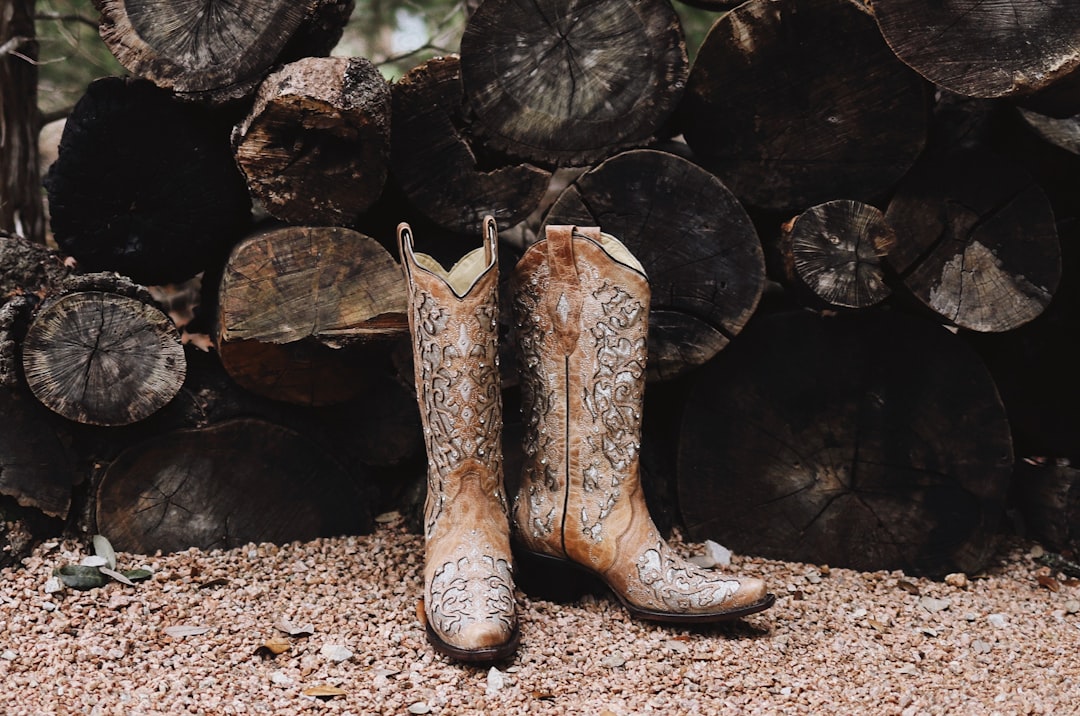
The line between real cowgirl boots and fast-fashion cowgirl boots is wider than the marketing implies, and knowing which side you are on saves both money and frustration.
We tracked the authentic-vs-fast-fashion conversation for Tumbleweed Thrift readers, mapped the construction differences against the brands that actually deliver, and pulled out where each tier earns its place. The Cowgirl and Western Boots hub frames the broader landscape; this guide is specifically about what makes a cowgirl boot real, what does not, and how to choose well in either tier. Both categories are valid for different use cases. Plan accordingly.
What makes a cowgirl boot “real”
Four construction details define authentic Western boot construction. Goodyear welt construction is the first and most important. The welt is a strip of leather stitched between the upper and the sole, allowing the boot to be resoled when the original sole wears down. A Goodyear-welted cowboy boot can last 20 years or more with reasonable care; the same boot with a cemented (glued) sole rarely makes it past three.
Genuine leather upper, ideally full-grain, is the second. Full-grain leather retains the natural surface of the hide, develops patina over wear, and softens without losing structural integrity. Top-grain leather is sanded smooth and acceptable for fashion-cowgirl pieces but lacks the long-term aging quality. Bonded leather (leather scraps mixed with adhesive) and synthetic uppers do not deserve the cowboy-boot name; they look the part initially and fall apart inside a season.
Traditional silhouette is the third detail. Cowboy heel of one to two inches, a traditional toe shape (round, square, or pointed), shaft proportions that read recognizably Western. Heritage brand provenance is the fourth. The brands that actually build Western boots have done so for decades and have institutional knowledge in the construction; brands that bolted “western” onto an existing fashion-shoe lineup tend to miss the details. The Leather Cowgirl Boots piece covers the leather-grade conversation in detail.
What makes a cowgirl boot “fast-fashion”
The reverse construction pattern. Cemented sole construction means the sole is glued rather than welted, which makes the boot non-resoleable and significantly shortens lifespan. Synthetic uppers or thin top-grain leather sit at the entry tier, often combined with embellishment that hides the underlying construction. Trend-driven silhouettes like ultra-square toes, trendy heel heights, and statement colors that cycle in and out of fashion are common.
Fast-fashion brands generally do not have a heritage in cowboy-boot construction. They identified the western trend, sourced production from existing factories, and applied the styling to standard fashion-shoe construction. The boots look the part in photographs and at the point of purchase; the construction tells the truth six months in. None of this is automatically a problem; fast-fashion cowgirl boots earn their place in occasion-wear and trend-trial use cases. The Cute Cowgirl Boots piece covers the fashion-cowgirl tier specifically.
Real cowgirl boot brands
The heritage roster is reasonably stable across decades. Ariat (founded 1993, comfort-engineered heritage) leads on daily-wear and work-ready cuts; the Ariat Women’s Cowboy Boots piece covers the lineup. Justin (founded 1879, heritage value) holds the entry-mid heritage tier; the Justin Cowgirl Boots piece covers the brand. Lucchese (founded 1883, premium handcrafted) is the luxury heritage leader, with Lucchese Women’s Cowboy Boots for context.
Tony Lama (founded 1911, heritage premium) sits between Justin and Lucchese on price and construction. Old Gringo (Mexican-American heritage, designer statement) brings bold styling onto authentic construction. Frye (American heritage shoe brand with strong cowgirl-boot lines) is the fashion-heritage crossover. Tecovas (DTC heritage, founded 2015) is the newest entrant in the genuinely-real category, with credible Goodyear-welt construction at a $300 to $500 price point. Dan Post is the mid-tier reliable heritage option. Durango holds the entry-tier Western category at $80 to $200.
Reviewers consistently report the heritage brands as outlasting their initial purchase price across a multi-year ownership window. A $250 Ariat Heritage Western worn three days a week for five years works out to less than $0.35 per wear; a $100 fast-fashion alternative replaced annually delivers worse cost-per-wear math.
Fast-fashion cowgirl boot brands
The fast-fashion roster turns over more frequently. Steve Madden western produces cowboy-boot styled pieces in the $80 to $150 range with cemented construction and synthetic-blend uppers. Coconuts by Matisse hits a similar price point with more trend turnover. Brand-Amazon basics fill the under-$80 tier with widely variable quality; buyer beware on storefront authenticity.
Idyllwind by Miranda Lambert sits in an interesting middle position. The brand uses authentic-coded styling and some heritage construction techniques but generally falls short of full Goodyear-welt heritage; reviewers report mixed construction across the lineup, with the higher-tier pieces ($200-plus) more credible than the entry tier. Forever 21, H&M, and Target western collabs sit firmly in the fast-fashion tier with one-to-two-season expected lifespans. None of these brands are bad at what they do; they are simply answering different questions than the heritage roster.
Pricing reality, real vs fast-fashion
Real cowboy boots run $150 to $2,000-plus depending on tier. Entry heritage (Justin, Durango) sits at $150 to $250. Mid heritage (Ariat, Dan Post, Tecovas) sits at $250 to $500. Premium heritage (Lucchese, Tony Lama, Old Gringo statement) sits at $500 to $2,000-plus, with luxury exotic-leather pieces extending higher still.
Fast-fashion cowgirl boots run $40 to $150 typical, with the rare premium fast-fashion piece pushing $200. The price gap reflects construction tier (welt vs cemented), leather quality (full-grain vs synthetic), and longevity (15 years vs 1 to 3 years). It is not a markup on the same product; it is a different product. The Cheap Womens Cowboy Boots piece covers the budget tier specifically and where it earns its place.
How to spot fake cowboy boots
Three quick checks distinguish heritage construction from fast-fashion at point-of-purchase. First, look at the welt. Goodyear-welted cowboy boots have visible stitching where the sole meets the upper, running a small leather strip around the perimeter. Cemented boots have a smooth, seamless join between sole and upper; the construction is hidden because there is nothing to show. Second, check the leather quality. Full-grain leather has natural grain texture, slight imperfections, and a subtle natural variation in color across the upper. Corrected-grain or bonded leather looks unnaturally uniform, slightly plastic, and lacks the depth of full-grain.
Third, check brand authenticity, particularly on Amazon and resale platforms. Counterfeit Lucchese, Ariat, and Tony Lama listings exist on third-party marketplaces; the prices are usually too good to be true ($150 for boots that retail at $400-plus is a flag). Buy from verified brand storefronts, authorized retailers, or directly from the brand DTC sites for premium pieces. The Cowgirl Boot Brands piece runs through the verified brand landscape; Designer Cowgirl Boots covers the higher-end statement options.
When fast-fashion cowgirl boots are the right choice
Three legitimate use cases. First, festival and occasion wear, where a one-to-three-season lifespan is fine and the cost-per-wear math works out reasonably. Spending $400 on Old Gringos for two festivals a year is bad math; spending $120 on Steve Maddens is fine math. Second, costume and Halloween contexts, where construction does not matter and cheap is the explicit goal. Third, trend trial, where you want to test whether the cowgirl-boot category suits you before investing in heritage.
Fast-fashion is also the right answer for kids who outgrow boots quickly, for shoppers in fashion-cycle environments where the trend turnover is the point, and for shoppers explicitly buying for an aesthetic rather than for daily wear. The brands that lead the fast-fashion tier are doing legitimate work for legitimate use cases. The error is buying fast-fashion for daily-wear use cases or buying heritage for occasion-only use cases. Match the boot to the job.
When real cowgirl boots are worth it
The reverse logic. Daily and weekly wear demands heritage construction; the cost-per-wear math heavily favors $250 boots that last five years over $100 boots replaced annually. Heritage investment pieces (boots intended to be worn for a decade-plus) require authentic construction to deliver on the intent. Proper Western styling for ranch work, riding, country-music professional contexts, and any setting where the boot’s authenticity matters demands heritage brands. Resale value is also real on heritage cowboy boots; Lucchese, Tony Lama, and vintage Justin pieces hold value on resale platforms in a way fast-fashion never does.
For shoppers exploring the broader category, Women’s Cowboy Boots is the comprehensive starting point. For specific use cases, Comfortable Cowboy Boots for Women covers the daily-wear angle; Tall Cowboy Boots for Women covers the height-specific cuts. Searching Ariat Heritage Western Women Cowboy Boots on Amazon surfaces the daily-wear heritage entry, and Lucchese Women Cowboy Boots on Amazon surfaces the premium heritage tier on the storefront.
The verdict
Real cowgirl boots are an investment ($150 and up) that pays back over years of wear. Fast-fashion cowgirl boots ($40 to $150) are occasion-wear, costume, and trend-trial pieces; they earn their place in different use cases entirely. The error is conflating the two categories or buying one for the other’s job. Pick the boot to match the use case, and the spending makes sense in either direction.
For daily-wear heritage, Ariat or Justin lead the value tier; Lucchese and Old Gringo lead the premium tier. For festival and occasion fast-fashion, Steve Madden and Coconuts handle the entry, with Idyllwind and Frye in the middle. The Cow Girl Boots guide and Best Cowgirl Boots cover the broader picks across both tiers. The Cowgirl and Western Boots hub holds the comprehensive view.
Shop the look on Amazon
Everything you need to build a secondhand-style wardrobe, delivered. We may earn a commission on purchases.
FAQ
What makes a cowgirl boot “real” or “authentic”?
Goodyear welt construction (resole-able, lasts decades), genuine full-grain leather upper, traditional Western silhouette (cowboy heel, traditional toe), and heritage brand provenance. Boots missing two or more of these are properly fast-fashion or fashion-cowgirl rather than authentic Western construction.
What’s the difference between real and fast-fashion cowgirl boots?
Construction tier (welt vs cemented), leather quality (full-grain vs synthetic), and lifespan (10-plus years vs 1 to 3 years). Real cowgirl boots cost $150 and up. Fast-fashion cowgirl boots cost $40 to $150. They are different products serving different use cases, not better and worse versions of the same thing.
What are the best authentic cowgirl boot brands?
Ariat (comfort-engineered heritage), Justin (heritage value), Lucchese (premium handcrafted), Tony Lama (heritage premium), Old Gringo (designer statement), Frye (fashion-heritage crossover), Tecovas (DTC heritage), Dan Post (mid-tier reliable), Durango (entry-tier Western).
How can I tell if cowboy boots are real?
Three quick checks: visible Goodyear welt stitching where sole meets upper, full-grain leather with natural texture and slight imperfections, and verified brand storefront for premium pieces. Counterfeit listings exist on third-party Amazon and resale platforms; buy from authorized retailers for premium brands.
Are cheap cowgirl boots ever worth it?
Yes, for occasion-wear, festival use, costume contexts, and trend-trial purposes. Steve Madden, Coconuts, and Idyllwind entry-tier pieces work well for those use cases. They are not worth it for daily-wear, where the cost-per-wear math favors heritage construction heavily.


