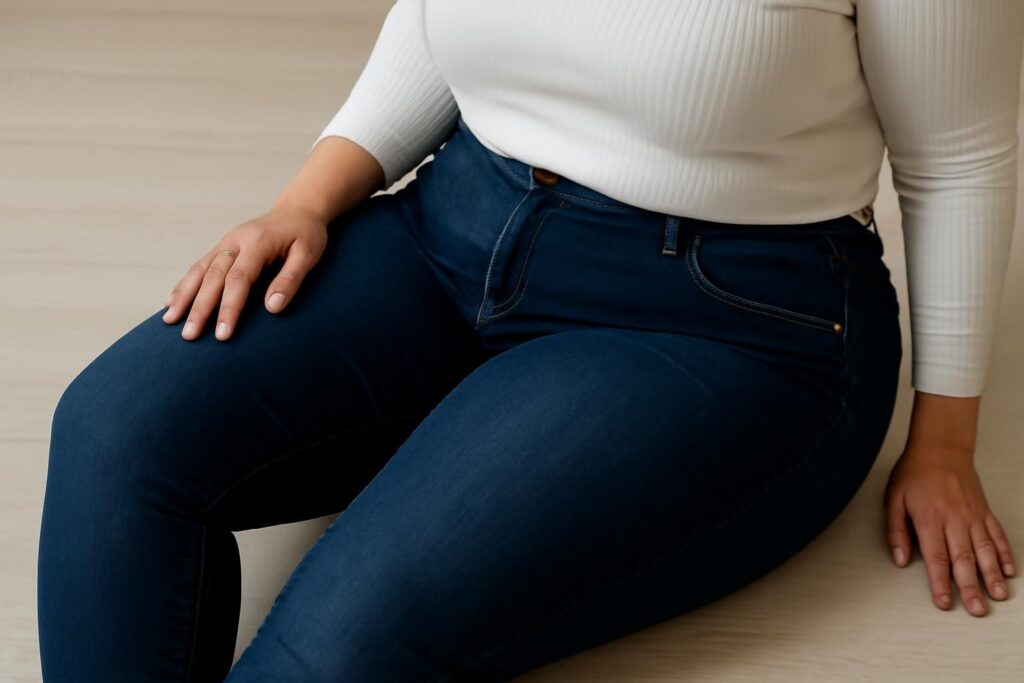
Stretch jeans promised freedom and comfort, but in plus sizes, too much elastane turns denim into leggings that bag out by noon.
The stretch content in plus size jeans ranges from 1% to 6% elastane, and that gap makes a massive difference in how a pair looks and performs over an eight-hour day. A 1% pair feels like classic rigid denim. A 6% pair feels closer to ponte or leggings. Across that spectrum, the sweet spot is narrower than most brands admit. This guide covers what to look for in plus size stretch jeans and which fabric blends actually hold up. It’s part of our Plus Size Denim hub, and if you want specific silhouette advice, check our Plus Size Skinny Jeans where stretch matters most.
The Elastane Sweet Spot for Plus Size Stretch Jeans
Here’s how the different stretch percentages typically perform. At 1-2% elastane, you get minimal give. The jeans feel like traditional denim with just enough flex for sitting and bending. These hold their shape all day but can feel restrictive in the thighs and hips if the brand didn’t cut generously for plus sizes.
At 3-4% elastane, you hit the comfort zone. There’s real stretch for movement without the fabric going slack. Pairs in this range usually bounce back after a full day of wear, with only slight give at the waistband that recovers once the jeans are off. At the same percentage, the amount of elastane generally matters more than whether the base is cotton or a cotton-poly blend. Above 4%, the problems start. Super stretchy jeans with 5-6% elastane feel amazing when you first pull them on, but they stretch out at the knees and waistband within hours. By afternoon, you’re pulling them up constantly. Waistbands can loosen noticeably by the end of a workday, and knees can bag out by lunchtime. The effect is usually stronger in larger sizes because the fabric is under more tension across a larger surface area.
Recovery Fabric vs. Standard Stretch
Some brands now use “recovery” or “sculpt” fabrics that incorporate polyester or recycled fibers alongside elastane. The idea is that the fabric snaps back to its original shape after stretching. NYDJ’s Lift Tuck technology and Good American’s Always Fits line are two examples of brands built around shape retention and a flexible fit, and they are worth comparing if bagging is your main complaint. The tradeoff is that recovery fabrics feel less like traditional denim. They’re smoother, almost ponte-like, which bothers some people.
Standard stretch blends (cotton plus elastane, no recovery tech) work fine if you stay in the 2-4% range and accept that you’ll need to wash them every 3-4 wears to reset the fibers. Keeping two pairs in rotation gives each pair time to recover between wears. Recovery fabrics are designed to keep their elasticity longer than standard stretch blends, while standard elastane pairs gradually lose some snap-back as the fibers age, even if they stay perfectly wearable. Recovery-tech jeans usually cost more, but the extra lifespan can justify it if you’re hard on denim. Plus Size Stretch Jeans Women on Amazon
When Super Stretchy Jeans Make Sense
Super stretchy jeans shouldn’t be dismissed entirely. If you have mobility issues, joint pain, or you’re in a job where you’re bending and squatting constantly, a 5-6% elastane pair can be genuinely helpful. The fabric weight in these pairs tends to be lighter too, usually 8-9 oz, which makes them easier to move in than structured denim. The key is to size down by one. If you’d normally wear a 20 in standard denim, try an 18 in a super stretch pair. The extra compression at the start compensates for the stretch-out over the day. Check the brand’s size chart and return policy before committing, since some super-stretch lines already account for this in their sizing.
The Verdict
For most people shopping for plus size stretch jeans, aim for 2-4% elastane in a cotton-dominant blend. That range gives you comfort without the afternoon sag. If you want the convenience of more stretch, invest in a recovery-fabric pair from a brand that’s specifically engineered for snap-back. And if you go super stretchy, size down to compensate. The right amount of stretch should feel like the jeans are working with your body, not slowly giving up on it.
Shop the look on Amazon
Everything you need to build a secondhand-style wardrobe, delivered. We may earn a commission on purchases.
FAQ
Do plus size stretch jeans bag out faster than straight sizes?
Yes, because the fabric is under more tension across a larger area. The elastane fibers stretch more across wider hips and thighs, and they have less capacity to recover from that extended stretch. Higher-elastane pairs are especially prone to this. Sticking to 2-4% elastane and choosing recovery fabrics minimizes the issue.
How often should I wash stretch jeans to reset the fit?
Every 3-4 wears for standard stretch blends. Cold water, gentle cycle, and air-dry. Turn them inside out before washing to reduce surface abrasion. Heat from the dryer degrades elastane faster than anything else. Repeated hot dryer cycles can wear out a pair’s recovery quickly, while air-dried pairs keep their stretch much longer.
What’s the difference between stretch jeans and jeggings?
Jeggings typically have 5% or more elastane and are constructed more like leggings with denim styling. Stretch jeans are still built like jeans with traditional construction but include elastane for give. For a pull-on option that splits the difference, see our Plus Size Pull On Jeans.