Most plus size fashion tips are thinly disguised instructions for looking thinner, and that is not what getting dressed should be about.
Most plus size fashion tips articles recycle the same advice: wear dark colors, avoid horizontal stripes, always define your waist, never wear anything cropped. These rules were written to minimize your body, not to help you dress it well. This guide sorts the tips that genuinely improve how clothes look and feel on bigger bodies from the ones that are just body-shaming dressed up as style guidance. Here is the honest version. For budget-friendly wardrobe building, check our Thrift Resale hub.
Plus Size Fashion Tips That Actually Matter
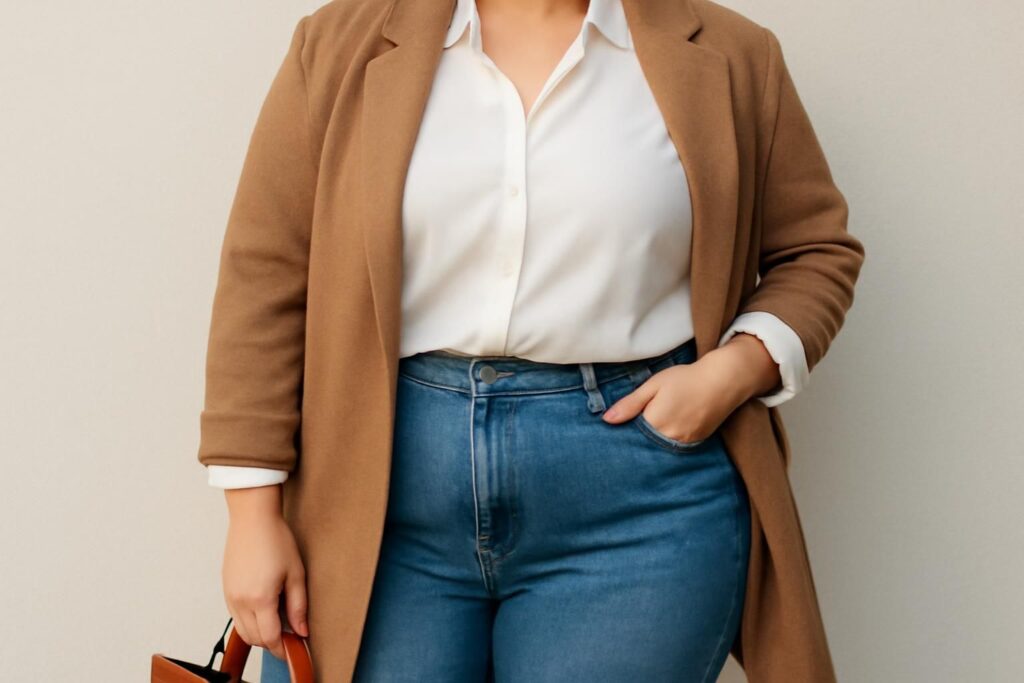
Fit is everything, and “fit” does not mean tight. The single most impactful plus size style tip is wearing clothes that match your actual measurements, not a size up for comfort or a size down to prove something. A blazer that fits through the shoulders, a pair of jeans that sits at your natural waist without gapping, a dress that follows your body without compressing it, these look expensive and intentional regardless of what they cost. A well-fitting thrifted blouse can look better than a department store top costing ten times as much, because the fit is precise Plus Size Women Fashion Basics on Amazon.
Fabric quality is visible. Cheap fabric betrays itself instantly on bigger bodies because there is more surface area for wrinkles, cling, and pilling to show. A cotton-blend tee that costs $10 more but has a heavier knit looks drastically better than a thin, see-through alternative. When shopping on a budget, prioritize fabric weight and composition over brand, color, or trend. Thrift stores are the workaround: you get premium fabrics at budget prices because the original retail cost is irrelevant to the thrift tag.
Tailoring is not just for rich people. A $15 alteration on a thrifted blazer (taking in the waist, shortening the sleeves) transforms a decent find into a perfect piece. Even if you tailor some of your thrift finds, the total cost (garment plus alteration) is usually still a fraction of buying new. The most useful alterations for plus sizes: hemming pants and dresses to the right length, taking in the waist on structured pieces, and adjusting sleeve length.
Plus Size Style Tips to Stop Following
“Always wear black.” Black is a color option, not a uniform. Every color, including white, can look good when the clothes fit well; dark colors are not what makes an outfit work. Color does not make you look bigger; ill-fitting clothes make you look uncomfortable.
“Avoid horizontal stripes.” This myth has been disproven by actual research and by anyone with eyes. A well-fitted Breton striped tee looks sharp on a size 18. A poorly fitting solid tee looks bad on any size. The stripe is not the problem.
“Never show your arms.” If you want sleeves, wear sleeves. If you want bare arms, wear bare arms. This is a preference, not a rule. Many people wear sleeves for years only because they were told to, then find sleeveless tops feel easier and look just as good. See Plus Size Dresses with Sleeves if sleeves are your preference, but know that they are not a requirement.
“Always define your waist.” Some silhouettes are intentionally unstructured, and they look great on bigger bodies when the fabric and proportions are right. An oversized linen shirt with wide-leg pants is a deliberate, stylish choice, not a fit mistake. Waist definition is one tool, not the only tool.
Building a Wardrobe That Works
Instead of following rules, build your wardrobe around pieces that pass two tests: they fit your body accurately and you feel good wearing them. If a crop top passes both tests, wear it. If a muumuu passes both tests, wear that. The only non-negotiable is fit, which means the garment sits where it should on your body without pulling, gapping, riding up, or compressing.
Thrift stores are the best testing ground because the low cost per piece ($3-8) lets you experiment without financial risk. Try the silhouettes the old rules told you to avoid. Buy a horizontal stripe. Try a cropped jacket. See how wide-leg pants look on your actual body rather than on the body a style guide imagined for you. Most of what you try will work, and the pieces that do not cost you almost nothing to discover. See Plus Size Outfit Ideas for Every Occasion for specific outfit combinations across occasions.
The Verdict
The most useful plus size fashion tip is this: stop taking fashion tips designed to make you look smaller and start learning what good fit actually looks and feels like on your body. Fit, fabric quality, and intentional styling, these are the principles that make clothes look good at any size. Everything else, the color rules, the silhouette restrictions, the arm-covering mandates, is noise from an industry that profits from making you feel like your body is a problem to solve. It is not. Dress the body you have with clothes that fit it, and the “flattering” question answers itself.
Shop the look on Amazon
Everything you need to build a secondhand-style wardrobe, delivered. We may earn a commission on purchases.
FAQ
What is the most important fashion tip for plus size women?
Wear clothes that actually fit your body. Not too tight, not too loose, just accurately sized. This single principle improves every outfit more than any color, pattern, or silhouette rule ever could.
Should plus size women avoid certain styles?
No. Every style, crop tops, bodycon, wide-leg, oversized, mini skirts, can work on plus size bodies when the fit is right and the styling is intentional. The old rules about avoiding certain silhouettes are outdated and based on the premise that plus size women should try to look smaller.
How can I look stylish in plus size on a budget?
Thrift stores are the answer. Premium brands and quality fabrics at $4-8 per piece. Spend the money you save on occasional tailoring ($10-20 per alteration) to perfect the fit. A tailored thrift store outfit looks better than an expensive poorly fitting one.
How can plus size women find jeans that don’t gap at the waist?
Waist gap in plus size jeans usually means the waist-to-hip ratio of the pattern does not match the body, so the fix is a cut designed with more hip and thigh room, not a bigger size. Curvy or contoured-waistband fits are built for this, and a little stretch helps the waistband follow the body. For a pair that fits everywhere else, a tailor can take in the waist, which is one of the most useful alterations for plus sizes.