Most men buy one pair of winter boots and wear them for years. That makes it worth understanding what the specs mean before you choose the pair you will live in.
Shopping for winter boots men’s ranges throw a lot of numbers at you: 200g, 400g, -40°F, waterproof, seam-sealed, Omni-Heat, Heatseeker. Some of those numbers are useful, some are marketing, and some are not what they appear to be. This guide explains insulation, waterproofing, traction and fit in plain terms, then walks through the main boot types, from pac boots for deep snow to lighter city boots, with notes on Sorel, Baffin, The North Face and Columbia. For the coats and layers that go with them, see our Shackets & Casual Coats hub. None of this comes from our own cold-chamber testing; brand claims are attributed, and where a temperature rating is not verified on the brand’s site, we say so.
What insulation grams really mean
Men's winter boots: current Amazon prices
As an Amazon Associate we earn from qualifying purchases. Prices and availability are accurate as of November 2026 and may change. Specs are as stated in each Amazon listing.
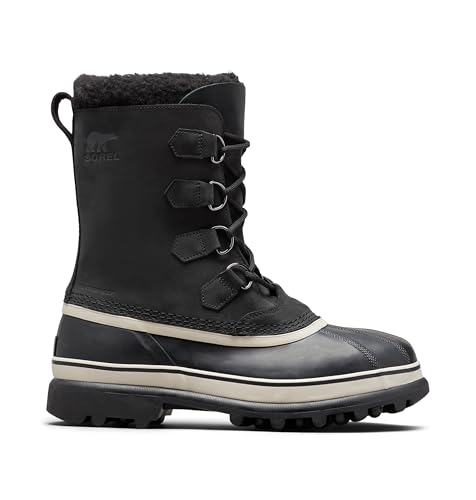
- Warm And Durable: These snow boots for men are a great fit for light rain and heavy snow alike
- Waterproof Boots: Made with waterproof nubuck leather upper and seam-sealed design for dry feet
- Quality Outsole: Handcrafted waterproof rubber shell with Sorel aero-trac non-loading outsole

- Omni-Tech: Our proprietary technology provides air-permeable protection that's waterproof and…
- Alpine Style & Performance: Waterproof leather upper, injection molded shell, 200 grams of insulation, superior…
- Take On The Cold: A re-energized update of our cold-weather classic. Versatility and protection make…
When a boot lists “200g” or “400g” insulation, it refers to the weight of insulation per square metre of material, not the total amount of insulation in the boot. 3M’s footwear-specific Thinsulate Type B line, for example, is sold as B200 (210 g/m²), B400 (420 g/m²) and B600 (620 g/m²). Other brands use their own insulations with the same gram-style labelling.
The temperature bands you see attached to those numbers are rules of thumb from retailers, not a specification from 3M. The usual guide is roughly this: 200g for cool weather or high activity, 400g for typical winter conditions, and 600g or more for cold, low-activity days such as standing outdoors. Use that as a starting point, not a guarantee. How warm a boot feels also depends on the liner, the sole, the fit, your socks and how much you move.
Activity matters more than people expect. If you walk briskly, a 200g boot can feel plenty warm and a heavier one can make your feet sweat, which then chills them. If you stand still for long periods, go heavier.
Waterproofing and temperature ratings
For winter, waterproofing is non-negotiable. Look for waterproof leather or rubber lowers, seam-sealed construction and a gusseted tongue, which is sewn to the upper so snow and water cannot get in through the laces. Slush is the real test: a boot that is only water-resistant will soak through on a salty, wet pavement within a winter.
Temperature ratings deserve scepticism. They are not standardised across brands, and they often assume you are moving. Some well-known ratings are not even confirmed on the brands’ own sites today. A rating can help you compare boots within one brand’s range, but it is not a lab-tested promise for your feet.
Traction: the sole matters as much as the warmth
A warm boot that slips on ice is a hazard. Look for deep, widely spaced lugs that shed snow rather than packing it, and a softer rubber compound, which stays grippier in the cold than hard plastic soles. Some boots use specialist cold-weather rubbers or Vibram outsoles; Sorel’s Caribou Horizon GTX, launched in November 2025, for example, pairs a Gore-Tex membrane with a Vibram outsole.
No sole grips sheet ice reliably. If you live somewhere icy, slip-on traction cleats are a cheap, effective add-on for the worst days.
The main types of mens snow boots
Pac boots. A rubber lower, a leather or nylon upper and a thick removable felt or foam liner. This is the classic deep-snow boot. The Sorel Caribou is the archetype: first prototyped in 1962 from handmade rubber, wool and leather, and long marketed with a -40°F rating, though reviewers disagree on whether Sorel still publishes that figure. Pac boots are very warm and very waterproof, but heavy and bulky for city walking. Our Sorel Caribou Review goes into detail, including the split among reviewers on sizing.
Extreme-cold boots. Built for standing still in brutal cold. Baffin is the specialist here. Its Impact boot is officially “Polar Rated”, with comfort during moderate activity listed at -45°C to -60°C (-49°F to -76°F), and Baffin advises sizing up one full size. These are overkill for most cities but right for northern winters, outdoor work and ice fishing. See our Baffin Boots Review.
Insulated hiker-style boots. Lighter, more flexible, with moderate insulation and a hiking-style sole. The North Face Chilkat V, which comes with 200g Heatseeker Eco insulation (or 400g in the Chilkat V 400), is a popular example of north face boots men buy for city snow. The North Face does not publish an official temperature rating for the Chilkat that we could verify, so judge it by the gram count and owner reviews. Columbia’s Bugaboot line is another common pick among men’s columbia boots, using Columbia’s Omni-Heat lining; we could not verify a temperature rating for it on Columbia’s site either.
Waterproof leather boots. Lightly insulated or uninsulated leather boots with a lug sole. These are the most stylish and versatile for city winters with occasional snow, and they pair with jeans and chinos. Pair with merino socks for warmth.
Insulated work boots. Safety toes, tough leather and insulation often in the 400g to 600g range. Our guide to Insulated Work Boots explains what to look for.
How the main styles compare
| Boot type | Example | Warmth (as stated) | Weight and bulk | Best for |
|---|---|---|---|---|
| Pac boot | Sorel Caribou | Long marketed as -40°F; rating disputed by reviewers | Heavy | Deep snow and cold, low-activity days |
| Extreme-cold boot | Baffin Impact | Officially Polar Rated; comfort -45°C to -60°C during moderate activity | Very bulky | Arctic-style cold, outdoor work |
| Insulated hiker | The North Face Chilkat V | 200g or 400g insulation; no official rating found | Moderate | City snow and winter walks |
| Waterproof leather boot | Varies | Light or no insulation | Light | Mild winters and everyday style |
Most men in typical city winters do best with an insulated hiker-style boot or a waterproof leather boot. Pac boots and extreme-cold boots are worth it only if you regularly face deep snow or very low temperatures, or spend long periods standing outdoors.
Fit: how winter boots men buy should feel
Try boots on with the socks you will wear in winter, ideally midweight merino. You want a little room to wiggle your toes, because a tight boot restricts circulation and makes your feet colder, no matter how much insulation it has. Your heel should not lift much as you walk.
Sizing varies by brand and model. Baffin officially advises going up a full size for the Impact. Reviewers are split on the Sorel Caribou, with some saying it runs large and others saying stick to your usual size. Check each brand’s own guidance, read recent owner reviews, and buy from a retailer with easy exchanges.
Height is the other fit decision. An ankle-height boot is lighter and easier with trousers, but snow pours in over the top once it is deeper than a few inches. A mid-calf boot keeps out most city snow and slush. Tall pac boots, often with a snow cuff or drawstring collar, are the only real answer for deep drifts. Buy for the deepest snow you regularly walk through, not the average day.
Socks matter as much as the boot. Cotton socks hold sweat and leave feet cold; merino handles moisture far better. Our guide to Merino Wool Socks explains which cushion level fits which boot.
Style: making winter boots work with your wardrobe
For city wear, a waterproof leather lace-up boot or a sleek insulated hiker works with jeans, chinos and wool trousers. Brown leather is the most versatile; black looks sharper with darker outfits. Pac boots and extreme-cold boots are functional first, so wear them with technical outerwear, jeans or work trousers rather than smart clothes.
Pay attention to how your trousers meet the boot. Straight-leg jeans stack nicely over a boot; slim jeans can be tucked into taller snow boots. Pair with a puffer or parka for real cold; our guide to Men’s Puffer Jackets covers those.
For a versatile pick that handles city snow, an insulated, waterproof hiker-style boot is our recommendation: Mens Waterproof Insulated Winter Boots 200G on Amazon. For deep snow, a pac boot with a removable liner: Mens Pac Boots Removable Liner Waterproof on Amazon.
Caring for winter boots
Salt is the enemy. Wipe off salt marks with a damp cloth as soon as you get home, and let boots dry at room temperature, away from radiators. Remove liners to dry them separately if your boots have them. Re-waterproof leather boots with a suitable treatment once or twice a season, and check the soles for wear before the next winter, since a worn tread loses grip on ice.
The verdict
Most men need an insulated, waterproof hiker-style boot with around 200g of insulation, a deep lugged sole and a fit that leaves room for a merino sock. That covers city snow, slush and winter walks. Step up to a 400g boot or a pac boot like the Sorel Caribou if you face deep snow or spend long periods standing outdoors, and go to a specialist like Baffin only for serious sub-zero cold. Treat temperature ratings as rough guides, and do not trust any rating the brand itself does not publish. Get the fit right, wear wool socks, and look after the leather, and a good pair will last many winters.
Shop the look on Amazon
Everything you need to build a secondhand-style wardrobe, delivered. We may earn a commission on purchases.
FAQ
How much insulation do I need in winter boots?
As a rule of thumb from retailers, 200g suits cool weather or active use, 400g suits typical winter conditions, and 600g or more suits cold, low-activity days. These bands are guides, not 3M specifications.
Are temperature ratings on winter boots accurate?
Treat them as rough guides. They are not standardised across brands and often assume you are moving. Some widely quoted ratings are not confirmed on brands’ own sites.
Should winter boots be a size bigger?
Sometimes. Leave room to wiggle your toes with a thick sock. Some brands, such as Baffin, officially recommend sizing up a full size; others fit true to size. Check each brand’s guidance.
What are the warmest men’s winter boots?
Extreme-cold boots like the Baffin Impact, which Baffin officially describes as Polar Rated with comfort at -45°C to -60°C during moderate activity, sit at the top. For most city winters, they are more boot than you need.