Denim in July is a personal decision. If you’re committed to jeans year-round, lightweight summer denim is the difference between suffering and surviving.
For men who skip shorts and still need denim that works in 95-plus-degree heat, a dedicated summer rotation is the answer. The useful question is what makes men’s lightweight jeans work versus what just markets itself that way, and the answer comes down to fabric weight, weave, cut, and fiber content. This piece covers fabric weight, weave, fit, and the real brands worth considering. For the Wrangler-specific summer option, see Wrangler Cool Vantage Jeans and the broader Mens Denim hub.
What “lightweight” actually means
Top Mens Lightweight Jeans Summer picks on Amazon
As an Amazon Associate we earn from qualifying purchases. Prices and availability are accurate as of November 2026 and may change. Specs are as stated in each Amazon listing.

- Cool Temp Technology: Designed to keep you dry and comfortable, our innovative Cool Temp Technology uses…

- RELAXED FIT. Built with a relaxed fit through the seat and thigh, these versatile jeans sit at…
- COMFORT FLEX WAISTBAND. Designed with comfort in mind, our innovative flex waistband ensures a…

- EVERYDAY JEAN. Great for both long days on the job and kicking back on the weekend, these…
- ATHLETIC FIT. Built with a roomier fit through the seat and thigh, these five-pocket jeans are…
Standard denim runs 12–14oz. “Lightweight” denim starts at 11oz and runs down to about 8oz. Below 8oz you’re in territory where the fabric stops behaving like denim and starts behaving like twill or canvas. For summer use, the 9–11oz range is the sweet spot — light enough to breathe meaningfully, heavy enough to still look like real jeans.
Fabric weight alone isn’t the full story
A 10oz denim with a loose weave breathes better than a 10oz denim with a tight weave. An open-weave pattern lets air move through the fabric; a dense weave traps heat even at lighter weights. Some summer-specific denim uses “slub” weaves or wider yarn gauge to increase breathability without going lighter. Wrangler Cool Vantage uses this approach. Reading product pages for weave descriptions matters as much as weight.
The color factor
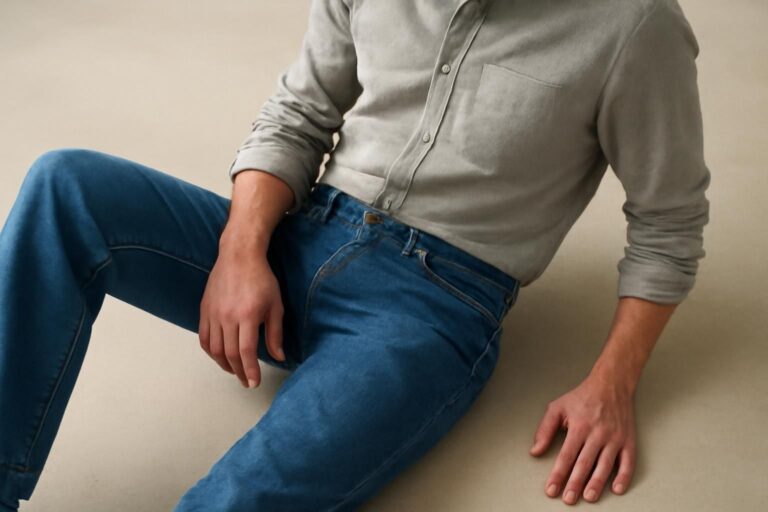
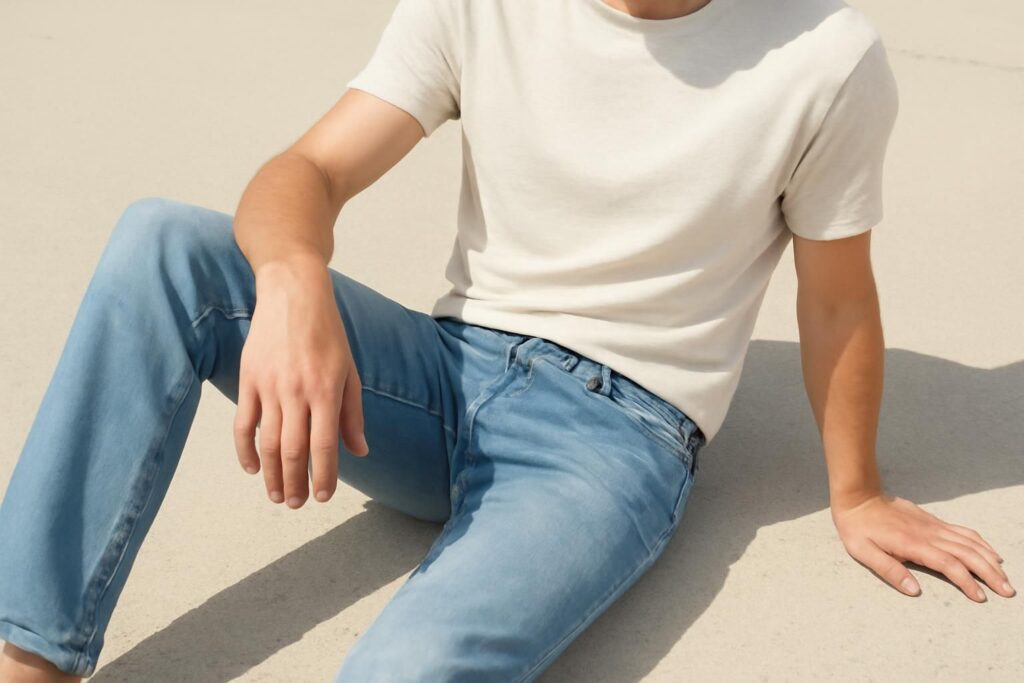
Dark jeans absorb more solar radiation than light jeans — on a bright summer day, dark denim will run 5–10 degrees hotter on the fabric surface than light wash. For outdoor summer wear, lighter washes are meaningfully cooler. For indoor summer wear, color matters less because you’re not in direct sun. The Big and Tall White Jeans piece covers the whitest end of the spectrum; medium blue and natural ecru are the practical sweet spots for most buyers.
Brands doing lightweight summer denim right
Wrangler Premium Performance Cool Vantage Cowboy Cut — warm-weather denim in a cotton-polyester blend (retailer listings put it at roughly 70% cotton and 28 to 30% polyester, some with a touch of stretch) with Wrangler’s moisture-wicking Cool Vantage technology. Most useful in 90+ heat. Classic Cowboy Cut silhouette.
Levi’s 541 Athletic Taper in lightweight fabric — the stretch version runs around 10.5oz and breathes noticeably better than standard 511 at 12oz. $70 range.
Mott & Bow Summer Mercer — lighter-weight variant of their standard slim, around 10oz Italian fabric. Premium option, $148.
Uniqlo Slim Fit Chino Denim — technically a denim-chino hybrid at 9oz. Summer-specific fabric choice at under $50. Good budget option.
Faherty Original Lightweight — summer-specific line with softer fabric and more drape. Premium price around $128.
What to skip
Any jean that markets as “summer” without specifying fabric weight — these are usually just lighter colors on standard-weight denim, which doesn’t solve the heat problem. Polyester-heavy “tech denim” that claims breathability — usually worse than natural cotton in real heat because polyester traps moisture against skin. Skinny summer denim — the fit is its own insulation problem; tight fabric against skin traps heat regardless of weight.
Cut considerations
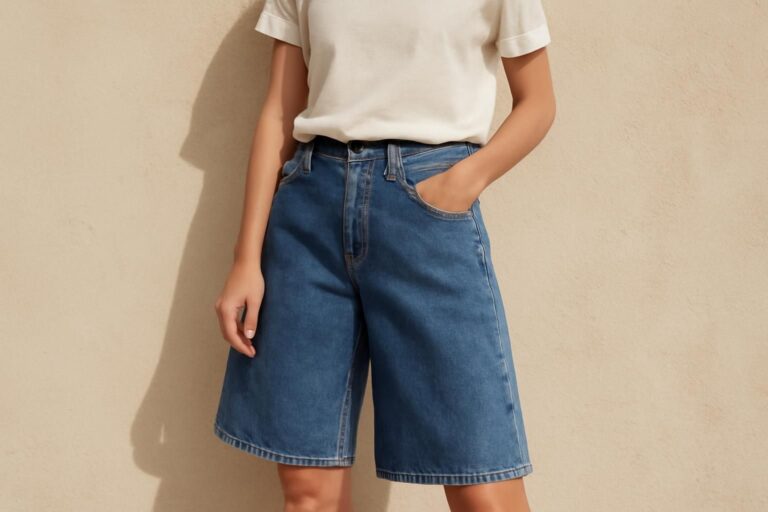
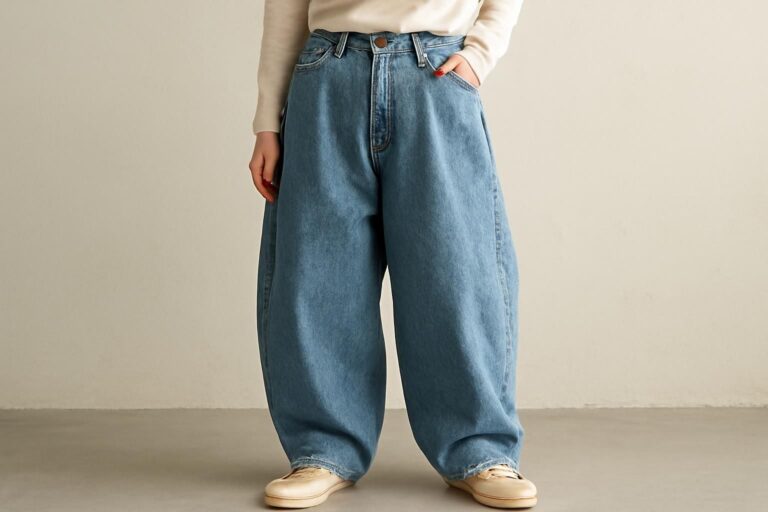
Looser cuts breathe better than tight cuts at the same fabric weight. A slim-straight 10oz pair is cooler than a skinny 10oz pair. A straight cut is cooler than either. This matters more than most buyers realize — a well-chosen cut in standard denim can wear cooler than a poor cut in ultra-light denim. For summer, target straight or slim-straight; save skinny for cooler seasons. The Straight Fit Jeans for Men breakdown covers cut options.
Stretch in summer denim
Elastane content traps heat slightly more than pure cotton because the synthetic fiber has lower breathability. For summer-specific pairs, 100% cotton is measurably cooler than 98/2 cotton-elastane at the same weight. The trade-off is comfort — pure cotton summer denim feels stiffer. 1% elastane is a reasonable compromise for daily wear.
The care angle
Summer sweat is hard on denim. Plan for more frequent washing than non-summer denim, cold water only (sweat plus hot wash accelerates color loss), and hang drying (direct sun can bleach washed denim but moderate indoor hang drying is fine). Expect summer pairs to cycle through their useful life faster than winter pairs because they see more washes.
The limits
No jean is genuinely cool in extreme heat. The best summer denim is less bad than regular denim, not actually cool. If you’re in 100+ degree weather for extended periods, you will sweat through any pair. Acknowledge this before buying — the goal is minimizing discomfort, not achieving comfort. For truly extreme heat, linen pants or technical shorts do what summer jeans cannot. Order summer options via Mens Lightweight Summer Jeans on Amazon.
Layering with lightweight
Summer jeans pair well with short sleeves, linen shirts, and cotton tees. Avoid tucking — the extra fabric at the waist traps heat. Avoid full-length socks unless you’re wearing full shoes; no-show or ankle socks only. Belt choice matters less than most assume — leather breathes fine, fabric belts can be cooler but look more casual.
Fit notes
Lightweight denim generally runs about a half size larger than equivalent standard-weight denim at the same tag — the lighter fabric has less structure and the fit feels looser. Order your normal size; don’t size down expecting fit correction. If you find them loose, they’ll hang honestly rather than bag.
Seasonal rotation strategy
One approach: have 2–3 pairs of standard-weight daily drivers for most of the year, plus 1–2 dedicated summer pairs for June–September. Don’t try to make one pair work all seasons — summer denim is a purpose-specific tool. In winter, summer pairs feel too thin; in summer, winter pairs are miserable. The rotation approach costs slightly more upfront but is more comfortable and extends the life of each pair.
Summer-specific styling
Lighter washes read more summery. Rolled cuffs work for the visual aesthetic and also for ankle ventilation. Leather sneakers or low boat shoes over slim-straight lightweight jeans hits the right register for most summer casual contexts. Avoid the full-western boot in summer unless you’re riding or at a specific event; boot height traps heat. See Best Shoes to Wear with Jeans for Men for the full pairing context.
The verdict
Men’s lightweight jeans for summer deliver a real comfort improvement over standard denim in 80+ degree weather, but the gains are incremental rather than transformative. Pick 10–11oz fabric, a straight or slim-straight cut, and a medium wash for the best practical summer performance. Wrangler Cool Vantage and lightweight Mott & Bow are the two to look at first, depending on budget and style lean. Accept that summer jeans are a compromise — no denim is actually cool — but the right compromise makes year-round jeans wearable. For extreme climates, the Affordable Jeans for Men Under $50 That Don’t Look Cheap coverage includes budget options for the category.
Shop the look on Amazon
Everything you need to build a secondhand-style wardrobe, delivered. We may earn a commission on purchases.
FAQ
How light can jeans go and still be jeans?
8oz is the practical lower limit for fabric that still looks and behaves like denim. Below 8oz, the fabric takes on twill or canvas properties and loses the denim aesthetic.
Do lightweight jeans hold up as long as regular denim?
Generally no. Thinner fabric wears through faster at abrasion points (inner thigh, back pockets). Expect a shorter lifespan than a standard-weight pair in the same rotation.
Are linen-cotton blend jeans a good idea for summer?
Mixed results. Linen breathes better but adds coarseness that some buyers dislike. Pure cotton lightweight is more predictable; linen blends are a preference call.
Can I wear lightweight jeans year-round?
In mild climates, yes. In climates with real winter, lightweight jeans feel thin below 50 degrees. A seasonal rotation is more practical for most buyers.