A maxi sundress is the closest thing warm weather has to a uniform: one piece, no styling math, and it looks deliberate from the school run to a rooftop dinner. The catch is that a bad one drags, clings and wrinkles by noon.
The maxi sundress earns its spot because it solves two problems at once: it covers the legs for people who would rather not wear shorts, and it still feels loose and airy. But long dresses magnify every small choice. Fabric weight decides whether the skirt swings or sticks, the waistline decides where your proportions land, and an extra two inches of hem decides whether you can walk up stairs without hitching it. This guide works through those decisions in order, so you can shop for a long sundress with a checklist rather than a hunch. For the full range of shapes and lengths, start at our Sundresses hub, then come back here for the long version.
What makes a good maxi sundress
Three things separate a maxi you reach for every week from one that sits in the closet: the fabric moves, the length matches your height and shoes, and the bodice stays put without constant adjusting.
Movement. A long skirt is a lot of fabric. If it is heavy or stiff, it hangs like a curtain and pulls on the shoulder straps. If it is too thin, it clings to your legs in a breeze and shows every seam of what is underneath. The sweet spot is a light-to-mid-weight woven or a jersey with some body.
Length. The hem should sit roughly at the top of your foot in the shoes you will actually wear. Too long and it collects grit from every sidewalk. Too short and it reads as a midi that shrank.
A bodice that holds. Smocked backs, adjustable straps, a lined bust and a defined waist seam all help a long dress stay where it should. Unstructured tube tops and thin spaghetti straps tend to slide under the weight of a full-length skirt.
Best fabrics for a long sundress
Fabric is the single biggest decision with a maxi. Read the composition label before you look at the print.
Cotton voile and cotton lawn. Fine, lightweight, plain-weave cottons that feel crisp and breathable against the skin. They wrinkle, but in a relaxed way that suits a sundress. Lighter colours may need lining.
Rayon and viscose challis. These are the drapey, fluid fabrics behind most printed maxis. They swing beautifully and hold colour well. The downside: many shrink if washed warm and can crease sharply. Check the care label and expect to cold-wash or hand-wash.
Linen and linen blends. Linen has structure and texture and looks expensive in solids. Pure linen wrinkles fast; blends with cotton or viscose soften that. A linen maxi is a strong choice for travel and outdoor dinners.
Cotton jersey and modal jersey. Knit maxis are the most comfortable and the easiest to pack. They can cling more than wovens, so a slightly heavier jersey with a bit of weight in the skirt hangs better than a thin one.
Polyester chiffon and georgette. Common on dressier, layered maxis. They resist wrinkles and look polished in photos, though they feel less airy than natural fibres. Usually lined.
A note on claims: some retailers describe fabrics as cooling or protective. Unless the specific garment’s label states it, treat that as marketing copy, not a spec.
Waistlines and silhouettes
The waist seam sets the proportions of a long dress more than anything else, so it is worth knowing which one you like before you scroll.
Empire waist sundress. The seam sits just under the bust and the skirt falls from there. It gives a long, uninterrupted line and lots of room through the middle, which is why it shows up so often in maternity and resort collections. On a petite frame, an empire waist can make the skirt look very long; a slightly higher hem helps.
Natural waist. A seam or tie at the narrowest part of the torso, with a fuller skirt below. This is the most classic sundress shape and works with a belt if you want more definition.
Drop waist and column. A straight or slip-style maxi with no waist seam, or one at the hip. Relaxed and modern, and good in linen or heavier jersey. In thin fabric, it can look shapeless.
Tiered maxi. Horizontal tiers that widen toward the hem. They add volume and movement and suit prints well. Too many tiers in a stiff fabric can feel bulky, so look for two or three in a soft cotton or rayon.
Wrap and faux-wrap. Adjustable through the bodice and easy to fit across a range of sizes. Check the skirt overlap: some wrap maxis open well above the knee when you walk or sit.
Getting the length right for your height
Maxi length is where online shopping goes wrong most often, because the same dress hits a 5’1″ person and a 5’10” person in completely different places.
Check the product’s length measurement. Most retailers list the length from the shoulder or high point of the shoulder to the hem. Measure your own body from the same point down to the floor in the shoes you plan to wear, then compare. A difference of an inch or two is fine; four or more means a hem job or a different size range.
Look for petite and tall ranges. If you are on either end of the height scale, a dress cut in a petite or tall length will sit right at the shoulder, waist and hem, rather than just being shorter or longer at the bottom.
Hemming is easy on a simple skirt. A plain hem on a single-layer cotton maxi is a quick alteration. Tiered skirts, ruffled hems and printed borders are harder to shorten without losing the design, so get those as close as possible off the rack.
Flats vs heels. Decide on the shoe before you hem. A maxi hemmed for sandals will drag if you later wear it with a wedge, and look short with flats if you hemmed it for heels.
How to wear a maxi sundress
A maxi is a whole outfit, so styling is mostly about shoes, a layer and one accessory.
Shoes. Flat leather sandals are the default and work almost everywhere. Espadrille wedges add height and keep the hem off the ground on grass or gravel. Clean white sneakers make a cotton maxi feel casual and city-ready. For dressier evenings, a block heel or strappy sandal works with chiffon or satin-finish styles.
Layers. In spring and early autumn, a cropped denim jacket, a short cardigan or a boxy linen shirt worn open keeps the waistline visible. Long layers that end mid-thigh tend to cut the dress awkwardly. For more options, our guide to Spring Jackets for Women covers the lightweight jackets that work over dresses.
Belts. A thin leather or woven belt adds a waist to column and empire styles. Keep it narrow on light fabrics so it does not bunch.
Bags and jewelry. A woven tote or crossbody suits the relaxed mood. Keep jewelry simple with busy prints and go bolder with solids.
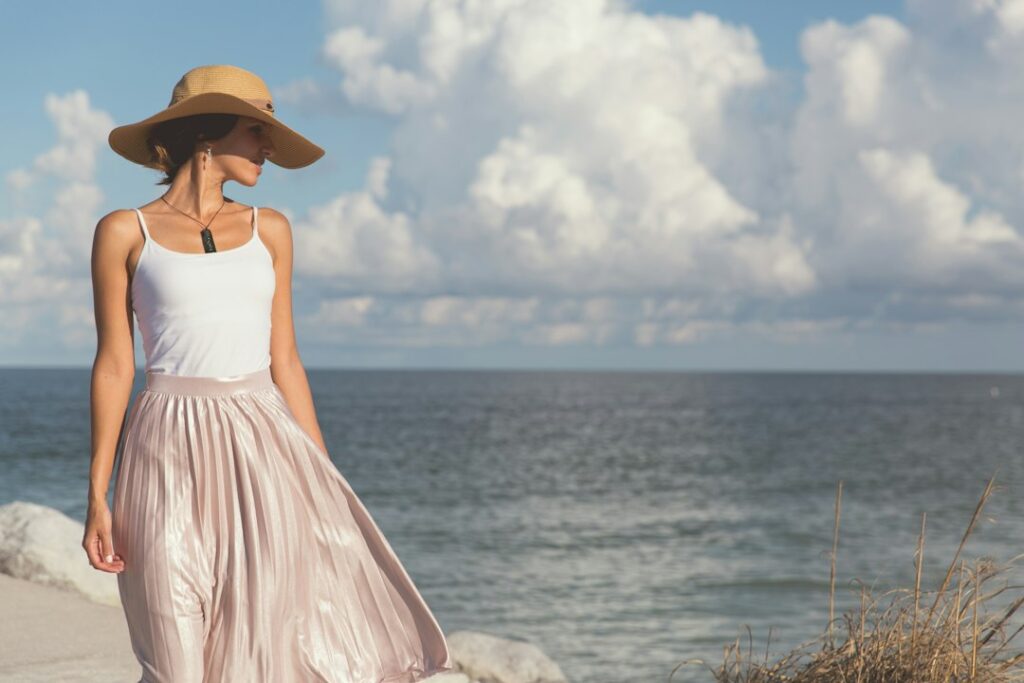
Occasions. A solid or subtle-print maxi in linen or chiffon works as a Beach Wedding Guest Dresses option when the invitation is relaxed. Cotton and jersey maxis are for errands, vacations and weekends. A crisp white maxi can stand in as a casual summer party dress; see our edit of White Sundresses for fabric picks that stay opaque.
Prints, colours and the maxi summer dress
Because a maxi summer dress shows a lot of fabric, print scale matters more than on shorter dresses. Small, dense florals read as a texture from a distance and are easy to wear. Large-scale prints are louder and work best on simple shapes with minimal tiers or ruffles. Our guide to Floral Dresses goes deeper on choosing a print that looks current rather than dated.
Solid colours are the most versatile. Black, navy, olive and rust maxis move from day to evening with a change of shoes. Bright solids, such as cobalt, tomato red or emerald, make a statement without a busy print. White and cream look fresh but need opaque fabric or a lining.
For a more casual take, a chambray or lightweight denim maxi gives the same long silhouette with a sturdier hand. Our Denim Sundresses guide covers which weights work for full-length styles.
What to check before you buy
Most maxi disappointments are visible in the product details if you know where to look.
Lining. Light colours and thin rayons are often sheer. A lined bodice or skirt, or a half-slip, solves it. If the listing does not mention lining, check reviewer photos taken in daylight.
Pockets. Side-seam pockets are one of the best features a maxi can have. They are also a sign the maker paid attention to construction.
Straps. Adjustable straps let you fine-tune where the waist seam sits, which matters more on a long dress. Wide straps work with regular bras; thin straps and open backs may need a strapless or convertible option.
Slits. A side slit makes walking much easier in a narrow maxi. Check how high it goes, because listing photos often pose models to minimise it.
Care label. If you want an easy summer dress, cotton, jersey and polyester are the low-maintenance picks. Rayon and linen usually need gentler washing and an iron or steamer.
If you want a starting point, search for a Women Cotton Tiered Maxi Sundress With Pockets on Amazon and filter by reviews that mention the wearer’s height. For thrift and resale, maxis are an easy category to buy secondhand: fabric and length are visible in photos, and long, simple skirts are easy to alter.
Similar style on Amazon

- Design: Summer casual maxi dresses for women is available in a variety of vibrant soild…
- Material: This casual maxi dress is made from cozy fabric(60%Polyester,35%Rayon,5%Spandex)…
- Styles: The v-neck summer dresses are easily pair with sandals, heels, sneakers, and…
Caring for a long sundress
Long skirts hold more water and more wrinkles than short ones. Wash on a cold, gentle cycle inside out, especially prints and rayons. Skip the dryer for anything rayon or linen: line-dry or hang to dry, then steam. Jersey maxis can usually be tumbled low, but heat shortens the life of the elastic in smocked bodices. Store long dresses folded over a hanger bar rather than hanging by thin straps, which stretch under the weight of a full skirt.
The verdict
Buy fabric and length first, print second. A maxi sundress in a mid-weight cotton, linen blend or substantial jersey, with adjustable straps, a lined bodice and side pockets, will outwear three trendier dresses in thin rayon. If you are between heights, take the time to compare the listed length with your own shoulder-to-floor measurement; it saves more returns than any size chart. Empire waists are the easiest place to start because they give room and a long line. Natural waists and tiers are where you go once you know what you like. And if you only own one, make it a solid colour you can wear with sandals in July and a denim jacket in May. That single dress will cover more days than any other piece in a warm-weather wardrobe.
Shop the look on Amazon
Everything you need to build a secondhand-style wardrobe, delivered. We may earn a commission on purchases.
FAQ
What is the difference between a maxi sundress and a long sundress?
They are mostly the same thing. “Maxi” usually means the hem reaches the ankle or floor, while “long sundress” is sometimes used for anything below mid-calf. Check the listed length to be sure.
What shoes go with a maxi sundress?
Flat sandals are the easiest choice. Espadrille wedges suit grass and gravel, white sneakers make it casual, and block heels dress it up. Pick the shoe before you hem the dress.
Can petite women wear a maxi sundress?
Yes. Look for petite-length ranges, a natural or slightly raised waistline, and fewer tiers. Hemming a simple single-layer skirt is an easy alteration.
Is an empire waist sundress good for everyday wear?
It is one of the most practical shapes: roomy through the middle, easy to move in and simple to layer with a cropped jacket. It also adapts well to changing sizes.