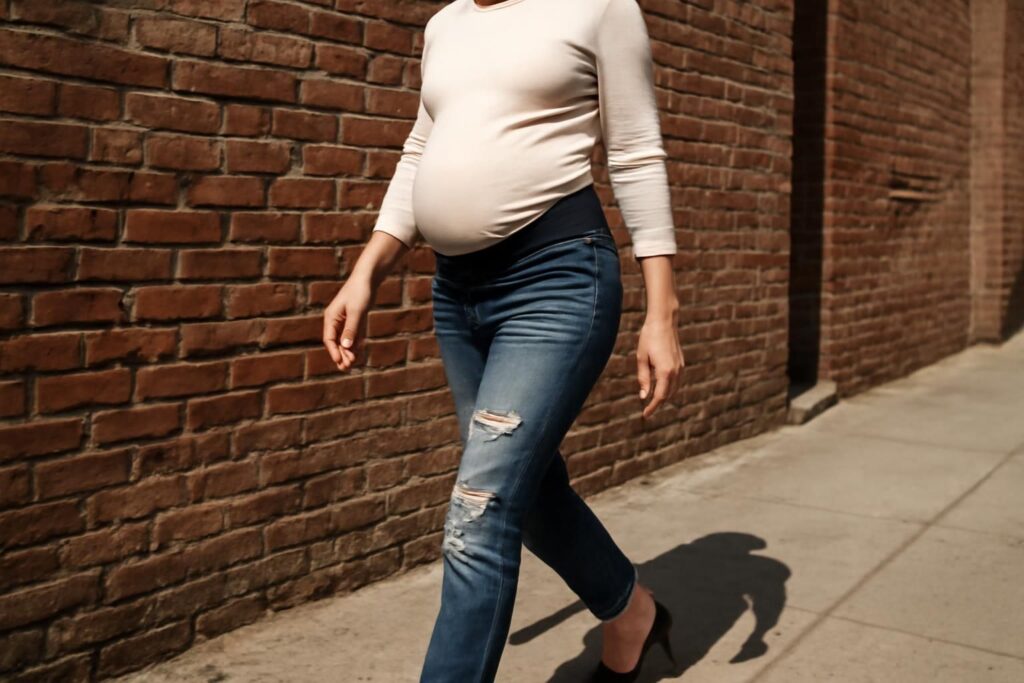
Maternity jeans with rips are the aesthetic compromise between casual pregnancy style and actual functional maternity denim. They read more relaxed than plain pairs, skew younger, and work for weekend wardrobes. They also fail in specific, predictable ways under the stress of a growing belly.
The short version: rip placement decides whether a pair still looks intentional at full term. This guide covers which rip styles hold, which spread, what fabric to look for, and how to stabilize a rip that starts to grow. The pillar hub at Brand Guides has the broader maternity context. Related reads: Maternity Jeans with Holes covers overlapping territory, Maternity Jeans Distressed covers the softer end, and Maternity Jeans Cute looks at the aesthetic side.
Rips vs. distressing vs. holes
Rips are deliberate tears in the fabric where skin shows through. Distressing is surface abrasion without through-fabric openings. Holes are similar to rips but tend to be rounder and smaller.
Rip styles in maternity: straight horizontal knee rips (most common), ladder rips (multiple parallel cuts), shin rips (small tears below knee), and hip/front rips (rare in maternity).
The distinction matters because rips have pre-weakened edges that can spread under stress — something pregnancy provides in abundance.
Why maternity rips are riskier than non-maternity rips
The outward pressure of a growing belly travels down the front of the pair. Knee and upper thigh rips sit in the stress path. A rip that’s stable in non-maternity denim can spread noticeably over a pregnancy.
A wide horizontal knee rip is the typical problem case: by the last weeks of pregnancy it can be noticeably wider than at purchase, and even if the pair is still wearable, the rip becomes the visual focus of any outfit and looks more aggressive than intended.
Second issue: rip edges fray. The pre-cut edges lose threads over washes. On a non-maternity pair, fraying is slow and decorative. On a maternity pair with increased wash frequency (panels get sweaty, require more washes), fraying accelerates.
Rip placements that hold
Shin rips. Below the knee, away from belly-pressure path. A shin rip stays close to its original size through pregnancy.
Below-knee smaller rips. One to two inches, placed just below the kneecap. Less bend stress than the kneecap itself.
Small hip-area rips. Rare in maternity but exist. Sit below the panel, out of the belly-pressure path. Stable.
Rip placements that fail
Large horizontal knee rips. Spread the most. Plus, the frayed edges collect threads which make the rip look messier over time rather than intentionally ripped.
Mid-thigh rips. In the belly-pressure path. Almost always spreads.
Ladder rips across the knee. Multiple parallel cuts create multiple weak points. Often one of them will open into a full rip.
Front-of-thigh rips above the knee. Pressure path plus bending stress. Usually spreads.
Rip styles worth keeping
A ripped boyfriend cut with small shin rips and an under-belly panel, the kind of style Old Navy Maternity carries. The boyfriend cut gives plenty of ease, so the rip edges are not under constant tension, and small rips low on the leg tend to stay close to their original size through the second and third trimester, with minimal fraying.
A straight leg with one small, subtle knee rip plus light shin distressing on a full panel, a look Gap Maternity often stocks. A small knee rip on a straight cut may widen a little, but the spread is usually acceptable and the pair still looks intentional rather than destroyed.
Rip styles worth returning
A ripped skinny with a large horizontal knee rip and extra thigh rips. The tight cut keeps tension on every rip edge, the knee rip is likely to spread and fray visibly, and thigh rips can widen into small cut-outs. If a new pair like this already looks stressed at the knee, use the return window.
A ladder-style pair with several parallel cuts across one knee. Neighboring cuts can spread into each other and form one larger opening, leaving the pair one step from a full knee-out blowout. This is the style to return first.
Fabric considerations for rips
Heavier denim (10 to 11 oz) resists rip spread better than lighter denim. The fabric around the rip has more structure.
High-stretch denim (3+ percent elastane) tears more easily than low-stretch. Stretch fabric puts constant outward pressure on rip edges.
Cotton-heavy pairs fray slower than rayon-blend pairs. The cotton fibers are longer and don’t loose as easily.
For maternity rips specifically: look for 10+ oz cotton-heavy denim with 1.5 percent or less elastane.
Styling maternity rips
Rips skew casual. Weekend, errands, walk days. Some rip styles work for casual office; most don’t.
Pair with structure on top: fitted tank tucked, blazer over, leather jacket. Casual on bottom, structure on top reads intentional rather than sloppy.
Shoe pairing: white sneakers, ankle boots, sandals in warmer weather. Avoid heels (formality mismatch).
Layering: a long cardigan or denim jacket over ripped maternity denim. The layer covers the panel and lets the rips be one visual element among several.
Weather considerations
Summer: rips are fine. Actually welcome for airflow on a pregnant body that runs warm.
Winter: rips expose skin at the knee and shin. Cold weather wear requires nude tights underneath or accepting the coldness. Less functional.
Rain: rips let water in. Worth planning around on rainy commutes.
Fixing a rip that’s spreading
Interior denim patch. Sew a denim patch on the inside of the leg across the rip. The rip still looks intentional from outside; the patch stops spread from inside.
Sewing the rip edges. Hand-sew the frayed edges with coordinating thread. Stops further fraying without eliminating the rip.
Iron-on hem tape across the back of the rip. Temporary fix. Lasts a few washes.
Professional tailoring. Some tailors will reinforce or resize rips for a reasonable fee. Uncommon but available.
Postpartum rip wear
Postpartum first 4 to 6 weeks, ripped maternity works casually. Past that, the panel doesn’t have a belly to fill and the rips hang oddly.
Resale value on ripped maternity is low because the rips become dated faster than plain denim and many buyers avoid rip styles for their own bodies.
Where to shop
Old Navy Maternity and Gap Maternity stock ripped pairs consistently. Try Shop at Old Navy or Shop at Gap. Broader search: Maternity Jeans With Rips on Amazon. For resale: Maternity Jeans With Rips on Poshmark.
Shop our picks: AG The Legging Ankle Maternity Jean, DL1961 Florence Maternity Skinny Jean, Amazon Essentials Maternity Pull-On Skinny Jean.
The verdict
Maternity jeans with rips are a wearable category if you pick rip placements that survive pregnancy pressure. Shin rips and below-knee small rips stay stable. Large horizontal knee rips, thigh rips, and ladder rips spread meaningfully over six months. Old Navy and Gap Maternity cover mid-tier ripped maternity with reasonable construction. Skip ladder-style rips entirely. Skip any pair where the rip is already 4 inches or wider — it’ll get wider. One pair is enough for most wardrobes; ripped maternity skews casual and gets repetitive fast. Pair with structure on top to avoid looking sloppy. For interior patching, a sewn-on denim patch stops spread without eliminating the look. The Old Navy Maternity category usually has at least one lightly ripped pair in stock, which is the reliable mid-tier starting point.
Shop the look on Amazon
Everything you need to build a secondhand-style wardrobe, delivered. We may earn a commission on purchases.
Browse picks on Amazon →FAQ
Do maternity jeans with rips tear further during pregnancy?
Yes, meaningfully. Knee and thigh rips sit in the stress path and tend to spread over a pregnancy. Shin rips stay relatively stable.
What’s the best rip placement for maternity?
Shin and below-knee. Small, away from belly-pressure path. Stays stable through pregnancy.
Can I prevent a maternity rip from spreading?
Partially. Interior denim patch sewn across the rip stops spread from underneath. Hand-sew frayed edges to stop further fraying.
Are ripped maternity jeans office-appropriate?
Casual offices sometimes; formal offices no. Small subtle rips in darker washes read more professional than obvious rips in light wash.
How should you wash maternity jeans with rips so the rips don’t spread?
Wash ripped maternity jeans inside out on a cold, gentle cycle and air dry them, since agitation and dryer heat pull threads loose from the cut edges. Washing them less often helps too, which matters because maternity pairs tend to be washed more. If a rip is already fraying fast, stabilize it with an interior denim patch or hand-sewn edges before the next wash.