
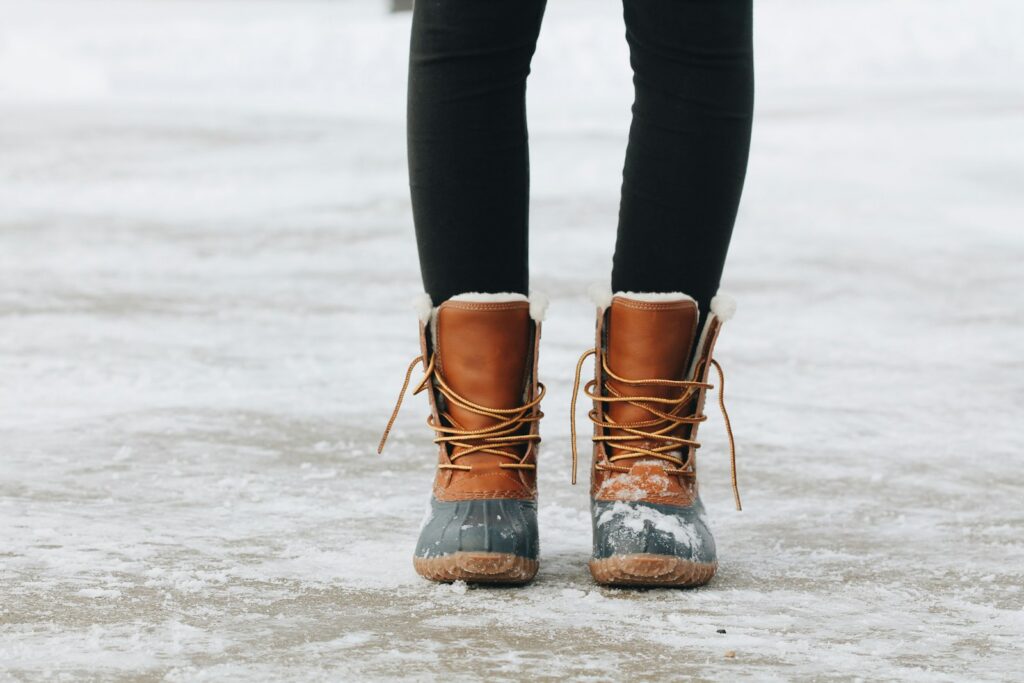
Kamik rarely gets the fashion coverage that Sorel does, which is part of the appeal. It is a practical Canadian snow-boot maker that publishes clear specs and lets the boots do the talking.
Kamik boots are the pair people in snowy places tend to recommend when you ask for something warm that does not cost a fortune. This review looks at what the brand actually is, what its best-known women’s model promises on paper, how Kamik sizing works, and how it compares with Sorel and Baffin. We have not run our own cold-chamber tests, so the specs below come from Kamik’s own product pages and the reporting in our winter fact sheet, and we say where a claim comes from. For the full spread of styles beyond snow boots, see our Women’s Boots.
Who makes Kamik boots
Kamik boots: current Amazon prices
As an Amazon Associate we earn from qualifying purchases. Prices and availability are accurate as of November 2026 and may change. Specs are as stated in each Amazon listing.

- Durable 600D nylon upper.
- Removable 8mm felt liner.

- Extreme Weather Performance: Kamik Men's Forester Insulated Rubber Boots are crafted to withstand harsh climates…
- Waterproof Durability: Conquer wet and muddy trails with the waterproof rubber upper that keeps feet dry…
- Secure Fit Comfort: The nylon collar with a drawstring closure ensures moisture and debris stay out…

- Reliable Warmth: Built with 145G HeatMX insulation and soft fleece lining with faux fur cuff to keep…
- Waterproof Protection: Features a seam sealed 600D nylon upper with polyurethane detail material and…
- Traction Outsole: Durable synthetic rubber base and outsole provide steady footing and reliable grip…
Kamik belongs to Genfoot Inc., a Montreal-area footwear company that is wholly owned by the Cook family. The company’s roots go back to a shoe factory in Contrecœur, Quebec, that operated from 1898; William Cook bought it in 1932, and it was renamed General Footwear in 1946. The Kamik brand itself was created in 1976. The name means “boots” in Inuktitut.
Kamik’s own site says that “70% of our footwear is made in North America” and that “100% of our production rejected rubber is recycled.” Those are brand claims, and the 70% figure is across the range, so do not assume any single model is made in Canada unless its listing says so.
Kamik snow boots: the Momentum 3 on paper
The women’s Momentum 3 is the model most shoppers land on, and it is the one where Kamik’s own numbers are clearest. On kamik.com, Kamik lists it with a “–40°F / –40°C rating”, a 145g HeatMX fixed liner, a seam-sealed waterproof nylon upper and a waterproof rubber base. Kamik describes the fit as “True to Size.”
Two details matter here. First, the liner is fixed, not removable. That keeps the boot lighter and less bulky, but it means you cannot pull the liner out to dry it overnight the way you can with a traditional pac boot. Second, the upper is nylon rather than leather, which makes the boot lighter and more casual-looking, and easier to wipe clean after slush and road salt.
Temperature ratings in general deserve some caution. Brands rate boots under their own assumptions about activity level and socks, and a boot rated very low will feel colder if you are standing still at a bus stop than if you are walking. Treat the rating as a comparison point between models, not a promise.
One common point of confusion: Kamik’s Snowcoast line is a kids’ and youth boot. Retailers list Snowcoast 3 with an 8mm removable liner, but it is not an adult women’s model, so do not buy it expecting adult sizing.
Kamik sizing
Kamik calls the Momentum 3 true to size. In practice, the deciding factor is your socks. If you plan to wear a thick wool or merino sock, try the boots on with that sock, or check the return policy before ordering. A boot that is snug with thick socks restricts circulation, and tight boots feel colder. Wiggle room at the toes is what you want. Our guide to Merino Wool Socks covers sock thickness and why wool helps in a winter boot.
Kamik vs Sorel and other alternatives
| Boot | Price tier | Warmth claim | Liner and build | Sizing note | Best for |
|---|---|---|---|---|---|
| Kamik Momentum 3 (women’s) | Value to mid | Official “–40°F / –40°C rating” on kamik.com | 145g HeatMX fixed liner, waterproof nylon upper, rubber base | Kamik says true to size | Everyday snow and slush on a budget |
| Sorel Caribou | Mid to upper | Long marketed as -40°F; reviewers disagree on whether Sorel still lists it | Removable 9mm felt InnerBoot, nubuck leather upper, vulcanized rubber shell (retailer spec) | Reviewers split between size down and true to size | Deep snow and a classic pac-boot look |
| Baffin Impact (men’s) | Upper | Official “Polar Rated”, comfort at -45°C to -60°C during moderate activity | Removable multi-layer inner boot | Baffin says it runs small; size up one full size | Extreme cold and long periods outdoors |
| The North Face Chilkat V | Mid | No official temperature rating found | 200g Heatseeker Eco insulation (400g in the Chilkat V 400) | Varies by reviewer | Lighter hiking-style snow boot |
The Kamik vs Sorel question is really about how you use the boot. The Momentum 3 is lighter and simpler, and its rating is published plainly by the brand. The Caribou is a heavier, more traditional pac boot with a removable felt liner that you can dry or replace, and a leather upper that many people prefer for looks. If you shovel the driveway, walk the dog and run errands, the Kamik covers you with less weight on your feet.
Baffin is in another category. The Impact is built for extreme cold and long, low-activity exposure, and Baffin itself tells you to size up a full size. It is more boot than most city or suburban winters need. Our Baffin Boots Review goes into the brand’s rating tiers.
The North Face Chilkat is the pick if you want something closer to a hiking boot in feel. It has no official temperature rating, so compare it on insulation weight rather than degrees.
The verdict
Kamik boots are the sensible choice for most people who deal with real snow but do not need an expedition boot. The Momentum 3 gives you a clearly published brand rating, a waterproof build and a true-to-size fit from a family-owned company with a long history in Canadian footwear. The honest negative is the fixed liner: if your boots get wet inside, you cannot pull the liner out to dry it, which is where a Sorel Caribou or Baffin has the edge. If you spend long, still hours outside in deep cold, pay more for a removable-liner boot. For everyone else, Kamik is where we would start. Look for the Momentum 3 from a seller with easy returns so you can check the fit with your winter socks: Kamik Momentum 3 Womens Winter Boots on Amazon.
Shop the look on Amazon
Everything you need to build a secondhand-style wardrobe, delivered. We may earn a commission on purchases.
FAQ
Are Kamik boots good quality?
Kamik publishes clear specs, including a seam-sealed waterproof upper and rubber base on the Momentum 3, and comes from a company with Canadian footwear roots going back to 1898. For everyday winter use it is a solid, practical choice.
Do Kamik boots run big or small?
Kamik describes the Momentum 3 as true to size. Try them with the socks you will actually wear, because thick socks change the fit.
Is Kamik better than Sorel?
Not better, different. Kamik is lighter and simpler with a fixed liner; Sorel’s Caribou is a heavier pac boot with a removable felt liner and a leather upper.
How do you dry Kamik boots that have a fixed liner?
Kamik boots with a fixed liner, such as the Momentum 3, should be dried at room temperature with the boot opened up as wide as possible, since the liner cannot be pulled out. Loosening the laces and stuffing the boots with absorbent paper, changed every few hours, draws moisture out of the lining. A low-heat boot dryer also works, but direct heat from a radiator or fire can damage the rubber base and glued seams.


