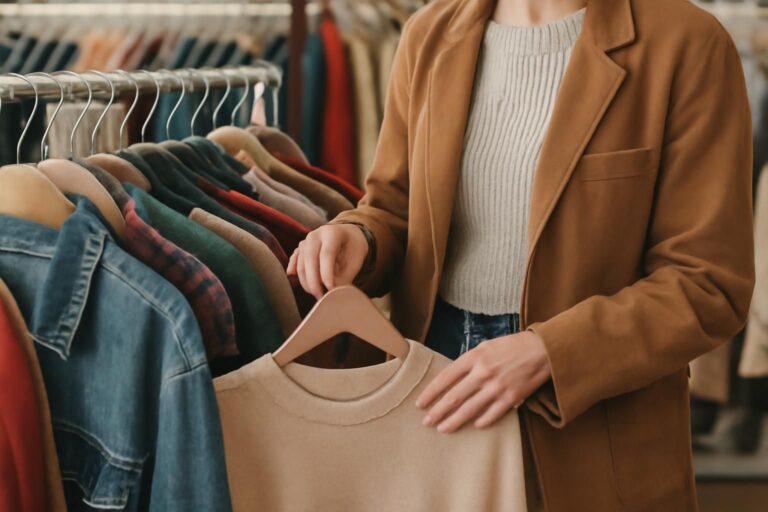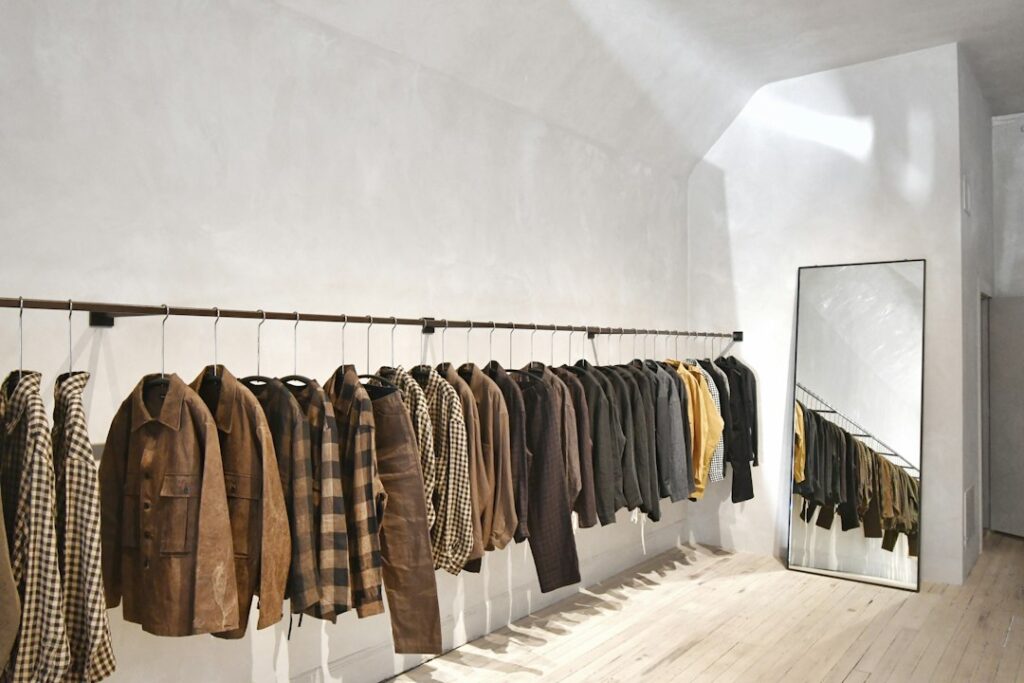
Every coat rack holds both, and stores file them under one menu heading, yet most people can sense the line between a jacket and a coat even if they could not define it.
The short answer to jacket vs coat: in common usage, a jacket usually ends at or around the hip, while a coat usually reaches the thigh or longer and is often heavier. That makes coats the usual choice for cold weather and for wearing over other layers, and jackets the lighter option. Retailers apply the terms inconsistently, though, so a “puffer jacket” can be warmer than a “rain coat.” This guide covers the word history, the coat vs jacket length question, and how to choose. For every style by name, see our Types of Coats and Types of Jackets hubs.
Where the words come from
The word history explains a lot. The Online Etymology Dictionary records “coat” from the early 14th century as the “principal outer garment, tunic, kirtle,” usually with sleeves, from Old French cote. It records “jacket” from the mid-15th century as a “short garment for men,” from Old French jaquet, “short coat with sleeves,” a diminutive of jaque, a kind of tunic of uncertain origin.
Put those two entries together and a jacket started out, quite literally, as a short coat. Length has been the dividing line from the start.
“Overcoat” came later. Etymonline records it from 1802 as a “large coat worn over ordinary clothing,” from over- + coat, with earlier words including overcloth (late 14th century) and overgarment (late 15th century). Our Peacoat vs Overcoat guide covers that pair in detail.
Comparison table
| Feature | Jacket | Coat |
|---|---|---|
| Typical length (common usage) | Waist to hip | Thigh, knee or longer |
| Typical weight | Light to mid-weight | Mid to heavy |
| Main job | Light layer, wind, mild weather, outfit piece | Warmth and cover over other clothes |
| Word recorded (etymonline) | Mid-15th century, “short garment” | Early 14th century, “principal outer garment” |
| Examples | Denim jacket, blazer, bomber, windbreaker | Overcoat, trench coat, wool coat, parka |
Coat vs jacket length and other checks
When a label does not settle it, these common rules of thumb do:
- Check where the hem falls. At or above the hip usually means jacket; mid-thigh or below usually means coat.
- Feel the weight. Heavy wool, thick insulation or a full lining point to a coat.
- Look at what it is designed to go over. A garment cut roomy enough to wear over a suit or a thick knit is generally a coat.
- Consider the job. If its purpose is warmth in winter, it is commonly called a coat even if it is short.
- Accept the exceptions. Tailoring keeps its own names: a suit “jacket” and a “sport coat” are both hip-length. Our Blazer vs Suit Jacket guide explains those.
The grey areas
- Puffers and parkas. A hip-length puffer is sold as a “jacket” yet can be very warm. A longer, hooded parka is usually called a coat. See Parka vs Puffer Jacket.
- Rain shells. “Rain jacket” and “raincoat” are both common, with the coat often longer. Our Windbreaker vs Rain Jacket guide covers the fabric side.
- Shackets. Shirt-jackets blur shirt and outerwear; see Shirt Jacket vs Coat.
When to wear each
Jackets
Jackets cover mild weather, transitional seasons and layering indoors. A denim jacket, bomber or light shell is a common spring and autumn choice. Our The Denim Jacket Guide and Men’s Lightweight Jackets guides cover favourites.
Coats
Coats come out for cold weather and for dressing up: a wool coat over tailoring, a trench for rain, a long parka for snow. Our Women’s Wool Coats guide covers fabric options.
Formal occasions
For evening events in winter, a longer coat over formal clothes is the common choice, because it covers a dress or suit completely. The host’s dress code still has the final word on what is underneath.
Choosing by season
A simple way to think about it, as common advice rather than a rule:
- Spring and early autumn: a jacket in denim, cotton or a light shell, worn open over a shirt or knit.
- Late autumn: a heavier jacket or a light coat, such as a trench, which gives extra cover without heavy insulation.
- Winter: a wool coat, a long parka or an insulated puffer, sized to fit over your warmest layers.
Can you swap them?
Often. On a mild day a light coat and a heavy jacket do the same job. The swap stops working at the extremes: a short jacket over a long dress or suit may leave the hem exposed, and a heavy long coat is too warm for a spring afternoon. Matching length and weight to the weather is the practical test.
Shopping now? Browse Womens Wool Blend Coat on Amazon, Mens Lightweight Jacket on Amazon or Mens Wool Overcoat on Amazon.
Top-selling match on Amazon

- Material: Polyester; Lightweight, Windbreaker, Breathable
- Feature: Rib Knit Cuffs, Waistband, Collar for comfort, Dual pen pockets on sleeve
- Multi-Pockets: 1 zipper sleeve pocket, 2 slant hand pockets, 1 inner pocket
Top-selling match on Amazon

- Material: The pea coat is made of high quality windproof and warm wool blend fabric, which is…
- Features: Classic midi long pea coats for women, featuring stand collar, single breasted…
- Occasion: This woolen peacoat perfect for daily wear, street wear, office, school, business…
Thrift tips
- Measure over a layer. Try coats on over the thickest knit you plan to wear with them; sizes vary by brand and era.
- Check the lining. Torn linings are common on secondhand coats and are a routine tailor repair.
- Inspect wool for moth holes and pilling. Hold it up to the light to spot small holes.
- Test zips and buttons. Replacing a long coat zip costs more than a button.
- Follow the care label. Many wool coats are dry clean only; use a professional cleaner where the label says so.
Shop the look on Amazon
Everything you need to build a secondhand-style wardrobe, delivered. We may earn a commission on purchases.
FAQ
What is the difference between a jacket and a coat?
In common usage, length and weight. Jackets usually end around the hip and are lighter; coats usually reach the thigh or longer and are heavier. Retailers use the words inconsistently.
Is a jacket a type of coat?
Historically, yes. The Online Etymology Dictionary traces “jacket” to Old French jaquet, “short coat with sleeves.”
How long is a coat compared with a jacket?
There is no official measurement. A coat commonly reaches mid-thigh or below, and a jacket ends at or around the hip.
Is a puffer a jacket or a coat?
Both names are used. Hip-length styles are usually sold as jackets and longer ones as coats.
When did the word overcoat appear?
Etymonline records “overcoat” from 1802 as a “large coat worn over ordinary clothing.”