Linen is easier to care for than its reputation suggests. A cool, gentle wash, a light spin and air drying keep a linen shirt or dress soft, sized right and ready for summer after summer.
Knowing how to wash linen mostly means knowing what to skip: hot water, hard spins, wringing and the tumble dryer. The Alliance for European Flax-Linen & Hemp, the European industry body for flax and linen, publishes clear care advice, and this guide follows it step by step for machine and hand washing, then covers drying, ironing and what to avoid. For background on the fabric, start with our guide to What Is Linen? Flax Fiber, Feel and Care.
Quick answer: Follow the care label, then wash linen on a delicate programme at 30 °C (about 86 °F) with a mild detergent, use a low spin, do not wring, and dry it in the open air away from direct sunlight. Iron while still slightly damp.
What you need
- The garment’s care label
- A mild detergent. The Alliance suggests “a mild and if possible natural detergent,” such as a Gentle Plant Based Laundry Detergent on Amazon
- A washing machine with a delicate programme, or a clean basin for hand washing
- A padded hanger or drying rack
- An iron or a steamer
Top-selling match on Amazon

- Plant-Based Laundry Detergent: Biokleen uses plant-derived cleaning agents to eliminate tough stains and odors…
- Hypoallergenic Formula: Biokleen Free & Clear uses a hypoallergenic formula that works great in High…
- Ultra-Concentrated: Biokleen laundry products are 3X concentrated to reduce packaging, waste and energy.
How to wash linen in the machine
The Alliance’s first rule is the one to remember: “Always follow the instructions on the labels. They indicate the wash cycle and temperature to be used.” Steps credited to the Alliance follow its guidance; the rest are a common method.
- Check the care label for the cycle, temperature and drying method.
- Sort linen by colour and keep heavy items such as jeans and towels out of the load.
- Fasten buttons and turn darker pieces inside out.
- Select a delicate programme, as the Alliance recommends.
- Set the temperature to 30 °C, the Alliance’s suggested setting, unless the label says otherwise.
- Add a mild detergent at the dose on the bottle.
- Choose a low spin. The Alliance warns that “too much spin can not only wrinkle the flax, but also reduce its longevity.”
- Remove the linen promptly when the cycle ends so creases do not set.
How to hand wash linen
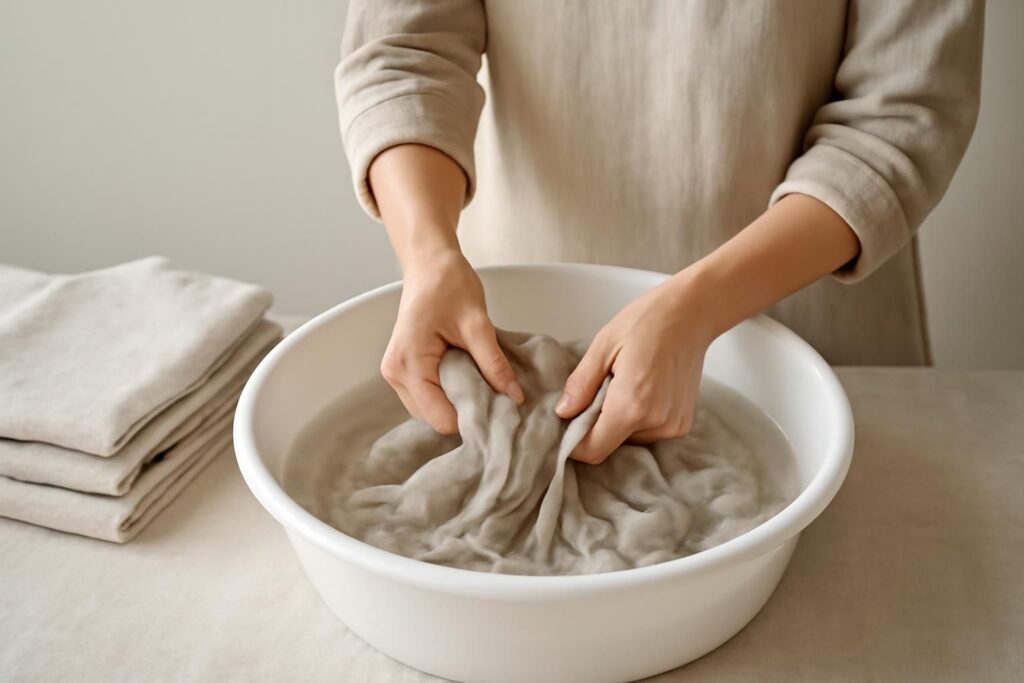
Hand washing suits delicate linen, embroidered pieces and anything you want to treat with extra care. A common method:
- Fill a clean basin with cool water.
- Stir in a small amount of mild detergent.
- Submerge the garment and swish it gently.
- Let it soak for a short while.
- Drain and rinse in clean cool water until no suds remain.
- Press the water out gently. Do not wring: the Alliance says heavy wringing “could cause marked folds.”
- Roll the piece in a towel to absorb excess water.
Our guide to How to Hand Wash Clothes (Delicates, Wool and Dresses) has more on technique for all fabrics.
Drying linen
The Alliance says “it is best to dry the flax in the open air, away from direct sunlight.” Shake each piece out, smooth the collar, cuffs and seams, and hang shirts and dresses on a padded hanger or lay heavier pieces over a rack. A set of Padded Hangers For Clothes on Amazon keeps shoulders from picking up hanger bumps while the fabric dries.
Can linen go in the dryer?
The Alliance discourages tumble dryers, because “excessive heat can alter the quality of the fabric and possibly cause shrinkage.” If a label explicitly allows tumble drying, a common method is to use the lowest heat, keep the cycle short and remove the piece while still damp. Clean the lint screen after every load, as the American Cleaning Institute recommends. Our guide on whether Does Linen Shrink? Washing Linen Without Surprises goes deeper into heat and shrinkage.
Ironing and steaming linen
The Alliance recommends ironing linen while it is “still slightly damp,” at medium-high heat, on the reverse side. Ironing the reverse helps avoid shine on darker colours. On irons with dot settings, linen sits at three dots (about 200 °C) according to summaries of the ISO 3758 / GINETEX care symbols, but follow the label first, especially for blends.
Linen wrinkles because flax has low elasticity, which linen sources describe as a property of the fibre, not a flaw. Plenty of people enjoy the relaxed look. If you want a smoother finish without an iron, a Handheld Clothes Steamer on Amazon works well, and our guide to How to Get Wrinkles Out of Clothes Without an Iron has more options.
Top-selling match on Amazon

- Leak-Proof Design: Steam at Any Angle Without Dripping:No one wants wet spots. Our clothes steamer…
- Fabric-Safe Steaming: Test on an Old Garment First:Before first use, test on an old garment — residual…
- Smart Safety Protection: Built-In Thermal Fuse:This clothes steamer handheld is equipped with an automatic…
What to avoid
- Hot water. Whirlpool notes natural fibres like linen can shrink in warm or hot water.
- High spin and wringing, which the Alliance links to wrinkles, folds and shorter fabric life.
- The tumble dryer, which the Alliance discourages.
- Direct sunlight while drying.
- Repeated chlorine bleach. The Smithsonian Museum Conservation Institute says repeated use on cotton and linen causes yellowing and weakening over time. Never mix bleach with ammonia or vinegar; if anyone is exposed to the fumes, call US Poison Control at 1-800-222-1222.
Linen blends and stains
Linen-cotton and linen-rayon blends may carry different care labels from pure linen, so follow the label on each piece. Rayon in particular is among the fibres most likely to shrink; see Does Rayon Shrink? Why Rayon Needs Gentle Care.
For fresh stains, a common method is to blot (not rub) the spot, rinse it from the back with cool water, and treat it with a little mild detergent before washing. Test any stain treatment on a hidden area first, as the Smithsonian Museum Conservation Institute advises, and do not put the piece in a dryer until the stain is gone. Dry-clean-only linen should go to a professional cleaner.
Thrift note
Secondhand linen is often softer than new, because the Alliance notes linen “becomes more flexible and soft over the washing.” Check the fibre content on the label, look for yellowed areas near collars and underarms, and give a new-to-you piece a cool, gentle wash before wearing. For styling ideas, browse Mens Linen Shirts or Linen Outfits for Women.
Frequently asked questions
What temperature should I wash linen at?
The Alliance for European Flax-Linen & Hemp suggests 30 °C (about 86 °F) on a delicate programme, unless the care label says otherwise.
How do I wash a linen shirt?
Fasten the buttons, wash on a delicate cycle at 30 °C with mild detergent and a low spin, then hang it on a padded hanger to dry and iron it while slightly damp.
Can you put linen in the dryer?
The Alliance discourages it, because excess heat can alter the fabric and possibly cause shrinkage. Air drying is safer.
Does linen get softer with washing?
Yes. According to the Alliance, linen “becomes more flexible and soft over the washing.”
Shop the look on Amazon
Everything you need to build a secondhand-style wardrobe, delivered. We may earn a commission on purchases.