
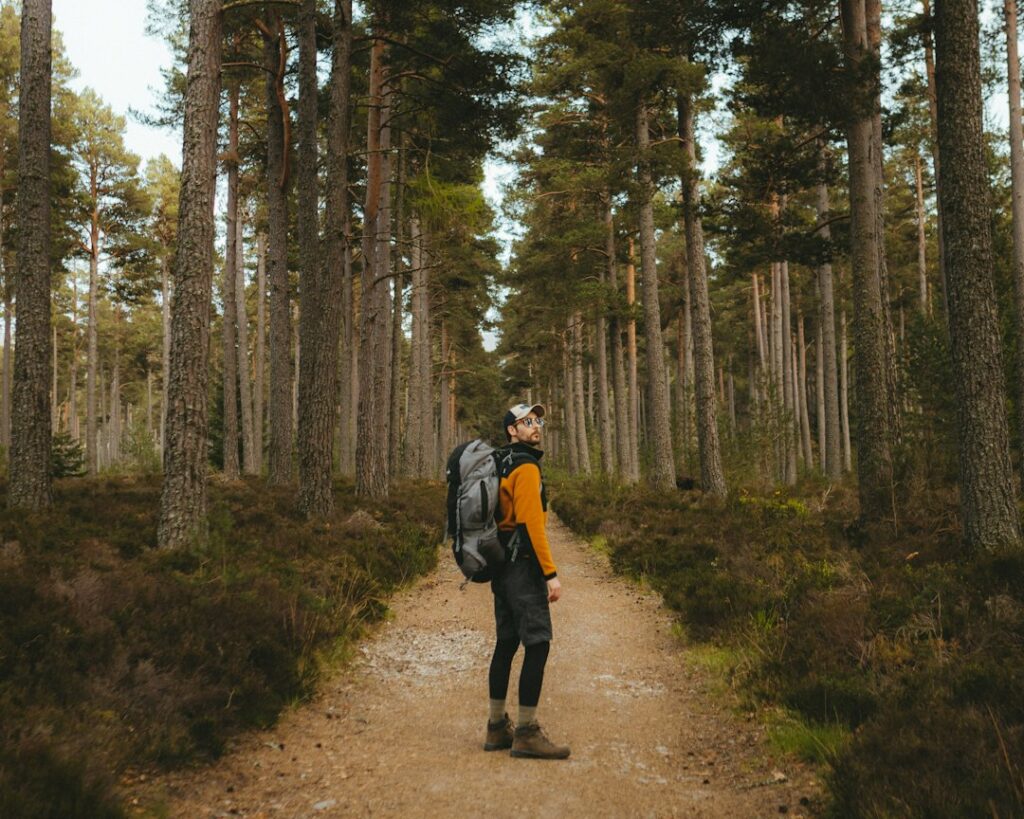
A good hiking outfit is less about how it looks at the trailhead and more about how it feels three hours in, when the weather has changed twice.
The best hiking clothes work as a system: layers you can add or remove, fabrics that handle sweat, footwear matched to the trail, and sun protection for exposed stretches. This guide covers the layering approach REI recommends, which fabrics to choose and which to skip, how to pick between boots, hiking shoes and trail runners, and outfit formulas for each season. For performance fabrics and athletic basics beyond the trail, see our Activewear and Athleisure.
The layering system for hiking
REI’s layering guidance breaks outdoor clothing into three layers, each with a job:
- Base layer: sits against the skin and wicks sweat away. Synthetics, merino wool and silk in a snug fit are the usual choices.
- Midlayer: insulates by trapping warmth. Fleece, a light puffy jacket or a down vest all work.
- Outer layer: blocks wind and rain. A rain shell or wind jacket.
The point of the system is flexibility. You add or remove layers as conditions change: start a climb cold, shed the midlayer once you warm up, then put it back on at a windy summit. National Weather Service guidance on cold weather makes a related point, that trapped air between layers insulates and that you should shed layers before you sweat, because damp clothing chills you quickly once you stop moving.
Why to skip cotton
REI advises avoiding cotton for active cold-weather use because it holds moisture. A cotton T-shirt soaked with sweat stays wet and cold against your skin on a breezy ridge. Synthetic and merino base layers dry faster and keep insulating when damp, which is why they are the standard for hiking clothes.
Key pieces for women’s hiking outfits
Tops
A moisture-wicking short-sleeve or long-sleeve top is the foundation. Long sleeves add sun protection; REI notes that sun-protective clothing such as long-sleeve shirts and pants reduces sun exposure. A lightweight button-up hiking shirt with roll-up sleeves is another popular choice for warm, sunny trails. Search Womens Hiking Shirt Long Sleeve Sun Protection on Amazon for options.
Top-selling match on Amazon

- Polyester Material, Lightweight, Quick Dry, Moisture Wickingand Comfortable
- Womens Sun Shirts with Long Sleeve UPF 50+ UV Protection, Provides Maximum Sun Protection Can…
Bottoms
Hiking pants in a quick-drying, stretchy synthetic are the most versatile option. Convertible pants with zip-off legs switch to shorts as the day warms. Hiking shorts and skorts work on warm, well-maintained trails, while athletic leggings are a comfortable choice for many hikers, though they snag more easily on brush. Our guide to Leggings with Pockets covers pairs with room for a phone or trail map. Search Womens Hiking Pants Quick Dry Stretch on Amazon for trail pants.
Top-selling match on Amazon

- Cargo Pants For Women: Skin-friendly, lightweight, quick dry, breathable, wrinkle-free fabric features a…
- Convertible Capri Design: Features roll-up capability around the knee parts to keep cooling when hiking and…
- Multiple Zipper Pockets: Includes 2 front slant pockets, 1 rear pockets, and 2 thigh cargo pockets designed…
Midlayers and outer layers
A fleece jacket or a light insulated jacket handles most midlayer needs. For the outer layer, a packable rain jacket is the piece most worth having. REI explains that 2.5-layer rain shells are light, packable and economical, while 3-layer shells are generally the most durable and breathable. Our Women’s Rain Jackets guide compares the options in detail.
Socks
Moisture-wicking hiking socks in merino or synthetic blends reduce friction and help prevent blisters. Avoid cotton socks for the same reason as cotton shirts.
Hiking footwear: boots, shoes or trail runners
According to search summaries of REI’s footwear guidance, hiking footwear falls into three broad types:
- Hiking boots: heavier and stiffer, often rising above the ankle and often waterproof.
- Hiking shoes: lighter and low-cut, breathable and quick to dry.
- Trail runners: the most flexible and breathable option, but less durable.
REI’s advice is to match footwear to terrain and load. Light, groomed trails suit hiking shoes or trail runners. Carrying a heavy pack, or needing more support on rough ground, points toward a boot. Whatever you choose, break new footwear in on short walks before a long hike. Search Womens Waterproof Hiking Boots on Amazon if you are leaning toward boots.
Sun protection on the trail
The National Park Service includes sun protection in its Ten Essentials, listing sunglasses, sunscreen and a hat to protect skin and eyes from the UV rays it describes as responsible for sunburns and skin cancer. REI adds, according to search summaries, that a brimmed hat helps shield the head, neck and face, and that you should reapply sunscreen after sweating and wear it in winter and on overcast days too. A wide-brimmed hat or a cap with a neck flap, sunglasses and long sleeves cover the basics.
Hiking outfits by season
| Season | Base and top | Bottom | Layers and extras |
|---|---|---|---|
| Summer | Lightweight wicking tee or sun shirt | Hiking shorts, skort or light pants | Brimmed hat, sunglasses, sunscreen, packable rain shell |
| Spring | Long-sleeve synthetic base | Convertible hiking pants | Fleece, rain jacket, waterproof shoes for mud |
| Fall | Merino long-sleeve base | Hiking pants or fleece-lined leggings | Fleece or light puffy, rain shell, hat and gloves, bright colors |
| Winter | Midweight base layer top and bottoms | Insulated or lined hiking pants | Insulated jacket, waterproof shell, warm hat, mittens, waterproof boots |
Bright colors in fall and beyond: the National Park Service notes that bright clothing makes you easier to see in case Search and Rescue needs to look for you, which is worth remembering on remote or seasonal trails.
Winter: National Weather Service guidance recommends layers of loose-fitting, lightweight, warm clothing, covering exposed skin, and notes that mittens are better than gloves for warmth. Our Winter Outfits for Women guide covers cold-weather layering beyond the trail, and Fleece-Lined Leggings covers warm leggings for chilly hikes.
Pack extra clothing
The Park Service’s Ten Essentials list includes extra clothes: a jacket, hat, gloves, rain shell and other layers, packed to prepare for sudden changes in weather. Even on a sunny day hike, a rain shell and a warm layer in your pack weigh little and can make a big difference if conditions turn.
Building a hiking wardrobe on a budget
Outdoor clothing is durable by design, which makes it a strong category for secondhand shopping. Thrift stores and resale apps often carry fleece jackets, synthetic base layers and hiking pants in good condition. Check zippers, seams and the inner coating of rain jackets for peeling. Footwear is better bought new or barely worn, since boots and shoes shape to their previous owner’s feet. If you play other outdoor sports, see our guides to Golf Outfits for Women and Pickleball Outfits.
Hiking clothes FAQ
What should a beginner wear hiking?
A moisture-wicking top, quick-dry hiking pants or leggings, hiking socks, footwear suited to the trail, a hat and sunglasses. Pack a rain shell and a warm layer.
Can I hike in leggings?
Yes, many hikers do. Leggings are comfortable and stretchy, but they can snag on brush and offer less protection on overgrown trails than hiking pants.
Do I need hiking boots for a day hike?
Not always. REI suggests hiking shoes or trail runners for light, groomed trails, and boots when you carry a heavy pack or want more support.
Is cotton bad for hiking?
REI advises avoiding cotton for active cold-weather use because it holds moisture. Synthetic or merino layers are better choices.
Can you wear jeans for a hiking outfit?
Jeans are a poor choice for most hikes because denim is usually cotton, which holds sweat and rain and stays cold and heavy once wet. REI advises avoiding cotton for active cold-weather use for exactly this reason. Quick-dry, stretchy synthetic hiking pants or athletic leggings move better on climbs and dry faster. On a short, dry, easy walk jeans will do, but pack a synthetic or fleece layer in case the weather turns.
Shop the look on Amazon
Everything you need to build a secondhand-style wardrobe, delivered. We may earn a commission on purchases.


