
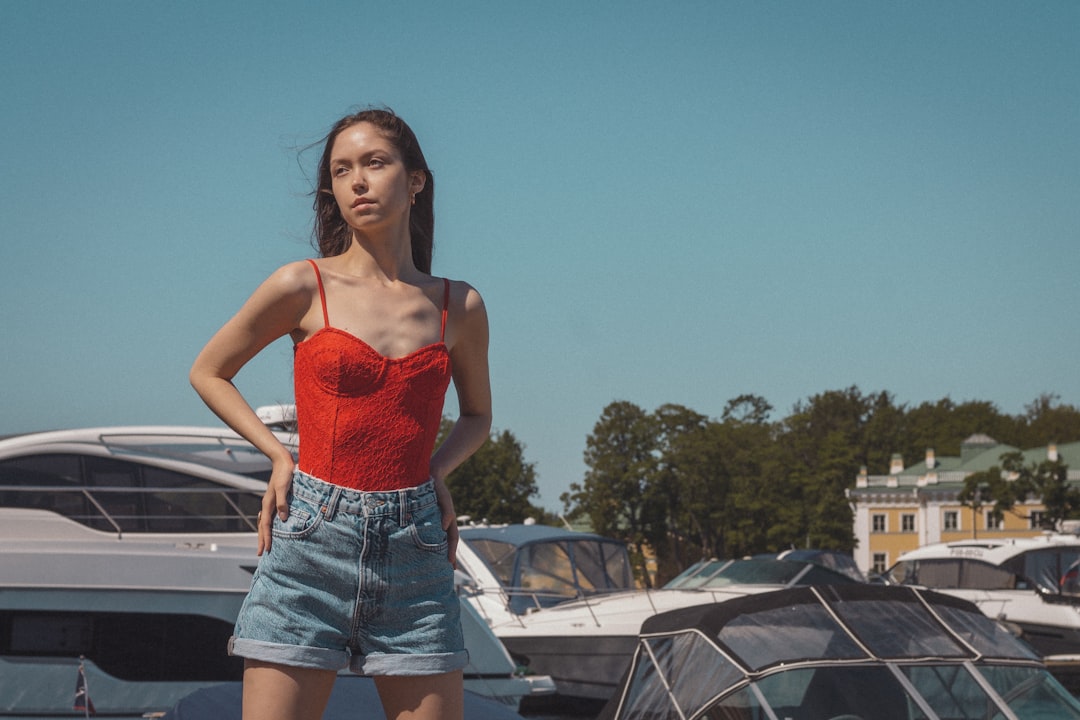
High waist denim shorts are the rise most people default to now, and for good reason — they hide more, flatter more, and stay in place better than lower-rise alternatives. They also dominate the market to the point where finding a non-high-waist short is harder than it should be.
I’ve worked through more high waist shorts than any other category this year because they’re simultaneously the most reliable and the most variable. “High waist” gets slapped on everything from a 9-inch rise (which is actually mid-rise) to a 13-inch rise (which is borderline waistline-reaching-your-ribs). After testing a dozen pairs across brands, here’s the honest breakdown. For the full short landscape, see our Brand Guides hub. For the anchor article, High Waisted Jean Shorts covers the cross-brand specifics in more detail and Jean Shorts covers every cut.
What “high waist” should actually measure
High waist denim shorts should have a rise of at least 10 inches — that’s the minimum for the waistband to sit above the hip bones and at or near the natural waist. Premium high waist cuts run 11-12 inches. Ultra-high waist (sometimes labeled “super high rise”) is 13 inches or more.
Anything labeled “high waist” with a rise under 10 inches is misleading. It’s mid-rise with marketing spin. Always check the actual rise measurement in the product specs before buying. I’ve returned multiple pairs that measured 9 inches despite being marketed as high waist.
On my 5’7″ frame, a 10-inch rise sits slightly below my natural waist. An 11-inch rise sits at my natural waist (the narrowest part of my torso). A 12-inch rise sits slightly above, which is the Ribcage Levi’s territory. For shorter torsos, the same rise measurements sit higher relative to your body.
Why people want high waist shorts
Three reasons. First, coverage — high waist shorts hide more of the midsection, which reads as flattering to most body types. Second, stability — the high rise keeps the shorts in place without constant adjustment. Third, visual lengthening — shorts that sit at the natural waist make the legs look longer than shorts that sit at the hip.
The trade-offs: high waist can feel restrictive when seated. Ultra-high-rise pairs can ride up into the rib cage on shorter torsos. High waist also emphasizes the midsection by drawing attention there, which some people want and some don’t.
If you’ve always worn low-rise or mid-rise shorts and are transitioning to high waist, start at 10-10.5 inches rather than jumping to 12+. The higher cuts take some getting used to and can feel aggressive at first. Ease in.
Brands that actually deliver high waist
Levi’s Ribcage short is the benchmark for high waist in the mid-tier. Honest 11-inch rise, rigid denim, classic silhouette. I bought a pair in a mid-wash and wear them more than almost anything else. Fit is true to size (I take my usual 29), shape holds through dozens of washes. The only issue: the waistband can feel snug when seated until it breaks in.
Levi’s Wedgie short is the other reliable option — slightly lower rise than Ribcage (around 10 inches), designed to sit at the natural waist. More forgiving for shorter torsos. Same rigid denim quality.
Abercrombie’s Curve Love high-rise short is the pick if your hip-to-waist ratio is significant. The Curve Love cut adds 2 inches of hip and thigh room at the same waist size, which prevents the waist from gapping at the back. At 10-11 inch rise, it’s properly high waisted. True to size if you’re a Curve Love regular.
Agolde’s Parker Long and Parker Vintage run high waist at around 11-12 inches. Premium denim, premium price. The best wash work in the category. Madewell’s curvy and regular high-rise shorts sit at around 10-11 inches — softer denim, slightly less structured than Levi’s.
Gap’s high-rise short lands at around 10.5 inches, which is honest high waist. Cotton-heavy denim, reasonable pricing, goes on sale often. High Waist Denim Shorts on Amazon is a broad search with mixed results; stick to major brands.
The back waist gapping problem
The most common high waist fit issue: gapping at the back waistband. High rise cuts often assume a straight torso rather than a defined lumbar curve. If you have any curve in your lower back, the waistband can stand away from your skin by half an inch to a full inch.
Solutions, in order of effectiveness: buy a contoured waistband cut (one that’s curved to follow the body rather than straight across). Abercrombie’s Curve Love and Levi’s Wedgie both have contoured waistbands. Alternatively, size down one size in a non-contoured cut — if the overall fit is slightly snug, the waist gap minimizes. Finally, a tailor can take in the back waist for $10-15 on a pair you’ll wear a lot.
Never accept a gap over half an inch. It looks unfinished, catches on layers underneath, and defeats the structural purpose of a high waist. If a pair fits everywhere except the back waist, it’s worth altering. If it fits nowhere correctly, return and try a different cut.
The muffin top issue
High waist shorts can create a muffin top if the waistband is too tight. This is almost always a sizing issue, not a cut issue — the shorts are a size too small. The fix: size up.
Counter-intuitively, a too-large high waist short also creates a muffin top, because the waistband slides down toward the hip and then creates pressure at the widest point. If your shorts don’t stay at your natural waist, they’re not doing their job.
The correct fit: the waistband sits at or just below the natural waist without digging in, and stays there throughout the day. You should be able to slide a flat hand under the waistband without strain, but not a full fist. That’s the benchmark.
Fabric weight matters at high rise
High waist shorts in lightweight stretchy fabric sag visibly by mid-afternoon. The waistband drifts down, the fabric bunches at the hip, and the high-rise advantage disappears. Heavier fabric (11 ounces minimum, ideally 12+) holds the shape.
Low stretch (under 2% elastane) is strongly preferred for high waist shorts. The rigidity of the fabric is part of what keeps the rise in position. High stretch high waist shorts end up functioning more like mid-rise because the fabric can’t hold the vertical structure.
Rigid Levi’s and Agolde denim both hold position beautifully. Stretchier pairs from Abercrombie and fast-fashion brands work but require more frequent adjustment. Factor this into your expectations. See Jean Shorts for broader fabric guidance.
Styling high waist shorts
Tops tuck into high waist shorts naturally, which is the easiest styling move. A fitted tank tucked fully in, a t-shirt half-tucked at the front, a button-down tucked and slightly bloused — all work. Cropped tops that hit at the waistband also work cleanly.
What’s tricky: longer tops hanging over the waistband. Because the waistband sits high, a long top that covers it obscures the very thing that makes high waist shorts flattering. You end up with a silhouette that looks like you’re wearing something shorter than you are. Either tuck, half-tuck, or wear shorter tops.
Footwear is flexible. Sneakers, sandals, loafers, heels all work with high waist shorts. Because the rise visually lengthens the leg, high waist pairs look great with almost any shoe. The one caution: ankle boots can look heavy paired with high waist shorts in summer weather — the thermal mismatch reads odd.
Care and longevity
Cold wash, inside out, hang dry or tumble low. Same routine as any quality denim. High waist shorts specifically benefit from air drying — the heat from a tumble dryer can shrink the rise by a quarter to half an inch over time, which changes how the shorts sit meaningfully.
Expect a well-made high waist pair to last three-plus summers of heavy rotation. Levi’s Ribcage pairs in my closet are two summers in and still look new. Agolde pairs can push five years with proper care. Cheaper high waist pairs typically last one to two summers.
The verdict
High waist denim shorts are the rise most people should default to, but the market is full of mislabeled pairs that don’t actually deliver. Levi’s Ribcage is the baseline — honest rise, rigid denim, reliable fit. Wedgie is the slightly-lower alternative that suits shorter torsos better. Abercrombie’s Curve Love handles hip-to-waist ratios that other brands gap at. Agolde is the premium splurge. Always check the actual rise measurement in inches, not the label. Aim for 10.5-12 inches for proper high waist. Don’t accept back waist gapping over half an inch — alter or return. Pair with tucked or cropped tops to keep the rise doing its job. My most-worn high waist pair this year is a Levi’s Ribcage in dark wash, worn probably forty times since April. They’re the pair I reach for when I want shorts that just work. That’s the endorsement.
Shop the look on Amazon
Everything you need to build a secondhand-style wardrobe, delivered. We may earn a commission on purchases.
FAQ
What is considered high waist in denim shorts?
A rise of 10 inches or more. Premium high waist cuts run 11-12 inches. Anything under 10 inches is functionally mid-rise despite marketing. Always check the actual rise measurement.
Are high waist denim shorts flattering?
For most body types, yes. The high rise creates a visual-lengthening effect on the legs and covers more of the midsection. They also stay in place better than lower rises. The main caveat is for very short torsos, where ultra-high rises can feel crowded.
How do high waist shorts fit?
The waistband should sit at or just below the natural waist, snug but not tight, and stay there throughout the day. You should be able to slide a flat hand under the waistband. A waistband that drifts down is either too large or in a cut that doesn’t suit your torso.
Why do my high waist shorts gap at the back?
Because most high waist cuts assume a straight torso, not a defined lumbar curve. The fix is a contoured waistband cut (Levi’s Wedgie, Abercrombie Curve Love), sizing down slightly, or tailor alteration.
What’s the difference between high waist and high rise denim shorts?
The terms are used interchangeably. Some brands use “high rise” and some use “high waist” — the measurement definition is the same (10+ inch rise). Both sit at or near the natural waist.


