There are three versions of the Gap jean jacket most shoppers end up choosing between: the mainline Icon in medium indigo, the Gap black denim jacket, and the lower-priced Gap Factory version sold through Gap’s outlet business. Here is which is worth the money and which isn’t.
Most articles about the Gap jean jacket stop at the product page. This one walks through how the versions differ in fit, fabric and construction, how denim jackets like these age, and how Gap compares with Levi’s, Madewell and Old Navy. If you’re still trying to figure out whether Gap is the right brand for you, start with the broader Brand Guides pillar; if you’re already set on Gap and want the detail on which Gap, keep reading. Fair warning: the answer is not always “buy the most expensive one.”
Quick answers
How much is the Gap Icon Denim Jacket?
It lists at $89.95 on gap.com as of November 2026, and Gap’s frequent promotions often bring it lower. For a specific pick, see the GAP Women’s Cropped Denim Jacket.
Is the Gap Factory jean jacket the same as the mainline Icon?
No. Gap Factory is Gap’s outlet line, and its Icon-style jackets are a separate, lower-priced product rather than the mainline jacket. For a specific pick, see the GAP Women’s Icon Denim Jacket.
Is a Gap jean jacket the same as a Gap denim jacket?
Yes. Gap sells it as the Icon Denim Jacket; “jean jacket” is the everyday name for the same garment.
What’s actually in the Gap jean jacket family
There are, in practice, four Gap jean jackets you’ll encounter if you shop around:
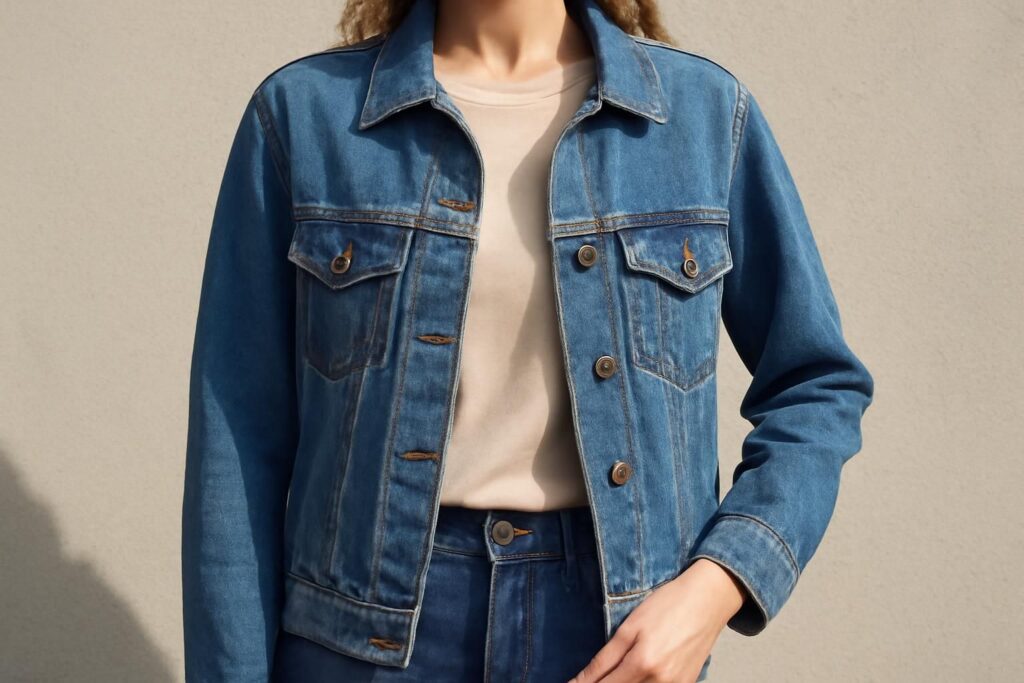
The Gap Icon Denim Jacket is the mainline — the classic trucker silhouette, most commonly sold in medium indigo, available in black, light, and occasionally in seasonal washes. It is covered in detail in our Gap Denim Jacket breakdown. It’s the flagship, and it lists at $89.95 on gap.com as of November 2026, before Gap’s frequent promotions.
Gap 1969 pieces come from Gap’s premium denim label, which launched with jeans in 2009 and was revived for Gap’s 50th anniversary in 2019 with Japanese denim from Kaihara. It is not a regular part of Gap’s current lineup, so 1969 jackets mostly turn up secondhand.
Gap Factory (Gap Outlet’s online presence) sells near-identical cuts to the Icon but made to a different spec — thinner fabric, lighter-feel hardware, sometimes a slightly different fit block. Not quite the same jacket, despite looking like it online.
Then there are seasonal and limited drops — cropped versions, oversized versions, colored denim, patchwork. These come and go. If you’re asking “does Gap make X kind of jean jacket,” the answer is usually “they have, at some point.” Whether they have it right now is a different question.
When people say “Gap jean jacket” they usually mean the Icon. This guide focuses there, with specific notes on the black version and on Gap Factory where relevant.
Fit and sizing: Icon, black and Gap Factory
Start with Gap’s size chart and your chest and shoulder measurements rather than your usual letter size from another brand.
A classic trucker like the Icon should fit with a little ease through the bust when buttoned, sleeves ending at the wrist bone, and the hem at the high hip. If the hem falls well below the hip or the sleeves cover your hand, try a size down or a petite length.
The Gap black denim jacket uses the same Icon cut in a black wash, but dyed and finished fabric can feel slightly different through the shoulders, and small variance between production batches is normal for any brand. If you plan to layer a thick sweater underneath, check the shoulder fit carefully before the return window closes.
Gap Factory versions that look like the Icon online are often cut on a slightly different block, which can mean a looser shoulder, longer sleeves and a more casual overall silhouette than the mainline. Not a bad thing, but different, so don’t assume your mainline size carries over.
Takeaway: Gap jean jacket sizing is reasonably consistent within the mainline Icon, but Factory is its own thing. If you’re buying Factory, consider sizing down one from your mainline Gap size. And if you’re specifically buying the black version, try to order from a retailer with free returns in case the shoulder fit differs.
Petite and tall notes
If the regular length hits too long or too short, check whether the style comes in petite or tall lengths, or consider a Short Jean Jacket cut — the regular length hits longer than a classic trucker is supposed to on shorter frames, which can make the whole proportion look off. Petite-specific options also help you avoid doing sleeve alterations later. If you’re plus size, check the jacket’s size chart for its extended sizes, since not every style comes in every size.
Fabric differences between Gap jean jackets
The Icon in medium indigo is a soft, mid-weight cotton denim (check the label for the current blend, since Gap adjusts fabric by season). It feels soft from the start, softens more with washes, and drapes with a slight slump rather than crisp structure. Mainline denim jackets at this level typically hold up well for years with sensible care; the usual first signs of wear are a loosened button or a thread pull rather than thinning.
The black denim jacket is the same fabric spec on paper but can feel slightly stiffer at first. Black denim often uses a heavier dye coat, which can make the fabric feel more robust out of the bag, and it softens with the first few washes. Worth noting: black denim fades differently than indigo. You’ll see more graying and less of the light-and-dark contrast that makes indigo age beautifully. Over many washes, pure black drifts toward a soft charcoal, which some people like and some don’t.
Outlet versions like Gap Factory are often made in lighter fabric, with a more “shirt-jacket” hand that doesn’t drape like the mainline Icon. Lighter fabric and simpler construction usually mean weak points appear sooner, such as pocket corners and seams under stress. Compare the fabric content and feel in person if you can, because it is a different manufacturing spec.
Wash results and durability
A medium indigo jacket fades with washing, and the fade concentrates where the fabric rubs and folds: the cuffs, elbows, and button placket. Loose buttons and small thread pulls at the yoke are the most common minor issues. Hang-dry rather than tumble-dry, since high dryer heat shrinks and stresses denim. For routine care, wash cold, inside out, with other denim.
The black Gap jacket softens toward charcoal over time, with lighter spots at stress points. Hardware can look more worn on black, because the contrast between metal buttons and a dark wash highlights any scuffing. Otherwise it is structurally the same as the indigo jacket.
A lighter outlet jacket like Gap Factory’s is more likely to show pocket and seam stress, pilling, and thinning at the elbows sooner. Not a disaster, but it is a more disposable product than the mainline Icon, better suited to casual, “don’t care” days.
Durability verdict: the mainline Gap Icon is a multi-year jacket if you care for it, and Gap Factory is likely to wear out sooner. The price difference between them is usually smaller than the durability difference. Buy the mainline.
When to choose Gap black denim jacket over indigo
The black version is its own style decision, not just a color variant of the indigo. Here’s how to frame it.
Choose black if you want a jean jacket that can function as a blazer-substitute — over a silk top with black trousers, under a wool coat with the collar peeking out, as a jacket for evenings where indigo reads too casual. Black also layers beautifully over black dresses, which indigo doesn’t always do without looking accidental.
Stay with indigo if you want a classic Americana jean jacket. Indigo is the default for a reason — it reads denim-forward, it fades beautifully, it works with more washes of jeans. A blue denim jacket is more versatile overall; a black denim jacket is better at one specific thing (looking a little more polished).
If you’re buying your first jean jacket, get indigo. If you’re buying your second, black makes a stronger case. A two-jacket rotation of medium indigo Icon + black Icon covers almost every context. For more on why dark and black washes read elevated, the Dark Wash Denim Jacket piece covers the specifics.
Gap jean jacket vs. the wider jackets denim jacket market
Compared to other mainstream brands, here’s where Gap sits:
Levi’s Original Trucker: roughly the same price. The Levi’s is rigid (or near-rigid) cotton, breaks in over weeks, develops more dramatic patina over years. The Gap is softer, more forgiving, easier to wear out of the bag. Neither is objectively better — they serve different preferences. For a jacket you’ll own for five-plus years, lean Levi’s. For a jacket you want to wear immediately and comfortably, Gap.
Madewell classic: noticeably more expensive. Madewell is better tailored through the shoulder, uses nicer hardware, and has a slightly higher-quality finish. Worth the upcharge if shoulder fit matters to you or if you want premium hardware. Skip it if you’re fine with Gap’s fit and don’t care about brand.
Old Navy classic trucker: much cheaper. Old Navy is Gap’s sibling brand; the trucker is essentially the budget version of the Gap Icon. Fine as a beater or first jacket for a teenager; not the best pick for a primary adult jacket.
Zara, H&M, and fast-fashion equivalents: cheaper, and the difference shows. H&M is covered specifically in the H&M Denim Jacket comparison. Fabric, hardware, and construction are all noticeably lower than Gap.
Chico’s, Eileen Fisher, and similar: different target customer. Fuller fit, lighter fabric, more relaxed shapes. If those brands suit your body and taste, they’re better for you than Gap. If you want a classic trucker silhouette, Gap is more on-target.
For secondhand shopping, Gap denim jackets are abundant on Gap Jean Jacket on Poshmark and often in excellent condition, because Gap customers tend to move through jackets rather than wear them into the ground. Worth a look if you want to save.
Styling: what actually works with a Gap jean jacket
The Gap Icon’s slightly softer drape pairs well with silhouettes that have some structure of their own — tailored trousers, A-line skirts, slim jeans with a crisp hem. Over a shapeless tunic or a flowy dress, the softness of the jacket and the softness of the garment can compound into something that reads a little sloppy. Not always, but often enough to mention.
Reliable ways to style the Gap Icon:
Over a white tee with straight-leg dark jeans and white sneakers — the canonical Canadian tuxedo done with deliberate contrast between jacket wash and jean wash. This is the outfit that covers most days.
Over a black slip dress with ankle boots — works in early fall, when it’s too warm for a full coat but too cool for just the dress.
Over a striped tee with high-waisted wide-leg jeans — slightly more “styled” look, with the jacket bringing the proportion back in.
Over a plain turtleneck under a wool coat — the jacket as a mid-layer, adding warmth and a bit of visible denim detail at the collar.
Combinations that tend not to work: the Gap Icon over a full-length maxi dress (proportions often look off), tied around the waist (too bulky, not the point of the jacket), belted (trucker silhouette doesn’t want a belt). If you want more outfit ideas, the Jean Jacket and Jeans guide has specific wash-pairing rules, and for the broader denim conversation, Denim Styles covers how jackets fit into full looks.
Where Gap jean jackets fall short
The jacket is genuinely good overall, but here are the gaps.
Hardware feels light. The buttons are functional but hollow. Compared to a Madewell or Levi’s Premium, the hardware reads budget, which it is. Most people won’t notice or care, but it’s the first thing that could be improved.
Pockets are shallow. A phone will likely peek out of the chest pocket. Annoying but minor.
The interior label can be stiff. Many people end up cutting it out.
Fabric weight is a compromise. A mid-weight denim is fine for three-season wear but is neither a true summer weight nor anything close to a winter weight. If you want a lighter jacket, you’re out of luck; if you want a winter-weight, Wrangler sherpa-lined or Levi’s Type III is where you’d go.
Color availability is inconsistent. Gap doesn’t always stock the black version in all sizes year-round. If you want a specific color in a specific size, buy it when you see it.
Finally, full price is steep for what you’re getting. Gap runs sales constantly, so there’s little reason to pay full retail. Wait for a sitewide promo, which comes around frequently.
Where to buy
Gap’s own site is the obvious answer, ideally during a sale. Gap Factory is fine if you want a cheaper Icon-style jacket, but be clear that it’s not the same jacket.
Secondhand is underrated for Gap specifically. Because people cycle through Gap jackets and because the Icon silhouette has been stable for years, a jacket from a few seasons back is very close to a current one. Gap Icon Denim Jacket Medium on Poshmark usually has dozens listed at any given time, often well below retail, and a lightly worn one can be hard to tell from new.
Amazon carries occasional Gap listings; third-party sizing can be inconsistent and returns may involve more friction than Gap.com. But if you need a specific size that’s out of stock everywhere else, Gap Jean Jacket Womens on Amazon can work. For a premium alternative at a similar price tier to the 1969 line, Shop at Madewell is one route.
The verdict
The Gap Icon jean jacket is the best default for adult women buying their first or second jean jacket. It’s soft enough to wear immediately, structured enough to look polished, durable enough to last years, and cheap enough to be accessible — especially on sale. The indigo is the essential; the black is a smart second; the Gap Factory version is a hard skip.
If you already own a Levi’s and you’re considering a Gap as a second, do it — the softer drape gives you a different styling option from the rigid Levi’s. If you’re picking between Gap and Madewell, go Madewell for tailored shoulders and Gap for everything else. If you’re picking between Gap and Old Navy, always Gap unless budget is genuinely tight. This is the jacket to put on the shortlist for most adult shoppers.
Shop the look on Amazon
Everything you need to build a secondhand-style wardrobe, delivered. We may earn a commission on purchases.
Browse picks on Amazon →FAQ
Is the Gap jean jacket the same as the Gap denim jacket?
Yes. Those are two names for the same garment. Gap tends to use “denim jacket” on its own site and “jean jacket” in casual shopper conversation. Same product.
How does the Gap black denim jacket differ from the blue?
Same cut, same fabric spec, but black denim fades to charcoal rather than to a lighter blue, and hardware scuffs show up more visibly against the dark fabric. Black reads slightly more polished and less Americana than indigo; indigo is more versatile across casual outfits.
Does the Gap jean jacket shrink?
Yes, slightly, as most cotton denim does, mostly in sleeve length. Hang-drying minimizes it; tumble-drying on high heat shrinks it more. If you plan to machine-dry, check the sleeve length leaves a little room.
Is Gap Factory’s jean jacket the same as the mainline Icon?
No. Gap Factory uses a lighter-weight fabric and thinner hardware on what looks like the same silhouette. It’s a cheaper product with a shorter useful life. Buy mainline Gap during a sale rather than Gap Factory at full Factory price.
How long does a Gap jean jacket last?
With reasonable care (cold wash, hang-dry, no constant daily abuse), the mainline Icon should last several years of regular rotation. Gap Factory’s lighter version is likely to wear out sooner.
Can I wear the Gap jean jacket in winter?
As a layer under a wool coat or over a thick sweater, yes. As a standalone outerwear piece in cold weather, no — it’s mid-weight denim, not a winter jacket. For actual cold, look at sherpa-lined truckers or reach for a proper coat.
For off-price routing through Macy’s Backstage, Nordstrom Rack, Gap Factory, and shopgoodwill, see our Off-Price + Outlet Retailers hub.