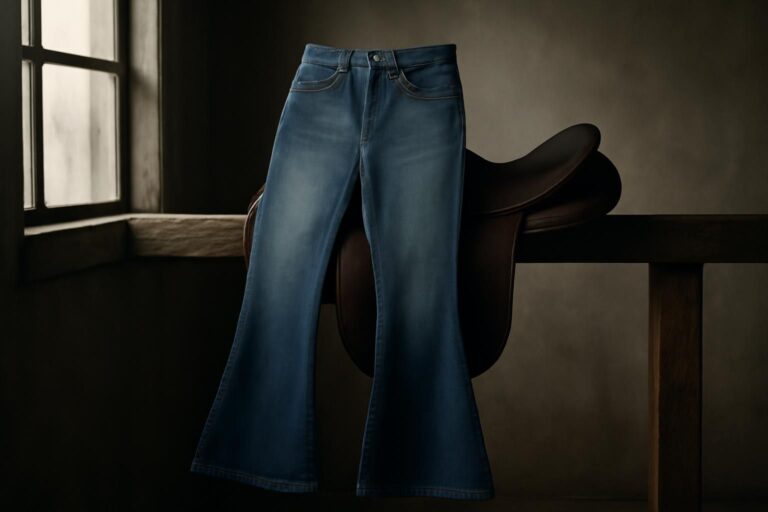
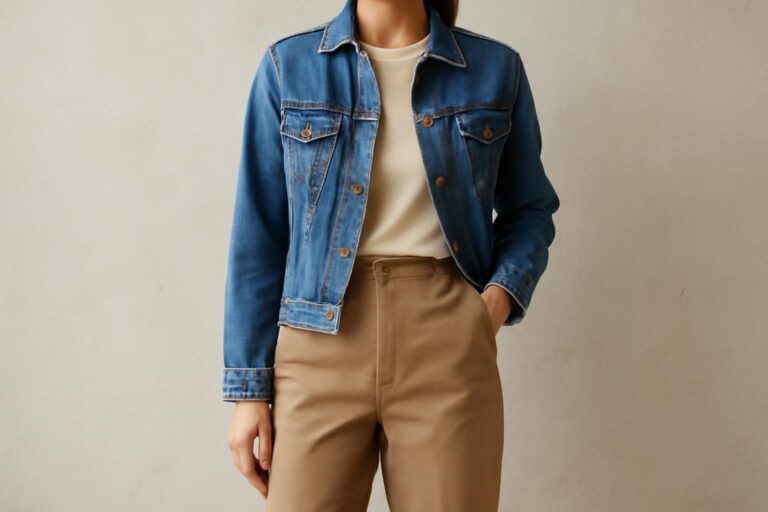
The phrase “female designer jeans” hits search because people are trying to distinguish women’s premium denim from men’s, and because the women’s designer denim landscape is genuinely different from the men’s in ways that matter when you shop.
Women’s designer denim is its own market. The brands that lead this category are not the same as the brands that lead men’s premium denim, the silhouettes evolve differently, and the fit priorities differ in ways that change what you should look for. For the broader category framing, Brand Guides is the hub.
Why “female designer jeans” is a category on its own
Men’s and women’s designer denim have evolved in parallel but with different priorities. Men’s premium denim has been heavily influenced by heritage and workwear — raw selvedge, rigid cotton, vintage-inspired cuts. Women’s premium denim has been more fashion-driven, with silhouettes shifting more dramatically season-to-season and fabric choices including more stretch for fit accommodation.
That means the brands that lead women’s designer denim are often different, the price points can be higher for similar construction, and the fit priorities center on silhouette flattery rather than heritage authenticity.
The brands leading female designer jeans
The current leaders in women’s designer denim, based on their fits, fabrics, and standing in the category:
Agolde has owned the contemporary premium women’s space for the last five years. Their 90s Pinch Waist, Riley Crop, and Nico cuts are defining silhouettes for the category.
Mother sits alongside Agolde at the contemporary premium tier, with more stretch-forward fabric and a stronger celebrity styling presence. Their Weekender and Insider cuts are reliable.
Citizens of Humanity offers strong pattern grading across an older-skewing buyer base. Their Daphne and Charlotte cuts are recommended across a wider age range than the aggressively trendy options.
7 for All Mankind is a heritage premium brand that has stayed relevant specifically because their women’s cuts have evolved while maintaining fit consistency.
Frame brings stronger minimalism — cleaner washes, less trend-forward silhouettes — which works for buyers who want premium without following current styling cycles closely.
At the luxury tier, Khaite has emerged as a quiet leader specifically for women’s denim, with cuts and fabric choices that reward adults over trend-chasers.
Fit priorities for women’s designer denim
The fit variables that matter most in women’s denim, and the ones most likely to decide whether a pair works:
Waist-to-hip ratio. Women’s bodies have more variable waist-to-hip ratios than men’s on average. A good women’s designer brand accommodates this through pattern grading that changes the ratio across size runs — a 24 and a 32 are shaped differently, not just scaled.
Rise versus torso length. High-rise jeans are popular across the category, but “high rise” means different things on different torso lengths. A 12-inch rise on a short-torso buyer sits almost at the bra line; on a long-torso buyer, it hits below the belly button. Brands like Madewell and some cuts from Agolde offer petite versions that adjust rise proportionally.
Thigh fit relative to hip. A good women’s designer jean fits through the hip without gapping at the back and through the thigh without feeling tight at the inner seam. This is one of the hardest fit elements to get right and one of the clearest differentiators between brands.
Leg opening and hem shape. Women’s designer denim currently leans wider than men’s at the hem. A 14-18 inch leg opening is standard for straight and wide-leg cuts; 20+ inches for full wide legs.
What to look for when buying
Check the product page for fabric weight and composition. Women’s designer jeans often use slightly lighter fabric than men’s (9-12 oz versus 12-14 oz). Below 9 oz tends to bag faster.
Check the inseam and rise measurements against your measured body. “High rise” with no inch specification could be anywhere from 10 to 13 inches.
Read user reviews that specify height and body measurements — a review from a 5’4″ 28-waist buyer tells you more than five generic “fit great” reviews.
Check the return policy. Women’s designer denim has a higher return rate than men’s because the fit variables are trickier. A brand that makes returns difficult is one to shop carefully.
The most useful sizing tip
Women’s denim sizing varies dramatically across brands. A 29 in Agolde is not the same as a 29 in Mother is not the same as a 29 in Citizens of Humanity. Fit by measurement, not by tag.
Keep a note on your phone with the exact measurements of each of your best-fitting pairs — waist, hip, thigh, rise, inseam. When buying a new pair, compare those numbers to the product page’s measurement chart. That single habit is the most reliable way to cut down on returns, because it replaces guesswork about brand sizing with numbers you already know work.
Where to buy female designer jeans
Major department stores (Nordstrom, Saks, Bloomingdale’s, Neiman Marcus) carry most of the brands mentioned here and have consistent return policies. End-of-season sales in September and February are the strongest discount windows.
Brand-direct sites carry full size runs and exclusive pieces. Sign up for email lists for sale access.
Current stock at Female Designer Jeans on Amazon with partial designer selection. Authorized retailer network at Shop on Amazon. Secondhand at Female Designer Jeans on Poshmark with strong inventory across all the brands mentioned at 30-60% of retail.
For specific picks, Best Designer Jeans ranks top options, and Designer Jeans Brands covers the broader brand landscape.
Shop our picks: Mother Women’s The Rascal Ankle Fray Jean, Mother Women’s The Tomcat Roller Jeans, AGOLDE Women’s Riley High Rise Straight Crop Jean.
The verdict
Female designer jeans is a robust category with clear leaders at both the contemporary premium and luxury tiers. Agolde, Mother, Citizens of Humanity, Frame, and 7 for All Mankind deliver at $180-$280 retail. Khaite leads at the $280-$400 luxury tier. The fit variables that matter most — waist-to-hip ratio, rise relative to torso, thigh fit relative to hip, leg opening — should drive purchasing decisions more than brand name alone. Sizing varies dramatically across brands so buy by measurement not by tag. And given the variability, major department stores and return-friendly brand-direct channels are the smartest places to buy new; secondhand is strong for confirmed fits and budget-conscious purchases. A well-built women’s designer denim collection at this tier lasts years and delivers better cost-per-wear than cheaper denim consistently.
Shop the look on Amazon
Everything you need to build a secondhand-style wardrobe, delivered. We may earn a commission on purchases.
Browse picks on Amazon →FAQ
What is the best female designer jean brand for everyday wear?
Agolde or 7 for All Mankind for most buyers. Both offer reliable fit, durable fabric, and reasonable pricing across core cuts.
Do female designer jeans run smaller than regular jeans?
Sizing is inconsistent across brands. Some run smaller, some run larger. Buy by measurement rather than assumption.
What is the rise range to look for?
Most current women’s designer denim sits between 10 and 12 inches at the front rise. Confirm the exact measurement on the product page before buying.
Are female designer jeans worth it over mall brands?
For fit, fabric longevity, and cost per wear over three to five years, typically yes. For a buyer who replaces their denim every year anyway, a good mall brand may deliver equivalent value.
How do you check secondhand female designer jeans are authentic?
Check the interior label, care tag and style name first, then compare the back-pocket stitching, hardware and stitching quality against photos of the same style from an authorized retailer. Ask the seller for close-ups of those details and for flat measurements. For higher-priced pairs, platforms with authentication processes add protection, and a price far below what the same brand usually resells for is a reason to look harder.