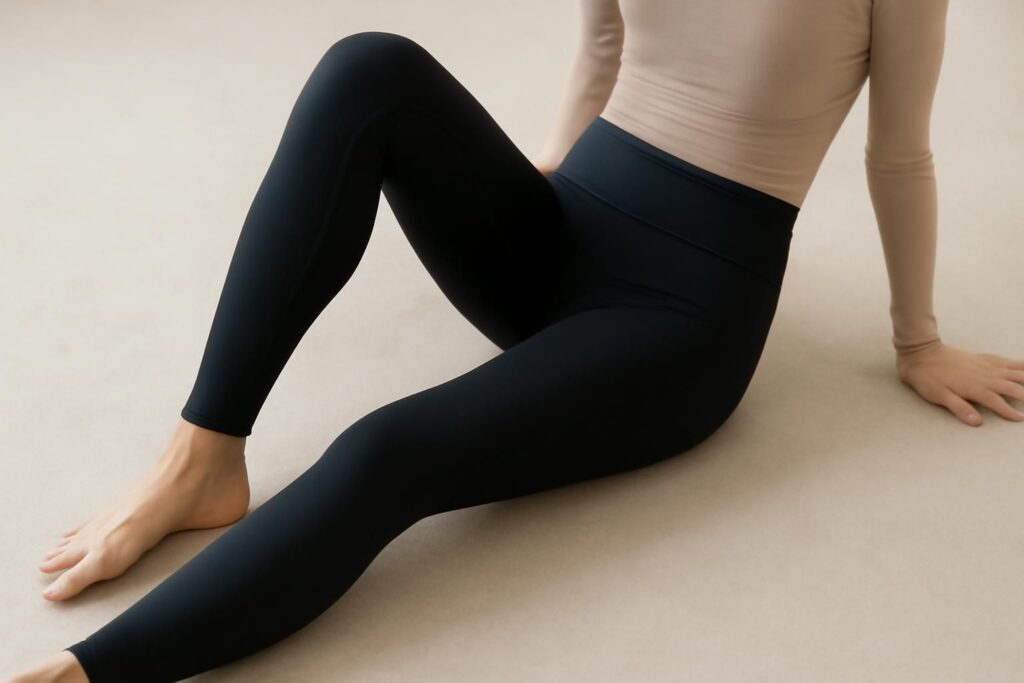
Before you spend on compression leggings, one honest distinction saves you money and disappointment: almost everything marketed as “compression” is a supportive compressive feel, not the graduated medical compression a doctor prescribes. Both are useful. They are not the same thing, and the price gap between them is enormous.
The best compression leggings for women deliver a firm, supportive hold that steadies muscle during training and feels reassuringly snug, and for the overwhelming majority of shoppers that is exactly the right product. We track this category for Tumbleweed Thrift readers within the broader activewear hub at Activewear + Athleisure Brand Reviews, and the single most useful thing we can do is be straight about what “compression” means on a leggings label. This piece separates real graduated compression from compressive feel, explains what each one actually does, names the picks worth buying, and covers sizing and the honest limits of the claim.
Compressive feel vs graduated compression: the difference
Graduated medical compression is a specific, measurable thing. The garment applies the most pressure at the ankle and progressively less up the leg, measured in millimeters of mercury, and it is designed to aid circulation for medical reasons. It is prescribed or bought to a spec, it is expensive, and it comes from medical-compression brands, not activewear labels. Athletic “compression” leggings are a different product. They use a tighter, firmer nylon-spandex knit to create an even, supportive squeeze across the leg that holds muscle steady and feels snug and secure during exercise. That compressive feel is genuinely useful for training, but it is not graduated, it is not measured in mmHg, and it does not do what medical compression does. Almost every legging sold as “compression” on a general activewear listing is the compressive-feel kind. That is not a scam; it is the category. It just means you should buy it for the supportive training feel, not for a medical benefit it does not provide.
What compressive-feel leggings actually do well
Framed as function rather than anything to do with body shape, a firm compressive knit does three useful things. It holds the muscle steady through impact and repetitive movement, which reduces the distracting movement-related jiggle over a run or a plyometric session; that is a performance benefit. It provides proprioceptive feedback, the snug, held sensation many people find helps them feel more stable and controlled during lifting or fast direction changes. And it stays firmly in place, because the same tension that creates the compressive feel is what keeps the legging from shifting during a set. Those are real, worthwhile benefits for training. What the fabric does not do is deliver the circulatory effect of graduated medical compression, so set expectations there. Our Athletic Leggings guide covers the performance-knit family this fabric belongs to.
How to spot a genuinely compressive legging
Since the word “compression” is used loosely, judge the fabric, not the label. A truly compressive legging uses a higher spandex percentage and a denser, firmer knit than a buttery-soft lounge legging, and it feels noticeably tighter to pull on. Reviewers describe it as “holds you in” or “very supportive” rather than “soft” or “barely-there.” Opacity tends to be strong, because the same dense knit that creates the compression also resists sheerness at stretch, but confirm squat-proof performance in recent reviews regardless. Be wary of a legging marketed as both “buttery soft” and “compression,” because those two fabric characters pull in opposite directions; a fabric light and soft enough to feel barely-there is not, by construction, delivering firm compression. Our Squat Proof Leggings guide explains how to read reviews for the opacity that firm knits usually deliver.
One more honest note on a common marketing claim: some compression leggings are sold as aiding recovery or reducing muscle soreness after training. The evidence for that in ordinary athletic compression garments is mixed and modest at best, and it is not the graduated medical kind that has clearer support. Buy a compressive-feel legging because the firm, held sensation makes training feel more supported and stable in the moment, which is a real and immediate benefit you can feel, rather than for a recovery effect that may be small or absent. Setting that expectation keeps you from overpaying for a claim the fabric cannot reliably deliver, and it is exactly the kind of honesty the affordable brands’ firm training lines reward, because they give you the genuine supportive feel without charging a premium for a recovery promise.
The best compression leggings worth buying
Among the affordable Amazon brands, the firmer training lines are where genuine compressive feel lives. CRZ Yoga’s training and firmer lines, as opposed to its soft Align-style fabric, deliver the supportive hold. Baleaf offers dedicated compression and training tights across a mid-weight compressive knit. 90 Degree by Reflex and ODODOS both carry firmer high-waist training styles with the compressive fit and a stay-put waistband. Sunzel and THE GYM PEOPLE round out the field. For gym and bodybuilding-leaning shoppers, Ryderwear is an Australian brand known for firm, squat-proof training leggings, though it tilts toward direct-to-consumer rather than Amazon. Across the affordable field, choose the firmer training knit and confirm the compressive feel in recent reviews, since the same brand often sells both soft and firm fabrics. To scan current compressive training options in one place, Compression Leggings Women High Waist Training Squat Proof on Amazon pulls the live catalog.
Similar style on Amazon

- Powertight Compression Support: Designed for women seeking reliable support and a sculpted fit, these compression…
- Smooth No Front Seam Design: These no front seam leggings feature a seamless front construction and thicker…
- Functional Side Pockets: Keep your essentials close with these leggings with pockets for women featuring two…
How the best compression leggings compare
| Option | Type | What it delivers | Graduated? | Best for |
|---|---|---|---|---|
| CRZ Yoga training line | Compressive feel | Firm supportive hold | No | All-round training |
| Baleaf compression tights | Compressive feel | Mid-weight firm knit | No | Value training pair |
| 90 Degree / ODODOS firm | Compressive feel | Firm high-waist hold | No | Stay-put waistband |
| Medical-compression brands | Graduated compression | Measured mmHg, ankle-up | Yes | Circulatory, prescribed use |
The table makes the honest point plainly: the three activewear picks are all compressive-feel, and none of them are graduated medical compression, which is a separate product category entirely. That is not a criticism of them. For training, the supportive compressive feel is what you actually want, and paying medical-compression prices would buy you a circulatory feature you do not need in the gym. The medical-compression row is included only so the distinction is unmistakable.
What the table cannot rank is how firm is firm enough for you. Some people love a very tight, held sensation for lifting; others find it restrictive and prefer a moderately supportive knit. Because the affordable brands sell across the softness-to-firmness range, the practical move is to read reviews for words like “very tight,” “held in,” or “restrictive” and calibrate to your own preference before buying. Firmness is a feature to match to taste, not a number to maximize.
Sizing compression leggings
Compression leggings run true to size, and this is the one category where sizing up genuinely undoes the product. The compressive feel comes from the fabric being under tension against your leg; size up and you lose the tension, and with it the support and the stay-put fit that are the whole reason to buy compression. If you are between sizes, stay at your true size rather than rounding up. Pulling on a firm compressive legging takes more effort than a soft one, and that resistance is normal, not a sign the size is wrong. If the pair genuinely restricts your breathing or cuts in at the waistband when you sit, that is too small rather than correctly compressive, and it is the one case where moving up a size is the right call. Check the brand’s size chart against your measurements and read recent reviews for fit notes. Our Best Leggings guide covers sizing across all the fabric families.
The verdict
Buy compression leggings for the firm, supportive training feel, and buy them with clear eyes about what that is. Nearly everything on a general activewear listing is compressive-feel, not graduated medical compression, and for gym, running, and lifting that is the correct product, not a compromise. CRZ Yoga’s training line is the strongest all-round pick, Baleaf is the value choice, and 90 Degree by Reflex and ODODOS deliver the firm high-waist hold with a waistband that stays put. Buy true to size, choose the firmer knit rather than the softest, and if you actually need graduated medical compression for a circulatory reason, buy that from a medical-compression brand instead, because an activewear legging is not it.
Shop the look on Amazon
Everything you need to build a secondhand-style wardrobe, delivered. We may earn a commission on purchases.
FAQ
Are compression leggings actual medical compression?
Almost never. Nearly all leggings sold as “compression” on activewear listings deliver a supportive compressive feel from a firm knit, not the graduated, mmHg-measured medical compression a doctor prescribes. Both are useful, but only the medical kind aids circulation, and it comes from medical-compression brands, not activewear labels.
What do compression leggings actually do?
A firm compressive knit holds the muscle steady through impact, which reduces distracting movement over a run or workout, provides a snug held feedback that helps some people feel stable during lifting, and stays firmly in place during a set. Those are genuine training benefits, framed as performance rather than anything to do with shape.
Should compression leggings feel tight?
Yes. The compressive feel comes from the fabric being under tension against your leg, so they should feel noticeably snug and take more effort to pull on than a soft pair. If they feel barely-there, they are not delivering real compression regardless of the label.
Should I size up in compression leggings?
No. Sizing up releases the tension that creates the compression and the stay-put fit, which defeats the purpose. Buy your true size, and stay at it rather than rounding up if you are between sizes.
Are compression leggings squat-proof?
Usually, because the dense firm knit that creates the compression also resists sheerness at stretch. That said, opacity still varies by style and colorway, so confirm squat-proof performance in recent reviews before buying rather than assuming it.