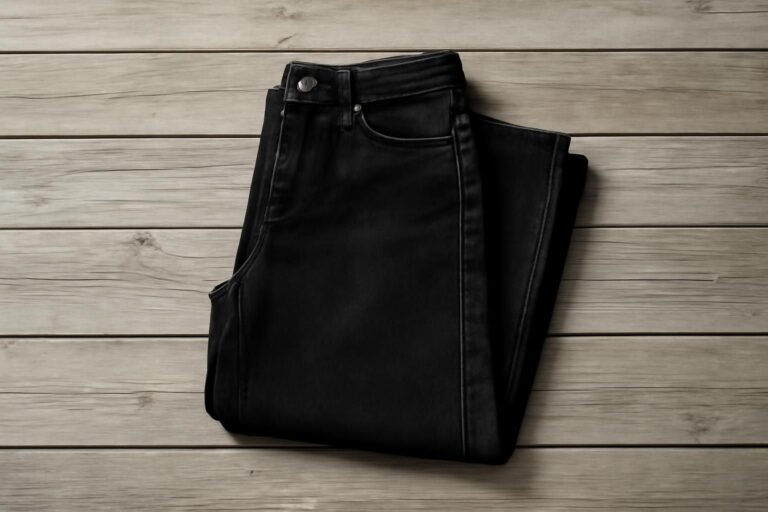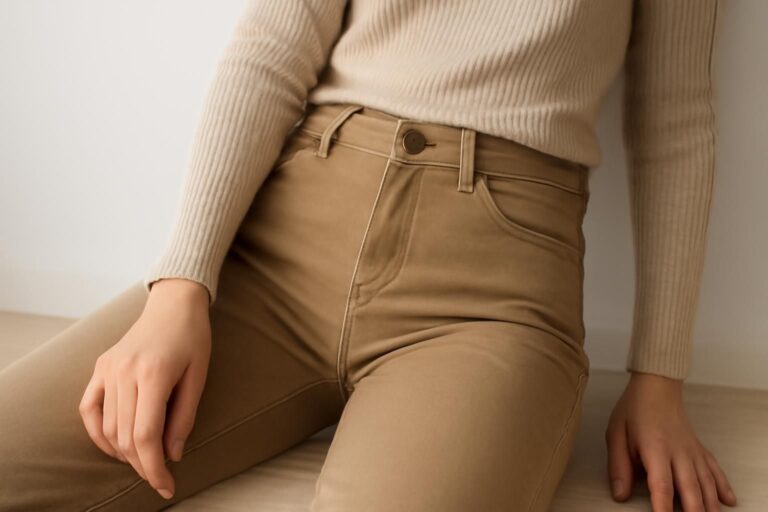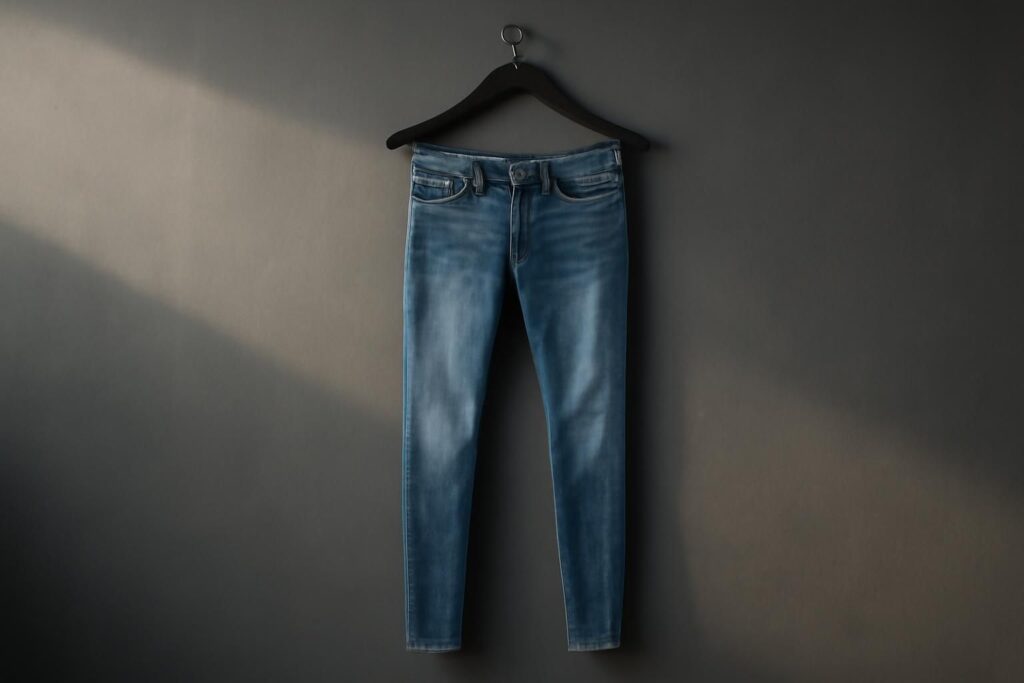
Skinny jeans are supposedly over, yet a good pair is still the easiest jean to wear with a knee-high boot without fighting the fabric. 7 for All Mankind skinny jeans remain one of the better-known premium options for that job.
The short version: a premium skinny earns its price through stretch recovery, a clean leg line and knees that don’t bag. The longer version involves sizing quirks, fabric choices, and when the b(air) lightweight denim is worth paying more for than cheaper skinny options. For the broader denim context, the hub at Brand Guides covers where this cut sits in the overall range.
The fit and sizing
The Skinny in b(air) generally fits true to the brand’s size chart through the waist, with a little break-in give at the hip. If you are between sizes and have fuller hips than waist, take your usual premium-denim size rather than sizing down. The leg is skinny but not painted-on, so knee-high boots should slide over the calf without bunching. Compare the listed leg opening with a skinny you already own if boot-friendliness matters most.
The Skinny sits at mid-rise rather than the high-rise trend of recent years, though rise varies by style, so check the product page. If you want a higher rise skinny, the brand also makes Ultra High Rise versions like the 7 for All Mankind Ultra High Rise Skinny Boot. If you want more of a skinny-bootcut hybrid, the 7 for All Mankind Slim Kick fills that spot.
The b(air) fabric is the selling point
b(air) is 7 for All Mankind’s lightweight stretch denim, marketed as feeling far lighter than its weight; it has been described as an 8.5 oz fabric that feels closer to 6.5 oz. Fiber content varies by style and season (one Nordstrom listing for a b(air) ankle skinny gave 98% cotton, 2% spandex), so check the tag or product page for the pair you are buying. The selling point is comfort and stretch recovery: a well-made stretch denim should snap back after a long day of sitting and walking instead of bagging at the knee.
This is the thing cheaper skinny jeans often get wrong. A budget skinny with low-quality stretch fibers tends to bag at the knees within hours of wear and loses recovery after repeated washes. Paying more makes sense only if the fabric genuinely recovers, which is the main claim behind b(air).
The drawbacks
The fabric is thin. At around 8.5 oz, the b(air) skinny is lightweight for denim. That is great in summer, mediocre in a January wind. If you need a cold-weather skinny, the brand’s High Waist Slim Kick in rigid cotton is warmer.
Back pockets on skinny jeans tend to be small and shallow, and a large phone will usually stick out of the top. If you carry your phone in a back pocket, check the pocket depth before you buy.
And the fading. Black stretch denim fades at the inner thigh with friction and repeated washing, and that lightening zone reads as wear rather than flattering fading. If you want black-forever, rotate two pairs and wash less often, or accept that a black rinse eventually reads as charcoal.
How they wash and hold up
Wash inside out, cold, with no fabric softener, and tumble low or line dry. The test of a good stretch skinny is simple: measure the waist and hip flat when new, then again after several washes. If the measurements hold, the stretch fibers are recovering. Cheaper skinnies often grow permanently after a handful of washes.
Pilling: some pilling at the inner thigh is normal for lightweight stretch denim over time. A fabric shaver handles it, and it is worth checking in resale photos.
The broader question: are skinny jeans worth buying in 2026?
Fashion press says no. Practical wardrobes say yes. The silhouette works with knee-high boots, over-the-knee boots, and under any mini dress or long tunic. You cannot do any of that with a wide leg. Skinny jeans are not the everyday jean anymore, but they are still a necessary shape in any real wardrobe.
If you are buying your first pair in a while, buy one good pair rather than three cheap ones. The good pair outlasts the cheap ones three-to-one. That is where 7 for All Mankind skinny jeans earn their keep.
Where to buy
The Skinny in b(air) sits in the brand’s premium price band at full retail, and seasonal sales bring it down several times a year. Current availability on 7 For All Mankind Skinny Jeans on Amazon and the brand’s authorized network through Shop at 7 For All Mankind. Resale is strong for this cut, with lightly worn pairs listed regularly on 7 For All Mankind Skinny Jeans on Poshmark. For a quick condition check, the pass-the-inner-thigh-test matters most: ask for a close-up.
The verdict
The Skinny in b(air) is one of the strongest premium skinny jeans on paper: lightweight comfort, stretch recovery as its main selling point, and a clean leg opening that works under boots. The fabric is thin and the back pockets are small, which is the trade for the clean line. Buy it if you want a skinny jean you will still wear in five years, not a skinny jean you will throw out in one. Be wary of cheaper lightweight skinnies from other brands that borrow the b(air) pitch: the fiber blend and stretch quality matter, so read the composition tag before you buy.
Shop the look on Amazon
Everything you need to build a secondhand-style wardrobe, delivered. We may earn a commission on purchases.
FAQ
Do 7 for All Mankind skinny jeans run true to size?
Yes. The Skinny in particular follows the brand’s size chart closely. The ankle is snug, but the body gives naturally at the hip after a wear or two.
Is the b(air) fabric worth the extra cost?
For many buyers, yes. Stretch recovery and comfort are the main differentiators; cheaper skinnies tend to bag at the knees sooner.
What about black fading?
Expect noticeable fading at the inner thigh with heavy wear. If you need black-forever, the brand’s Slim Illusion Black has a slightly better fade profile but a stiffer hand.
Are they warm enough for winter?
Not really. The b(air) fabric is lightweight — great for spring-fall, thin for January. Layer fleece-lined tights underneath or consider the heavier rigid-cotton skinny options for cold months.