
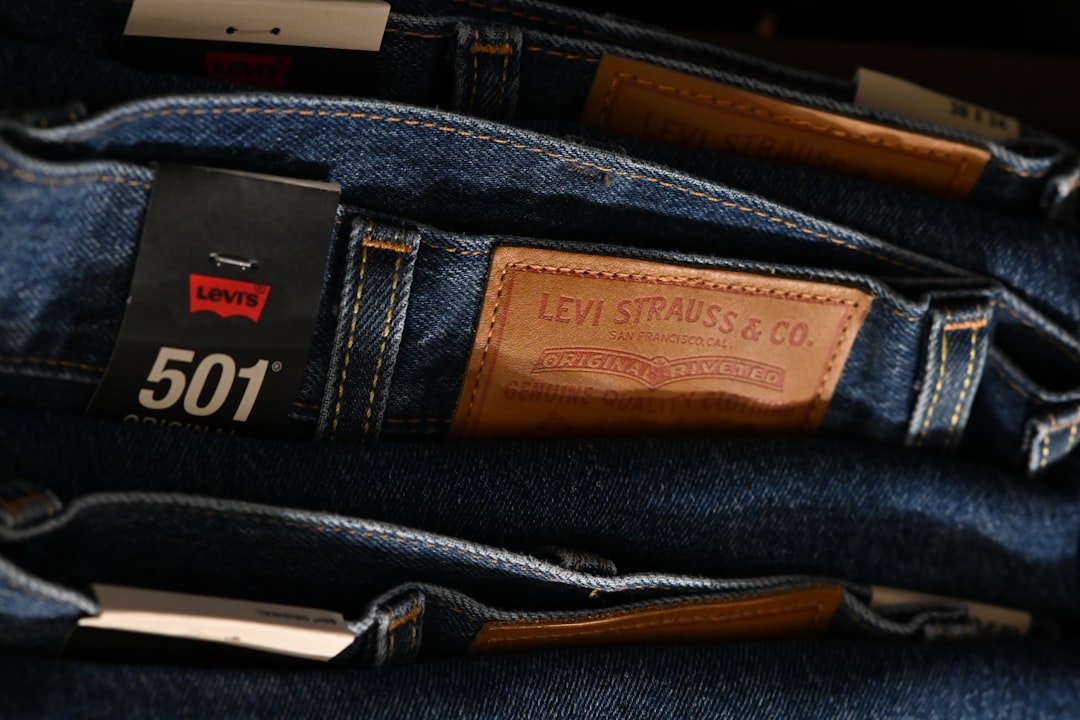
Vintage Levi’s 501 Men’s: The Fit Guide I Wish I’d Had
A men’s 501 from 1977 and a men’s 501 from 1997 are both “vintage 501” and neither one fits like the other. Here’s what to expect when you actually put them on.
I’ve owned five pairs of men’s vintage Levi’s 501s in the last five years, spanning the mid-70s through the late 90s. If you’re shopping for your first pair, the differences between decades are the most important thing to understand. This piece focuses on what men’s 501s feel like on a real 5’10″/175lb body across decades and what I’d tell a friend who asked me where to start. For broader context, see Levi’s 501 Vintage Jeans and Vintage Levi’s. The pillar Brand Guides covers the denim category more generally.
The 501 cut in brief
The 501 is a straight-leg button-fly jean with a mid-to-high rise (depending on era), a full thigh that tapers slightly to the ankle, and the signature 16–16.5″ leg opening. It was the original Levi’s cut and it’s been in production since 1890. The modern 501 is the same idea but cut slimmer and lighter than most vintage pairs.
For men, the 501 is the gold-standard vintage jean because the size run is comprehensive (waists from 28 to 44 in 1″ increments, inseams from 30 to 34) and the cut has been consistent enough that you can size from one pair to another with minor adjustments.
1970s men’s 501: the shrink-to-fit era
1970s 501s were sold as shrink-to-fit (STF) raw denim. You bought them in a size 2″ larger than your measured waist and 3″ longer than your inseam, then shrunk them via hot wash and hot dry. The final measurements depended on how you shrunk them, which is why 70s pairs have the widest measurement variability today.
The rise is the highest of any 501 decade — the front rise on my 1978 pair measures 12″ from crotch to waistband. The thigh is the most generous. The denim is 14 oz and holds structure even after decades of wear.
These are period pieces. They fit differently than modern jeans and they read that way visually. I wear mine when I want the fit to be intentional; they don’t blend into regular rotation the way the 90s pair does. Budget $150–$400 depending on big E status and condition.
1980s men’s 501: the sweet spot
1980s 501s transitioned from STF to pre-shrunk at various points in the decade. The rise dropped slightly from the 70s (around 11.5″), the thigh trimmed marginally, and the leg opening held at 16″. This is the decade where the 501 is most balanced between period character and modern wearability.
My 1986 pair is the one I reach for most often. The denim feels substantial — 13–14 oz — and the cut flatters a range of body types without reading costume-y. I paid $72 on Poshmark and would pay $100 for a similar pair. The 80s sizing is reasonably predictable once you find the flat measurements. Vintage Levis 501 1980S Mens on Poshmark has regular inventory in common sizes.
1990s men’s 501: the easiest first pair
The 1990s 501 is the pair I recommend to anyone buying vintage 501 for the first time. The denim is pre-shrunk, so the tag size matches the actual size within half an inch. The rise sits at a comfortable 11″. The thigh is trim but not tight. The leg opening is 16″. Fade patterns on 90s pairs tend to be cleaner than 70s/80s pairs because the denim weaving was more consistent.
I have two 90s pairs in current rotation — a 1993 and a 1998. Both fit predictably, both wash well, and both cost under $80. For daily-driver vintage, this is the pair.
Sizing on a real body
I’m 5’10”, 175 lb, 32″ natural waist, 40″ hip, 23″ thigh. Here’s what fits:
1978 STF shrunk by previous owner: tagged 34×34, measures 32×32 today. Fits me with a half inch of ease at the waist.
1986: tagged 32×34, measures 32×33. Fits perfectly; minor break at ankle.
1993: tagged 32×32, measures 32×32. True to tag, the easiest to size.
1998: tagged 32×32, measures 31.5×31.5. Slightly tighter than the 93 — seems to have been hot-washed once.
If you’re between sizes, go up one waist size in 70s and 80s pairs (to account for shrinkage history variability) and go true to tag in 90s pairs.
The three things I check before buying
Crotch integrity: the most common failure point on vintage 501s. Thinning is expected; active holes require repair.
Belt loop attachment: 30+ year old belt loops can pull away from the waistband under strain. Check the stitching where the loops meet the waistband.
Inseam measurement: the hem wear on vintage pairs is often uneven, and the listed inseam can vary from actual by an inch. Measure the inseam on the photo if you can; ask the seller to measure if not.
How I’d spend $100 on one pair
Either a 1990s made-in-USA pair in my size for around $75, or a well-loved 1980s pair at $100. Both would serve different wardrobes — the 90s pair as a daily driver, the 80s pair as the “wear with a sweater and boots in fall” pair. I wouldn’t spend $100 on a 70s pair because at that price range the 70s pairs tend to have condition issues or sizing mysteries. Save 70s pairs for when you’re ready to spend $180+ for known good condition. Levis 501 Vintage on Amazon has reissue alternatives in the $80–120 range if you can’t find vintage in your size.
The honest negative
Vintage 501s have a break-in period if they haven’t been pre-worn hard. A pair that spent 20 years in a closet will feel stiff and rigid when it arrives; expect two or three wears before the denim relaxes. This isn’t a fault — it’s how the denim was designed — but it’s worth knowing before you put them on for a meeting and assume they’ll feel like your favorite jeans out of the box.
The verdict
Start with a 1990s made-in-USA Levi’s 501 men’s in your measured waist. Expect to pay $60–$90 for a wearable pair. Move into 80s pairs once you know what works. Save 70s shrink-to-fit for your second or third vintage purchase. For cuts beyond 501, see Vintage Levi’s 505 and Vintage Levi’s 512. For general sourcing, Mens Vintage Levi’s covers the broader men’s vintage question.
Shop the look on Amazon
Everything you need to build a secondhand-style wardrobe, delivered. We may earn a commission on purchases.
FAQ
How should vintage men’s 501 jeans fit?
Snug at the waist without a belt, generous through the thigh, and sitting at the ankle with a quarter- to half-break. Pre-90s pairs have a noticeably higher rise than modern jeans.
What’s the difference between 501 STF and 501 pre-shrunk?
STF (shrink-to-fit) is raw denim that shrinks when washed. Pre-shrunk is sanforized denim that doesn’t shrink significantly. 501 STF is typically pre-1993; pre-shrunk is 1993-onward (with some overlap).
Are vintage 501s heavier denim than modern 501s?
Most 1970s-1990s pairs are 13–14 oz denim. Modern standard 501s are 12–13 oz. The difference is noticeable in hand feel and structure.
How much should I budget for vintage men’s 501?
$60–$90 for wearable 1990s made-in-USA. $80–$130 for 1980s pairs. $150+ for 1970s pairs in good condition. Add 30–50% for rare sizes.


