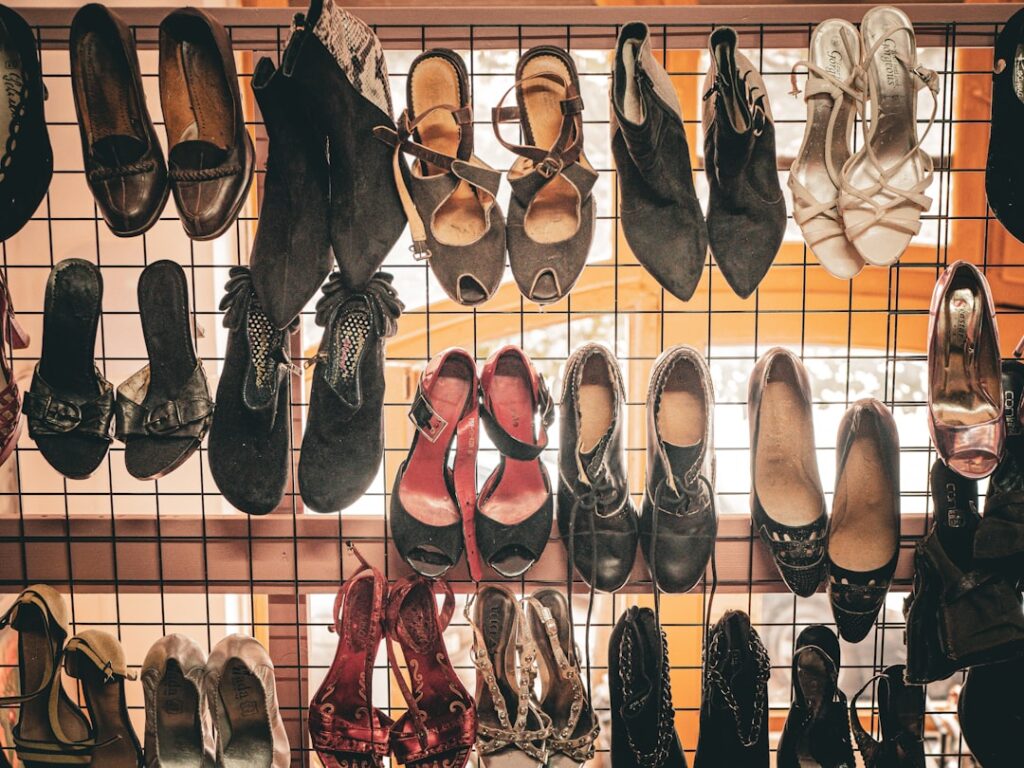
Thrift store shoes are either the best deal in secondhand shopping or a hygiene gamble — the difference comes down to knowing which categories to target.
Shoes are one of the most polarizing thrift categories. The upside is real: well-made leather oxfords, heritage work boots and vintage cowboy boots do turn up on thrift racks for a fraction of their retail price, and they can be worn for years with basic care. The downside is equally real, because some categories wear out invisibly or can’t be cleaned well enough to justify the savings. Not every thrift store shoe is worth the shelf space, and the line between a find and a waste of money is clearer than you might think. For more secondhand shopping strategy, our Thrift and Resale Fashion hub has you covered.
Thrift Store Shoes Worth Buying
Leather dress shoes are the single best category for secondhand buying. Quality leather shoes from brands like Allen Edmonds, Cole Haan, Clarks, and Johnston & Murphy show up at thrift stores regularly because men clean out their closets and donate shoes they no longer wear to the office. Leather holds up for decades when cared for, and a $15 thrift store purchase plus $20 worth of Leather Shoe Care Kit on Amazon gives you shoes that compete with $200-plus retail pairs.
Leather boots — cowboy boots, work boots, Chelsea boots — are another strong buy. Brands like Red Wing, Frye, and Justin build boots designed to last years of hard use. The leather molds to the previous owner’s foot to some degree, but a new insole ($15-25 for a quality Superfeet or Dr. Scholl’s insert) and proper conditioning reset the fit enough for most people. Surface scratches and dry, faded leather are cosmetic: a cleaning and a coat of a quality leather conditioner such as Bick 4 usually brings Goodyear-welted boots back to a rich, supple finish. What matters more is the structure, so check the welt stitching, the heel stack and whether the boot has been resoled. A welted boot from Red Wing or a similar maker can be resoled by a cobbler, which means a worn sole is not a deal-breaker if the upper is sound.
Canvas sneakers like Converse and Vans are safe thrift buys when the soles still have tread and the canvas is not torn. These shoes are easy to clean, and a run through the washing machine on cold brings most of them back to presentable. Barely worn Converse Chuck Taylors and Vans show up often, since many people buy a pair, wear it a few times, and donate it. White pairs that look grubby on the rack usually clean up well with a cold machine wash and a scrub of the rubber sole and foxing with a melamine sponge. It is also worth watching for New Balance 574s and Adidas Sambas in suede or leather, which tend to hold resale value on platforms like Poshmark if you decide not to keep them.
What to Skip at the Thrift Store
Athletic shoes with compressed midsoles are a pass. Running shoes, cross-trainers, and basketball shoes rely on foam cushioning that breaks down with use and does not recover. A pair of Nike runners that look clean on the outside may have completely dead cushioning, which means zero support and potential joint stress. If the midsole feels flat and hard when you press your thumb into it, the shoe is spent regardless of how the upper looks.
Cheap synthetic dress shoes — the kind that were $30 new from brands like Dexter or George — are not worth buying used. The faux leather cracks and peels, the glued soles separate, and the insoles compress permanently. You can spot them quickly: synthetic uppers feel plasticky and uniform in texture, while real leather has subtle grain variation and gives slightly when pressed with a thumbnail. These shoes were barely functional new; used, they are garbage. Spend your thrift store budget on genuine leather instead.
Sandals and flip-flops are a hygiene line worth not crossing. The foot-to-material contact is too direct, the materials are usually non-washable foam, and the savings are too small to justify it. Buy sandals new.
How to Clean and Prep Secondhand Shoes
Give every pair of thrifted shoes the same treatment before wearing them. Leather shoes get wiped down with a damp cloth, treated with a leather conditioner, and fitted with new insoles. The conditioner restores suppleness and addresses any surface dryness. The supplies last many pairs, so the per-pair cost is small.
Canvas shoes go in the washing machine on cold with a mild detergent and air dry. Remove the laces and wash them separately. Replace the insoles if they smell or feel compressed. A Shoe Deodorizer Spray on Amazon handles any lingering odor.
Suede requires a suede brush and eraser to remove surface dirt and restore the nap. Do not use water on suede — it stains. A suede protector spray after cleaning keeps future dirt from setting in. An inexpensive suede cleaning kit, such as Kiwi’s, handles most light surface marks. For heavier stains or water damage, a professional cobbler can re-nap suede for $15 to $25 — still cheaper than buying new.
The Verdict
Thrift store shoes are an excellent value in the right categories: leather dress shoes, quality leather boots, and canvas sneakers. Skip athletic shoes with dead cushioning, cheap synthetic dress shoes, and anything you cannot clean properly. Budget $5 to $20 for cleaning supplies and new insoles on top of the purchase price, and you will have secondhand shoes that wear as well as retail. For more on thrift shopping footwear, see our Thrift Store Cowboy Boots guide and our How to Clean Shoes from the Thrift Store walkthrough.
Shop the look on Amazon
Everything you need to build a secondhand-style wardrobe, delivered. We may earn a commission on purchases.
FAQ
Is it gross to wear secondhand shoes?
Not if you clean them properly. Leather and canvas are both cleanable materials. Replace the insoles, sanitize the interior, and condition the exterior. The result is as hygienic as any shoe you would try on at a retail store.
How do I check if thrifted shoes still have life in them?
Check the sole wear pattern — uneven wear indicates structural issues. Press the midsole to test cushioning. Inspect the heel counter for collapse. Flex the shoe gently — it should bend at the ball of the foot, not in the middle. If all four pass, the shoe has wear left.
What brands are the best thrift store shoe finds?
Allen Edmonds, Cole Haan, Red Wing, Frye, Clarks, and Dr. Martens are all excellent secondhand finds because they are built to last well beyond one owner. Converse and Vans are great budget picks in the canvas category.
How do you disinfect the inside of thrift store shoes?
Pull out the old insoles, wipe the inside of the shoe with a disinfecting spray or a cloth dampened with rubbing alcohol, and let the shoe air dry completely before wearing it. Then fit a fresh pair of insoles and use a shoe deodorizer for any lingering smell. Canvas sneakers can go through a cold machine wash instead, while suede interiors and uppers should be kept as dry as possible.