
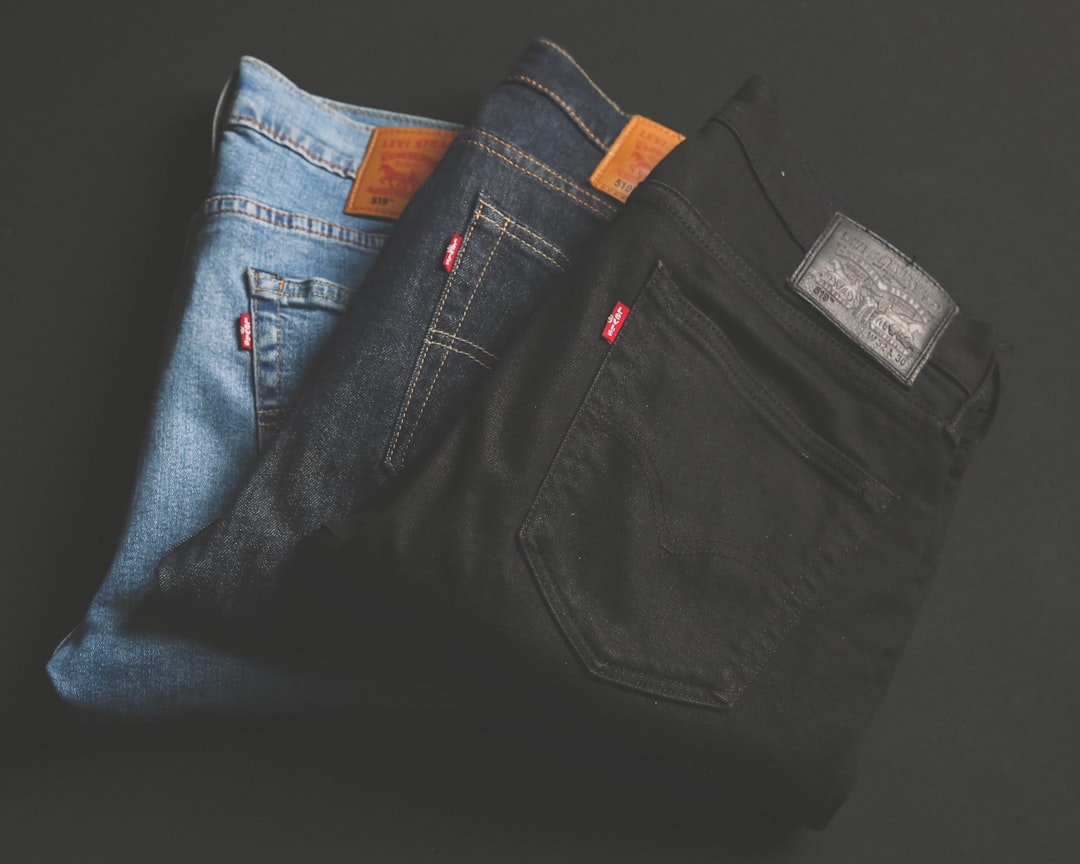
Ten years into buying, wearing, and thrifting mens denim, I’ve learned that “buying jeans that fit” is not a style question — it’s a measurement question you should solve once, in a methodical way, and never have to solve again.
Most men buy denim jeans the wrong way. They pick a brand they’ve heard of, try the default fit, and if it kind of works they stop looking. If it doesn’t work, they conclude they’re the problem and either keep wearing jeans that don’t fit or stop wearing jeans altogether. The actual answer is that there are probably four or five men denim jeans cuts in the mass market that would fit you well, and once you know which four or five, buying jeans stops being a chore. This piece sits inside our Men’s Denim coverage as the starting-point guide. By the end you’ll have a measurement-based frame for picking cuts, brand recommendations per body type, wash and fabric guidance, and a shortlist of fits worth trying in person if you’ve been struggling. I’m 6’0″, 32×34, 180 lb, with cyclist’s thighs and a standard seat. Every recommendation here is tested against real body measurements.
The five measurements that actually matter
Forget the waist-size-plus-inseam shorthand on the tag. That gives you the outer envelope but tells you nothing about whether the jean will fit your actual body. Before you buy anything, know these five numbers.
Waist: measure around your natural waist (just above the hip bone, where you want the jean to sit) with a soft measuring tape. Not where you buy belts. Where you actually want the jean to ride. This number is almost always different from your pants tag size — vanity sizing has pushed Levi’s, Gap, and most department-store brands a full inch or more off true.
Hip: measure around the widest part of your hips/seat. The difference between waist and hip (the “drop”) tells you whether straight-cut or curvy-cut jeans will fit better. Most men have a 4-6 inch drop. A 7+ inch drop means you have a pronounced seat and need to look at cuts with more seat room or plan on tailoring.
Thigh: measure around the top of one thigh, at the thickest point. This is the measurement that decides slim vs. regular vs. athletic. Under 22 inches, slim cuts work. 22-24 inches, regular cuts work. 24-26, you want athletic taper. 26+, you want relaxed or athletic with room to spare. Most men don’t know their thigh measurement, which is why so many men wear jeans that cut off blood flow.
Inseam: measure from the crotch to the floor, in your socks, while standing. Subtract 1 inch for a clean break on sneakers, or match exactly for a full break on boots. A tag-34 inseam on most brands measures 33.5-34.25 in reality, so pad accordingly.
Rise: measure from the crotch seam of a pair of pants that fits you well up to where the waistband sits. This number tells you whether you want low-rise (8-9 inches), mid-rise (9.5-10.5 inches), or high-rise (11+ inches). Different brands have radically different rise philosophies; knowing your preference cuts cross-brand shopping dramatically.
Write all five numbers down. Keep them in your phone. Reference them every time you shop. This one exercise eliminates more than half of bad-fitting jean purchases.
The men denim jeans fit map: which cut matches which body
With your five numbers in hand, here’s the rough fit map. This is not rigid — try multiple cuts in your category — but it’s a starting frame.
Lean build (waist 28-32, thigh under 22, 4-5 inch drop)
You have the widest range. Skinny, slim, slim-straight, straight, and regular all work. Levi’s 510 (skinny), 511 (slim), 501 (straight), and 502 (regular taper) are all viable. Wrangler 88MWZ Retro Slim Straight is also in play. Focus on rise and leg opening to pick among the options. See Men’s Slim Fit Jeans for the slim category.
Average build (waist 32-36, thigh 22-24, 5-6 inch drop)
Straight, slim-straight, and regular taper. Levi’s 501 Original, 502, 514, and 511 Stretch all work. Lucky Brand 121 and 221 are strong mid-tier picks. Wrangler Retro 88MWZ fits well. Skip pure slim (510) and pure relaxed (559). Slim-taper or regular-taper is the sweet spot.
Athletic build (waist 32-38, thigh 24-27, 6-7 inch drop)
Athletic taper is what you want. Levi’s 541 Athletic, Lucky Brand 410 Athletic Slim, and Mavi’s athletic cuts are purpose-built for this body. Avoid 511 (too tight in thigh) and 501 (generous but not tapered — can look sloppy on athletic builds). Best Jeans for Men with Big Thighs has the cross-brand rundown.
Bigger build (waist 36+, thigh 27+, variable drop)
Relaxed, relaxed-straight, and purpose-built big-and-tall cuts. Levi’s 559 Relaxed Straight, 550 Relaxed, Wrangler Rugged Wear Relaxed, and Dickies Relaxed Fit are the core picks. See Big and Tall Jeans and Big and Tall Levi’s Jeans for the category.
Tall (over 6’2″, needs long inseam regardless of waist)
Most mainstream jeans top out at 34 or 36 inseam. Wrangler, Lucky, and Duluth Trading routinely offer 38. Levi’s offers 36 and 38 in the 501, 505, 514, and 541. For 6’4″+, you’re often in specialty big-and-tall territory. See Best Jeans for Tall Men for a brand-by-brand breakdown.
Short (under 5’7″, needs short inseam)
Most mainstream jeans start at 30 inseam. Some brands (Levi’s, Wrangler) offer 28. For shorter than 28, you’re cuffing, hemming, or shopping petite men’s lines. See Best Jeans for Short Men for specialty picks.
Rise: the variable most men ignore
Rise matters more than men give it credit for. The rise determines where the jean sits on your torso, how the shirt hem interacts with the waistband, and how the silhouette reads on your body. Get it wrong and the jean will feel wrong all day even if the waist and leg fit.
Low rise (8-9 inches, crotch to waistband): sits below the belly button. Was standard in the 2000s. Has largely fallen out of mainstream men’s fashion but is making a modest comeback. Most men over 35 will feel the rise is too low and the jean keeps wanting to slip down.
Mid rise (9.5-10.5 inches): sits at or just below the belly button. The default modern rise. Levi’s 511, 501, and 502 are all in this range. Works for almost every body.
High rise (11+ inches): sits above the belly button, at the natural waist. The default historical rise before the 2000s low-rise trend. Makes shorter men look proportionally taller. Covered in High Rise Men’s Jeans.
My preference for a 6’0″ 180-lb body: mid-rise at 10-10.5 inches. Low rise pulls at the hip and shows too much shirt tail when I sit. High rise bunches at the diaphragm when I lean forward.
If you’ve never thought about rise, try on one pair in each category at a department store. You’ll notice immediately which rise feels right, and from then on you can shop by number.
Fabric weight and why it matters
Denim weight is measured in ounces per square yard. The range goes roughly from 8 oz (very lightweight, used for summer/fashion) to 16+ oz (heavy workwear). Most mainstream mens denim jeans fall between 11 and 14 ounces. The weight affects drape, durability, temperature, and break-in curve.
9-11 oz: lightweight. Drapes close to the leg, feels soft, cooler in hot weather. Fades and wears faster. Most fashion-focused jeans and summer pairs. Levi’s Hyperflex and most stretch-heavy pairs sit here.
12-13 oz: mid-weight. The default for most mass-market mens denim. Levi’s 501 Original sits at 14.5 oz but most of their stretch catalog is 12-13 oz. Comfortable, medium durability, works year-round.
14-15 oz: heavy. Workwear standard. Breaks in slowly, lasts long. Wrangler 13MWZ Cowboy Cut is 14.75 oz. Dickies Carpenter is 14 oz. Levi’s 501 Original is 14.5 oz. Expect 2-3 weeks of break-in before the fabric stops fighting your movement.
16+ oz: very heavy. Specialty raw denim territory. Japanese selvedge brands, heritage makers, and some workwear specialists. Multi-month break-in but legendary durability. Not necessary for most wearers. Men’s Raw Denim Jeans covers this category if you’re curious.
My rotation: one 14-15 oz 100% cotton pair (Wrangler 13MWZ or Levi’s 501) for durability, two 12-13 oz mid-weight pairs (Lucky 121 or Levi’s 511) for everyday versatility, and occasionally a lightweight summer pair for hot weather. See Men’s Lightweight Jeans for Summer for summer-specific picks.
Stretch vs. 100% cotton: the real trade-off
Modern denim splits into two camps: 100% cotton and cotton-elastane stretch blends (typically 98/2 or 96/4). Each has genuine advantages and genuine limits.
100% cotton pros: holds shape over years, fades into personal wear patterns, durable under stress, ages beautifully. 100% cotton cons: requires break-in (1-4 weeks depending on weight), less forgiving on athletic thighs, less comfortable sitting all day.
Stretch pros: comfortable immediately, forgiving on muscular legs, moves with the body, good for desk work and long commutes. Stretch cons: elastane fatigues over time, knee bagging at 12-18 months, waistband stretch-out at 8-12 months, overall lifespan 1-2 years vs. 5+ for cotton.
My split: 60% cotton, 40% stretch in my active rotation. The cotton pairs last 3-5 years; the stretch pairs last 12-18 months. Cost per wear works out roughly equal. What you’re optimizing for is different — cotton for longevity and character, stretch for comfort and ease.
If you work in an office and commute by car or public transit, go heavier on stretch. If you do physical work, walk a lot, or want a jean that ages, go heavier on cotton.
Washes and how they change the jean’s job
Wash determines what the jean is for more than any other variable. Same cut in a different wash is a different tool.
Raw / Indigo / Rinse: darkest, near-black dark blue. Formal end of the denim spectrum. Works under blazers, with dress shoes, for nice dinners. Levi’s Rinse, Lucky Brand Rinse, Wrangler Rigid. Cannot fade this dark unless you actively distress.
Dark: still dark blue but with some fade character. The most versatile wash. Works office-casual through weekend. My default recommendation for a first pair. Men’s Dark Wash Jeans covers dark washes across brands.
Medium: classic blue-jean blue. The default casual wash. Doesn’t work formally but works everywhere else.
Light / Stonewash: faded blue, sometimes with distressing. Warm-weather and casual. Doesn’t work formally at all. Men’s Light Wash Jeans is the deeper read.
Black: black denim. Versatile — reads slightly dressier than blue at the same tone. Coated blacks hold color better than dyed blacks. Men’s Black Jeans covers the category.
White: niche. Summer-specific. Hard to pair with many shoes. Men’s White Jeans for guidance.
Grey, brown, green, red, tan, khaki: colored denim. Each has its own use case. Not essential for a basic rotation but fun as third or fourth pairs. Men’s Gray Jeans, Men’s Brown Jeans, Men’s Khaki Jeans for specifics.
A basic rotation for most men: one dark wash, one medium wash, and either a black or a light wash depending on wardrobe. From there you can add specialty pairs.
The brands that actually deliver at each price tier
Here’s the landscape I’d give a friend building a denim rotation from scratch in 2026.
Under $50 per pair
Wrangler Authentics at Walmart, Dickies Regular Straight at Tractor Supply or Amazon, Old Navy slim-straight when they’re on sale. These are working-duty jeans — real cotton, simple construction, 12-18 month lifespan with regular wear. Not fashion pieces, but honest product. See Affordable Jeans for Men Under $50 That Don’t Look Cheap for the full rundown and Old Navy Men’s Jeans for the Old Navy specifics.
$50-$90 per pair (the mass-market sweet spot)
Levi’s Red Tab (501, 502, 511, 514, 541), Wrangler core (13MWZ, Retro 88MWZ), Lucky Brand (121, 221, 410, 363), Dickies premium, Lee 101. This is where most men should spend. Quality is genuinely good, lifespan is 3-5 years on cotton, fit blocks cover most bodies. If you’re not a denim enthusiast, this tier is all you need.
$90-$200 per pair
Madewell (see Madewell Mens Denim), J.Crew, Gap premium, AG, Hudson, Citizens of Humanity, 7 For All Mankind. You’re paying for nicer fabric, better stitching, cleaner washes, and slightly more distinctive silhouettes. Worth it for one “good” pair if you dress up often. Not worth it for everyday utility.
$200-$400 per pair (designer mid-range)
Rag & Bone, APC, Acne, Naked & Famous, 3sixteen, Tellason. You’re buying selvedge fabric, sharper silhouettes, and brand equity. For raw denim enthusiasts, this is where the hobby starts. See Men’s Designer Jeans Under $200 for picks under $200.
$400+ per pair (designer premium)
Amiri, Balmain, Saint Laurent, Ksubi, Rhude, Chrome Hearts, Louis Vuitton. You’re buying brand and aesthetic. The quality difference vs. the $200 tier is marginal; the price difference is not. See Designer Jeans for Men for the category.
My personal stack: two Levi’s in the $50-80 tier, one Lucky in the $50-70 tier, one Wrangler 13MWZ in the $40-50 tier, and one Madewell or AG in the $120-150 tier. Five pairs total, rotated across occasions.
How to try denim pants for men without wasting a Saturday
Here’s a practical shopping protocol I’ve converged on after too many bad afternoons in fitting rooms.
Step one: know your five measurements cold. If you don’t have them, measure first, shop second.
Step two: pick three cuts to try, not nine. Go in with a pre-built shortlist. Levi’s 501, 511, and 541 is a reasonable three-cut spread. Wrangler 13MWZ, 88MWZ, and Authentics is another. Buy three-cut sets at one brand in one visit, not four brands.
Step three: always try the tagged size, one up, and one down. Sizing varies enough across brand-new runs that only trying your “usual” size means 40% of the time you’re wearing a pair half a size off.
Step four: sit down in every pair. A jean that fits standing but binds when you sit is useless. Squat once. Reach for your phone on a low shelf. Tie a shoe. If any of those create discomfort, pass.
Step five: take one pair home, not three. Try it for two weeks of real rotation before buying a second. The pair that feels great in the fitting room but wrong on day four doesn’t belong in your closet. Most returnable retailers (Amazon, Levi.com, Macy’s) accept returns weeks later if tags are intact.
Step six: write down what you bought, what you returned, and why. The notes compound. After three years you’ll know exactly which cuts your body fits into without having to experiment.
Shoes, break, and how long should mens jeans actually be
Inseam interacts with shoe to create the “break” — the way the jean hits the top of your shoe. Too long and you pool. Too short and you look like you borrowed them from a younger brother. How Long Should Men’s Jeans Be? Length Guide by Style is the deep read; the short version:
No break: jean ends at or just above the shoe. Modern, sharp, works with low-profile sneakers and dress shoes. Looks intentional.
Half break: jean ends at the top of the shoe with one light fold at the front. The most versatile break. Works with nearly every shoe type.
Full break: jean sits on the shoe with multiple folds. Works with boots and casual shoes. Looks sloppy with dress shoes.
Stack break: jean extends down onto the shoe intentionally, stacking fabric. Western and rodeo aesthetic. Works with cowboy boots.
Your inseam choice plus your shoe choice creates the break. For sneakers on a 6’0″ body, I buy 34 inseams and get a clean half-break. For boots on the same body, I buy 34 or 36 depending on boot height. For dress shoes, I buy 32 or 33 and get a no-break.
For full context on shoe-to-jean pairing, Best Shoes to Wear with Jeans for Men breaks it down.
Washing and caring for denim so it actually lasts
Most denim failure is wash-related. Five rules that double useful life:
One: wash cold, inside out, gentle cycle. Hot water kills indigo and shrinks fabric unevenly. Cold preserves both.
Two: hang dry or tumble low for 10-15 minutes only. Full hot tumble dry destroys denim faster than any other single failure mode.
Three: never use fabric softener. It coats cotton fibers and degrades the hand.
Four: wash less often than you think. For 100% cotton, every 5-10 wears is plenty. Spot-clean between washes. Freeze overnight to kill odor (yes, really — an old raw denim trick that works).
Five: when a button thread loosens or a hem frays, fix it that day. A small repair is two minutes; a big failure is a retired pair.
The verdict
Buying denim jeans for men is not actually difficult — it’s just rarely taught in a measurement-based way. Know your waist, hip, thigh, inseam, and rise. Pick cuts based on those numbers, not on brand loyalty or what looks good on a model. Spend in the $50-90 range for most pairs. Buy 100% cotton when you want longevity and stretch when you want comfort. Rotate three to five pairs, each doing a different job, rather than owning ten similar pairs.
The single biggest improvement most men can make: stop buying the same ill-fitting cut in three colors. Try one new cut per year that matches your measurements. Within three or four years you’ll have a rotation that actually fits, and you’ll stop dreading the next jean purchase.
For a practical next step: read Blue Jeans for Men for a complementary purchase framework, and for current deals, check Denim Jeans For Men on Amazon, Shop on ShareASale, and Mens Denim Jeans on Poshmark before paying MSRP anywhere.
Shop the look on Amazon
Everything you need to build a secondhand-style wardrobe, delivered. We may earn a commission on purchases.
Browse picks on Amazon →FAQ
What are the best jeans for men in 2026?
There is no single best pair — the right jean depends on body measurements, use case, and budget. For most average-build men the Levi’s 501, 511, or 502 at $50-80 is the right default. For muscular builds, Levi’s 541 or Lucky 410. For workwear, Wrangler 13MWZ or Dickies Carpenter. For a deeper cross-brand rundown see Best Men’s Jeans 2025.
How should denim jeans for men fit?
Waist should sit at your natural waist without a belt holding them up and without pinching when you sit. Hip should accommodate your seat without pulling tight or gapping at the back. Thigh should have enough room to squat without pinching. Knee and calf follow from the thigh. Inseam should hit your shoe with the break you want. If any of these five zones fails, try a different cut — don’t try to alter the jean.
What is the difference between slim fit and straight fit denim pants for men?
Slim fit has a tapered leg — the leg narrows from knee to ankle, with a smaller leg opening than the knee. Straight fit has a consistent leg width from knee to ankle. Slim reads modern; straight reads classic. For average-to-lean bodies, both work. For muscular thighs, straight is often more comfortable. See Straight Fit Jeans for Men for the straight category.
How often should I wash my jeans?
For 100% cotton, every 5-10 wears is plenty unless you’ve sweated heavily or spilled something. For stretch (98/2 or 96/4), every 3-6 wears keeps the fabric fresh without accelerating elastane fatigue. Spot-clean between washes. Hang jeans between wears to air out. Over-washing is the most common cause of early denim failure.
Are expensive jeans actually worth it for men?
Past roughly $200, no, for most wearers. The fabric and construction quality of a Levi’s 501 at $70 or a Lucky 363 at $75 is 80-90% of what you’d get at a $300 premium brand. The remaining 10-20% is nicer selvedge, slightly sharper silhouettes, and brand equity. For raw denim hobbyists or men who dress up often, premium makes sense. For everyday wear, stick with the $50-90 tier.
What is the best denim weight for year-round wear?
12-13 ounce mid-weight is the year-round default for most men. Lightweight (9-11 oz) for summer and hot climates. Heavyweight (14-15 oz) for work, cold weather, or longevity. A rotation with one lightweight summer pair, two mid-weight everyday pairs, and one heavyweight durable pair covers most needs.
Related reading: How to Pair Men’s Blazers with Jeans: What to Know Before You Buy.


