
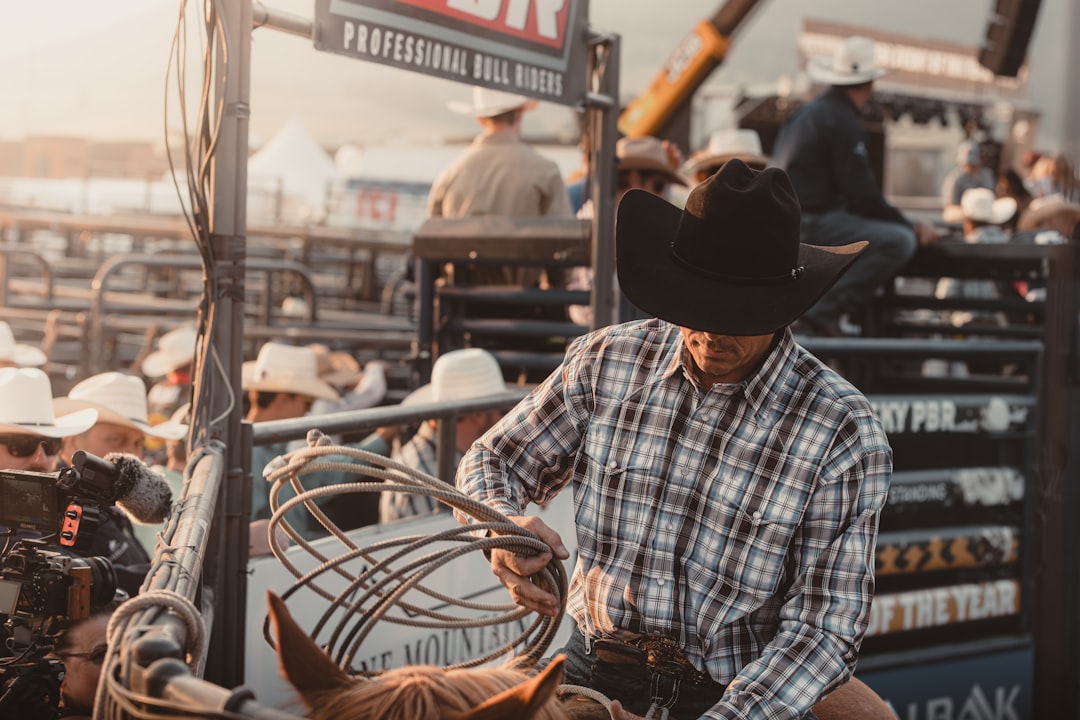
I spent a summer tagging cattle in Wyoming wearing nothing but Wrangler 13MWZs. They outlasted two pairs of boots, one truck tire, and my patience with a ranch horse named Denise. This is what I learned.
Wrangler is the jean that actually gets worn by people doing physical work in the United States, and that tells you more about the product than any marketing campaign. The brand sits inside our broader Mens Denim coverage because no men’s denim conversation is complete without it. The goal of this guide is to get you to the right pair of wranglers — work, western, retro, modern slim, or performance — without you having to try eight cuts first. I’ve tried most of them, ruined a few, and can tell you which ones hold up and which ones read costume. By the end you’ll know the three cuts most men actually need and which numbers to ignore.
What wrangler actually is now
Wrangler was founded in 1947 as the western rodeo-focused denim line of Blue Bell, which was later acquired by VF Corporation and then spun off in 2019 into Kontoor Brands. Kontoor now owns Wrangler, Lee, and Rock & Republic. The spinoff matters because the brand is now run as a standalone business with its own design team, product roadmap, and retail strategy, rather than a sub-brand of a much larger corporate owner. In practice this has meant more collabs (Leon Bridges, Lainey Wilson, Barbie, Fender), more “retro” reissues, and a harder push into mainstream men’s fashion beyond the western base.
The wrangler logo has not meaningfully changed since the 1960s — the serif “W” on the back pocket, the leather patch on the waistband, the familiar block-letter wordmark. If you are spotting counterfeit wrangler clothing, the logo and stitching are the first tells. Authentic back pocket “W” stitching uses a heavier thread and lands in a consistent spot; counterfeits stitch thinner and often land off-center.
The core men’s fits I actually reach for
Wrangler runs more parallel product lines than most men’s denim brands — Cowboy Cut, Retro, Western, 20X (competition rodeo), Rugged Wear, Wrangler Authentics, Performance Series, and the more recent fashion-forward capsule collections. For a working baseline, here are the fits that cover 90% of use cases, tested on a 5’10”, 180-lb, 32×32 body with normal thighs and a standard seat.
13MWZ Cowboy Cut
The original rodeo-era wrangler. High-rise, straight leg, generous seat, tight thigh relative to rise, extra-long inseam (the original cowboy length was 36″ to stack on a boot). This is the pair I wore in Wyoming. It fits flat in the back, sits above the hip bone, and looks objectively wrong under a button-up unless you’re actually riding or roping. On horseback it is the correct silhouette. In an office it is a costume. Know which one you’re doing.
Fabric: 100% cotton, 14.75 oz. Heavy. Takes real wear to break in — I’d say 20 to 30 hard days before the fabric stops fighting your movement. After that it softens and holds its shape for years.
936 Cowboy Cut Slim Fit
Same Cowboy Cut DNA as the 13MWZ but tapered through the thigh and leg. Same rise, same 100% cotton fabric in the traditional version. This is the rodeo competitor cut. If you’re doing any actual western riding where the jean has to clear a boot and not bunch at the knee, 936 is usually the right call over 13MWZ.
Retro Slim Straight (88MWZ)
The Retro line reinterprets Cowboy Cut geometry with slightly lower rise and modern leg taper. The 88MWZ is my pick for men who want a western-silhouette pair that works under a jacket in a non-horse context. I own two in mid-wash and wear them to restaurants, bars, low-stakes office days. The thigh has enough room for lifted legs. The leg opening is narrow enough that it doesn’t read 1986. This is the sleeper hit of the brand for urban men.
Wrangler Authentics Regular Fit
The budget line. Sold primarily at Walmart, Target, and Amazon for $20-$30 a pair. Lighter fabric (11 to 12 oz), often a cotton-poly blend, zipper fly, straight or regular cut. These are perfectly serviceable work-around-the-house jeans. They are not built to survive four years of daily wear the way a 13MWZ is. I buy a pair every 10 months to paint, garden, and change oil in. You’re getting 12 months of medium-duty wear for $25. Math is fine.
Wrangler Performance Series
Stretch denim with moisture-wicking fabric treatment. Released in the late 2010s to compete with Duluth Trading and Carhartt stretch work jeans. I own a pair. They are the most comfortable wrangler I’ve ever worn and the least durable. The stretch fiber fatigues after 18-24 months of regular use, bag at the knee, and lose their shape. Good for desk-and-commute days. Not my pick for work.
20X Competition Series
The rodeo-circuit jeans. Slight stretch, reinforced stress points, heavier denim at the seat, extra-long inseam. These are designed to survive a bull ride. I have never ridden a bull. The 20X fits between 936 and 88MWZ in silhouette and costs about 30% more than base Cowboy Cut. Worth it if you’re actually competing. Overkill if you’re wearing them to Chili’s.
The Lainey Wilson, Barbie, and Fender capsules: worth it?
Wrangler has run a heavy collab schedule since 2020. The Lainey Wilson line (bell-bottoms, western embroidery, higher-rise women’s cuts with a few men’s pieces) is the most commercially successful and is now semi-permanent. The Barbie capsule from 2023 was a pink-and-denim one-drop that’s now entirely secondary market. The Fender line leaned into guitar-shop aesthetics with some genuinely interesting denim.
My position on all of them: the core jean underneath is standard Wrangler Retro or Cowboy Cut construction. The collab value is aesthetic, not technical. If you love the artwork, buy. If you’re optimizing for jean quality per dollar, the base Retro 88MWZ is the same fabric without the markup.
Sizing: tighter through the seat than you’d expect
Wrangler sizing runs one size smaller through the seat than most men’s denim brands at the same tagged waist. A 32 Wrangler 13MWZ will fit flatter in the back than a 32 Levi 501. This is not a defect — Cowboy Cut geometry is designed to fit flat so it sits right under a belt and over a boot. If you have a pronounced seat or do any squatting/lifting where you need room, size up one in Cowboy Cut or buy the Retro line instead, which is cut with more modern proportions.
Inseams run long. Wrangler still makes 36″ and 38″ inseams at scale, which is a lifesaver for tall men who’ve been cuffing 34s for a decade. On a 32″ true inseam, I buy a 32×32 in Retro and a 32×34 in Cowboy Cut because the latter is designed to stack. Do not buy a Cowboy Cut at your street inseam — you’ll have a weirdly short western cut.
Waistband runs true to tag for current production. Vintage Wranglers (pre-2000) run about a half-inch tight at the waist relative to modern pairs. If you’re thrifting, bring a measuring tape.
The honest negative on sizing
Wrangler’s online size chart is less accurate than Levi’s for the modern/fashion cuts. The Performance Series in particular runs all over the place across production years. I bought a 32 in 2022 that fit like a 31 and a 32 in 2024 that fit like a 33. Read recent reviews, not the brand chart, for Performance specifically.
Fabric and construction: the durability story
Standard 13MWZ and 936 Cowboy Cut jeans use 14.75 oz 100% cotton denim. That is heavy fabric — heavier than any current Levi Red Tab production. It breaks in slower and lasts longer. I have a 13MWZ from 2019 with approximately 700 wear-days on it, 80 washes, and no seam failure. The fabric has softened into something that feels like a broken-in work glove. The fade pattern is slow and natural. I will wear this pair until it falls apart, which at the current rate will be around year 12.
Construction details: chain-stitched inseam and hem (creates the rope fade at the leg opening), copper rivets at pocket corners, “W” stitched back pockets, leather patch at the waistband (vinyl-coated on budget lines), button fly on Cowboy Cut and zipper fly on most other lines. The inner waistband is usually single-ply without a facing, which is why cheap wrangler clothing sometimes shows waistband roll.
Wash durability: my Cowboy Cut pairs hold indigo longer than my Levis did through comparable wash counts. The heavier fabric also means less thinning at the crotch, which is the usual failure point on men’s jeans.
Where to buy and what to pay
Wranglers are sold at Wrangler.com, Amazon, Walmart, Target, Tractor Supply, Boot Barn, Cavender’s, department stores, and outlet locations. The pricing hierarchy is flatter than Levi’s — a 13MWZ is typically $35-$45 at all major channels, with the occasional sale bringing it under $30. The Retro and fashion lines run $55-$75.
My buying order: Amazon for price and return policy (Wrangler Mens Jeans on Amazon), then Tractor Supply if you have one nearby (best in-store stock of Cowboy Cut variants), then Walmart for Authentics line, then Wrangler.com for the newer capsules. Boot Barn and Cavender’s will charge you MSRP but have the best sizing range for long inseams.
Wrangler runs end-of-season sales in January and July. If you can wait, a pair you’d pay $45 for in April drops to $28 in July. I buy 3-4 pairs at the July clearance and rotate through the next year.
The story behind the brand (quick version)
Wrangler’s first jean, the 11MWZ, was designed in 1947 by Rodeo Ben, the tailor who made custom western wear for rodeo cowboys including Roy Rogers. The design priorities were rodeo-specific — flat front pockets that wouldn’t catch on a saddle horn, a seat that wouldn’t ride up on horseback, reinforced stitching at stress points, and boot-height inseams. That original functional brief is why Wrangler still wears the way it does: it’s a piece of functional workwear with 78 years of rodeo feedback built in.
Levi’s built its brand story on gold rush miners; Wrangler built its on rodeo athletes. If you are picking a brand on story, that’s the split. If you are picking on jean quality at the $40 price point, Wrangler usually wins for working use and Levi’s usually wins for fashion versatility. The full breakdown is in our Levi’s vs Wrangler comparison.
Wrangler outside jeans: jackets, shirts, other pieces
The denim jacket line is underrated. The 124MJ cowboy cut jacket is a 14 oz indigo twill piece that looks exactly like a 1970s rodeo jacket and costs about half what a comparable Levi’s Type III runs. See our Wrangler Denim Jackets for Men writeup for the full rundown. The western shirts are a mixed bag — the pearl-snap basics are excellent for the money, the fashion line is hit or miss. Boots, hats, and belts under the wrangler clothing umbrella are licensed products made by other manufacturers and vary in quality.
Who Wrangler is and isn’t for
Wrangler is for you if: you want heavy, durable denim, you don’t need your jeans to read “fashion,” you like a flatter seat fit, or you want western silhouette at a price that makes sense. Wrangler is not for you if: you want tapered-modern fashion cuts (go Levi’s 511 or a designer line), you prefer stretch-heavy comfort denim (Wrangler Performance is okay but better options exist), or you want urban streetwear aesthetics (the brand’s capsules are leaning that way but the core fits still read western).
For the fit-by-fit breakdown of every men’s Wrangler cut, our Wrangler Jeans for Men article goes into each number individually. For the budget-tier buyer specifically, Wrangler Authentics covers the Authentics line in detail.
Problems I’ve actually had
Back pocket bartack failure on a 13MWZ after 3 years of wallet carry. Fixable with a sewing awl and two minutes. Not a real problem.
Indigo bleed on a new pair that ran onto a white couch. My fault for sitting on white furniture in new wrangler clothing. Wash twice before first real wear.
Performance Series waistband stretch-out after 18 months. Pair went from fitting snug to needing a belt to stay up. This is the inherent trade-off of elastane in denim. If I bought Performance again I’d size down a half.
Sizing inconsistency between Cowboy Cut and Retro at the same tagged waist. A 32 Cowboy Cut fits about a half-inch tighter at the waist than a 32 Retro in my drawer. Buy the line, not just the number.
Difficulty finding long inseams at physical stores. Most mall and Walmart locations stock 30/32/34 only. For 36″ and 38″, order online from Wrangler.com or Boot Barn directly.
The verdict
Wrangler makes the most honest jean in the American mass market. A 13MWZ Cowboy Cut or an 88MWZ Retro Slim will outlast almost any comparably priced competitor, hold its shape through hundreds of wears, and not pretend to be anything other than a pair of cotton trousers with rivets. The brand’s fashion capsules are fine and the collabs are marketing. The base product is the business.
If you work with your hands, ride horses, or just want a jean that won’t fall apart in a year, buy a 13MWZ or a 936. If you want the western silhouette in a modern context, buy the 88MWZ Retro. If you want the cheapest pair that works, buy Authentics and accept the 12-month lifespan. Skip Performance unless you specifically want stretch. Skip the Barbie collab unless you want the Barbie collab. The brand hasn’t reinvented the jean in 78 years, and nothing about the current lineup suggests they should start now.
Shop the look on Amazon
Everything you need to build a secondhand-style wardrobe, delivered. We may earn a commission on purchases.
Browse picks on Amazon →FAQ
Are Wrangler jeans made in the USA?
The core Wrangler lines are primarily manufactured in Mexico, Nicaragua, Egypt, Bangladesh, and Vietnam. A small domestic “American Made” capsule has been released sporadically but is not a consistent product line. If domestic production is your priority, look at Texas Jeans, All American Clothing, or vintage Wrangler pre-2003 (when most US plants closed).
What’s the difference between Wrangler and Wrangler Authentics?
Wrangler Authentics is the mass-market budget line, sold primarily at Walmart, Target, and Amazon at $20-$30. Core Wrangler (Cowboy Cut, Retro, 20X, Performance) is the full-line product sold at Wrangler.com, Boot Barn, Tractor Supply, and department stores at $35-$75. Authentics uses lighter fabric, simpler construction, and cotton-poly blends. Core Wrangler uses heavier denim and more durable construction. For durability, core Wrangler wins easily. For price-to-wear ratio, Authentics is fine for light-duty use.
Do Wrangler jeans shrink?
Pre-washed Wrangler jeans shrink about 1-2% on the first hot wash, mostly in the inseam. Cold wash and tumble dry low to minimize. Cowboy Cut 13MWZ is pre-shrunk but can still lose a quarter-inch on first hot dry. Plan inseam purchases accordingly — if you wear a true 32, buying a 32 Cowboy Cut is fine, but if you want boot stacking, size up to 34.
What’s the best Wrangler fit for everyday wear?
For non-western daily use, the Retro 88MWZ Slim Straight is the most versatile. It has Cowboy Cut DNA (flat seat, heritage aesthetics) with modern leg proportions that work under sneakers, boots, or dress shoes. For pure western/work use, the 13MWZ Cowboy Cut is the standard. For the budget tier, Wrangler Authentics Regular Fit does the job for $25.
Are Wrangler and Lee the same company?
Both brands are owned by Kontoor Brands as of the 2019 VF Corporation spinoff, but they operate as separate brands with separate design and product teams. Lee is positioned more toward Americana-casual and retro fits. Wrangler holds the western and workwear territory. The two brands do not share product lines, though they share some supply chain infrastructure.


