
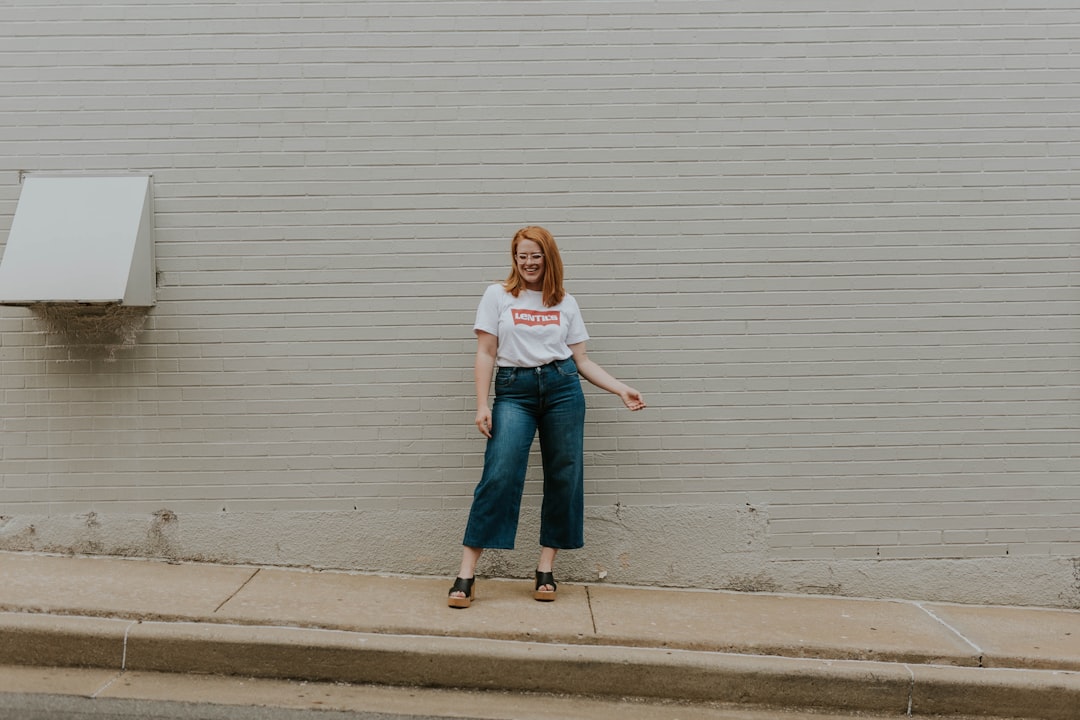
Vintage wide leg jeans are the best-kept secret in the denim market. Prices haven’t caught up to the resale value of vintage Levi’s 501s, quality is often higher than current production, and the fits feel different in a way that registers the moment you put them on.
I’ve built about half my wide leg rotation from vintage finds over the past three years. Three pairs of vintage Levi’s 550, one Wrangler from the late 80s, one unbranded pair I’m fairly sure is Gap from 1994, and a Tommy Hilfiger from 1999. Below is what I’ve learned about identifying real vintage, where to hunt, what to pay, and which brands deliver. For the era-specific guides, 90s Wide Leg Jeans and Wide Leg Jeans Y2k are the foundation. For general brand coverage, Best Wide Leg Jeans is the ranked reference. Pillar hub at Brand Guides.
What qualifies as vintage in denim
Minimum 20 years old is the common threshold, though the resale market often uses “vintage” more loosely. Truly vintage wide leg denim dates mostly to 1975–2005, spanning the 70s flare era into the Y2K wide leg moment.
Pre-1970s wide leg denim exists but is rare and typically more specialty. Sailor pants and workwear from the 40s and 50s in denim are collector items rather than wearable daily.
The sweet spot for wearable vintage wide leg is 1985–2000. Enough age to feel distinct from modern production, still functional and wearable, often available at reasonable prices.
Identifying authentic vintage
The care label tells you a lot. Union-made labels (“Made in USA” with a union bug) predate the 1990s offshoring of most denim production. “Made in USA” without a union bug typically dates 1990–1995 for most mass brands. Offshore tags (Mexico, various Asian countries) mostly post-1995.
Stitching: double-stitched seams throughout, flat-felled inseams, and chain-stitched hems are markers of pre-2000s construction. Modern production often skips chain-stitch hems for cost.
Hardware: copper-colored rivets with visible patina, heavier zippers with cloth tape, and brass buttons with era-appropriate branding. Stamped plastic hardware appears post-2000 in most mass production.
Fabric: heavier weight, rigid cotton, often 12–14oz. Modern denim averages lighter. The weight and drape are immediately different when you handle the fabric.
Red tabs on Levi’s are era-specific. Big E (capital E only) predates 1971. Little e (lowercase) post-1971. Both should have “LEVI’S” in capitals; any variation is suspicious.
Where to hunt
In-person thrift stores remain the best source. Specifically well-stocked Goodwill locations, Savers, Value Village, and estate sales in mid-sized cities. Coastal city thrift stores have picked-through inventory and higher prices; interior US thrift is where value lives.
Vintage-specific resellers on Etsy curate selections. Pricing is higher than raw thrift but the authentication work is done. Expect $80–$180 for common vintage wide leg, $200+ for rare brands or washes.
Depop and Poshmark have vintage sections that scale with the app. Poshmark tends to have more curated vintage; Depop has more raw finds. Search by brand and decade rather than “vintage” tag, which turns up a lot of misclassified items.
eBay is still valuable for specific brand and era searches. Auctions on specific Levi’s codes, Gap relaxed fits from the early 90s, and Tommy Hilfiger wide legs regularly close at reasonable prices. Vintage Wide Leg Jeans on Poshmark covers the Poshmark cross-search.
Estate sales in suburban markets where homes have been lived in for 40+ years occasionally surface entire wardrobes at low prices. Show up early.
Brands worth tracking
Levi’s 550, 560, 565. The relaxed and wide-leg cuts from Levi’s 1990s line. 550 is the most common; it’s a relaxed fit that reads wider than modern straight. 560 is looser. 565 is the fullest cut. Tagged sizes typically run large by modern standards.
Gap Relaxed and Easy Fit. Mid-90s Gap denim is surprisingly high quality. The Easy Fit in particular captures the classic 90s wide leg proportion.
Tommy Hilfiger. Late 90s/early 2000s Tommy wide leg pairs are well-constructed and have distinctive branding. The wash and hardware detailing is specific to the era.
Wrangler women’s from 80s–90s. Workwear-influenced cuts with heavy fabric. Less common in women’s resale but excellent when found.
Guess, Paris Blues, Mudd from early 2000s. Y2K-adjacent brands where the wide leg cuts have a specific era feel. Mudd in particular has built a cult following.
Calvin Klein from 80s. Long before the current Calvin Klein branding, the 80s wide leg and high-waist cuts were well-constructed.
What to pay
At in-person thrift: $5–$25 for vintage wide leg. Anything above $30 at Goodwill is overpriced unless the brand is notable.
At curated vintage: $60–$180 for standard vintage. $200+ for rare washes, specific year references, or notable brands. Signed or designer pairs can go higher.
At Poshmark/Depop: $40–$120 for common vintage. Rare finds occasionally higher. The market is efficient enough that extreme bargains are rare but so are gross overpays.
At eBay auctions: highly variable. End-of-auction pricing on specific Levi’s 550 pairs in size 28 has closed $35–$85 consistently. Uncommon brands or washes push $150+.
Fit considerations with vintage
Vintage denim sizes run large compared to modern labeling. A tagged 28 from the 1990s often measures like a modern 30. Always measure the waistband flat and check against your own waist plus an inch of ease.
Hip measurement matters equally. Vintage grading often has a more generous hip-to-waist ratio than modern, which can fit curvier frames better but be loose on straighter frames. Try on when possible.
Inseams vary. Some vintage pairs have been hemmed at some point; others retain original length. A listed 32 inseam might measure 30.5 if a previous owner cuffed and stitched.
Condition notes: inner thigh wear is common and usually cosmetic. Waistband stretch is dealbreaker territory. Back pocket wear can affect resale but is purely cosmetic for wear.
Washing and care for vintage denim
Cold wash, inside out, gentle cycle. Hang dry. Vintage fabric is often more fragile than new denim despite being heavier weight — decades of wash cycles, UV exposure, and use have compounded.
Detergent-free options (soapnuts, dedicated denim wash) help preserve color and fabric integrity on truly old pairs.
For pairs that smell musty from storage: a soak in cold water with a quarter cup of white vinegar, then line dry in sunlight. Removes the smell without damaging fabric.
Repairs: vintage pairs sometimes need hem repairs or small holes patched. A specialty denim tailor can handle both for $25–$50. Adds significant life to a pair worth keeping.
The authenticity versus comfort trade
True vintage wide leg pairs often have characteristics that read authentic but aren’t always comfortable — rigid fabric, less flattering through the hip than modern grading, waistbands that don’t sit cleanly. The trade is character for comfort.
My rotation has settled at: two vintage pairs I wear for specific outfits and one modern 90s-inspired pair for everyday wear. The modern pair gets 3x the wear. The vintage pairs get the outfits where I care about the details.
Wide Leg Jeans 90s Style covers modern interpretations if you want the silhouette without the hunt.
Where to buy
Poshmark is my primary vintage source: Vintage Levi’S 550 Wide Leg on Poshmark and Vintage Wide Leg Jeans on Poshmark. For Etsy curated vintage: Shop Now.
For a broader look: Vintage Wide Leg Jeans on Amazon catches some reprint and inspired-by options alongside real vintage.
The verdict
Vintage wide leg jeans are worth the hunt if you care about fabric quality, construction, and a silhouette that reads distinct from current production. Levi’s 550, 560, 565, Gap relaxed, and Tommy Hilfiger are the brands most worth tracking. Authentication comes down to labels, stitching, hardware, and fabric weight. Expect to pay $5–$30 at thrift, $40–$180 at resale platforms, and higher at curated vintage shops. Size up one size from modern tagging, check the hip measurement, and factor in condition. For daily wear, modern 90s-inspired pairs offer consistency; for outfits that care about the details, vintage is unmatched. My highest-traffic recommendation is a pair of vintage Levi’s 550 in medium wash from Poshmark — under $80 typically and as close to the authentic 90s wide leg as you can get without the estate sale hunt. Levi’s Vintage Clothing also publishes reissue drops of era-accurate cuts.
Shop the look on Amazon
Everything you need to build a secondhand-style wardrobe, delivered. We may earn a commission on purchases.
FAQ
What qualifies denim as vintage?
Generally 20+ years old. The wearable sweet spot for wide leg vintage is 1985–2000, spanning the 90s high-waist and late-90s wide leg eras.
How do I identify authentic vintage Levi’s wide leg?
Check the red tab (little e post-1971), care label (Made in USA with union bug predates 1990s), stitching (chain-stitched hem, double-stitched seams), and hardware (copper rivets with patina).
Do vintage wide leg jeans run bigger than modern?
Usually yes. Vintage grading from the 80s and 90s averages one size larger than modern labeling. Measure the waistband flat and check against your own waist plus an inch of ease.
Where are vintage wide leg jeans cheapest?
In-person thrift stores in interior US cities. Next: Poshmark and Depop searching by brand rather than “vintage” tag. Curated Etsy vintage costs more but includes authentication.


