
A pair of vintage Levi’s has more tells than a poker player. Once you know where to look, spotting a 1988 Cone Mills 501 from a 2011 retail clone takes about eight seconds, not an afternoon.
I started buying vintage Levi’s seriously in 2019, lost money on the first four pairs, and have been mostly right since. This is the guide I wish I’d had on the first trip to the thrift store — the 501 evolution, the Big E to small e transition, the Valencia Street vs Cone Mills White Oak question, and the specific authenticity markers that separate a great pair from a markup trap. If you want the broader jean-shopping context first, Brand Guides covers the rest of the denim universe, but for Levi’s specifically, you’re in the right place. The focus here is on vintage Levi jeans — the 501, 505, 517, 550 and their quirks — rather than jackets or shirts, which get their own treatment.
What “vintage Levi’s” actually means, depending on who you ask
There’s no official definition. Resellers use “vintage” for anything over 20 years old, which as of 2026 means pre-2006. Collectors tighten that to pre-1990. The hardcore crowd only calls pre-1971 pairs (Big E era) real vintage and treats everything after as “regular old Levi’s.” I use a three-bucket system and I’ll be straight about which I recommend buying:
- Pre-1971 Big E: collectible, expensive, often not wearable as daily jeans. Buy if you know what you’re doing.
- 1971–1988 redline selvage era: small e red tab, Cone Mills selvage denim, chain-stitched construction. The sweet spot.
- 1988–2003 transitional: Valencia Street still producing, selvage phased out for most 501s, care tag with printed lot codes. Affordable, wearable, still real Cone Mills cotton.
After 2003, Levi’s moved most production offshore and Cone Mills continued supplying the Levi’s Vintage Clothing line only until White Oak closed in 2017. Everything after 2003 is not what most people mean when they say old Levis, even though it’s technically decades old at this point.
The 501 evolution: a timeline that actually matters
The 501 is the entire reason this category exists. The cut has barely changed since 1947 — straight leg, button fly, no side seam pocket on the back right — but the details, fabric, and construction have evolved in specific steps that let you date a pair within a five-year window.
1947–1966: the pre-patch transitional years
Leather patch until 1954, then a cardboard-style patch, then a leather-look printed patch. Red tab reads LEVI’S in all caps (Big E). Single-needle arcuate on the back pockets. Hidden rivets on the back pockets until 1966, then bar-tacks replaced them. Cinch back long gone. These are museum pieces. You will not find them at Goodwill. A pair in wearable condition starts around $800 and goes up sharply.
1966–1971: the late Big E
Bar-tacked back pockets, single-needle arcuate, Big E red tab, XX patch reading “501XX” with the care instructions printed on the leather-look patch itself. Pre-shrunk options didn’t exist yet — every 501 in this era is shrink-to-fit rigid denim. Prices: $400 to $1,200 depending on size and condition. The “501XX” stamp is the marker you’re looking for.
1971: the Big E becomes small e
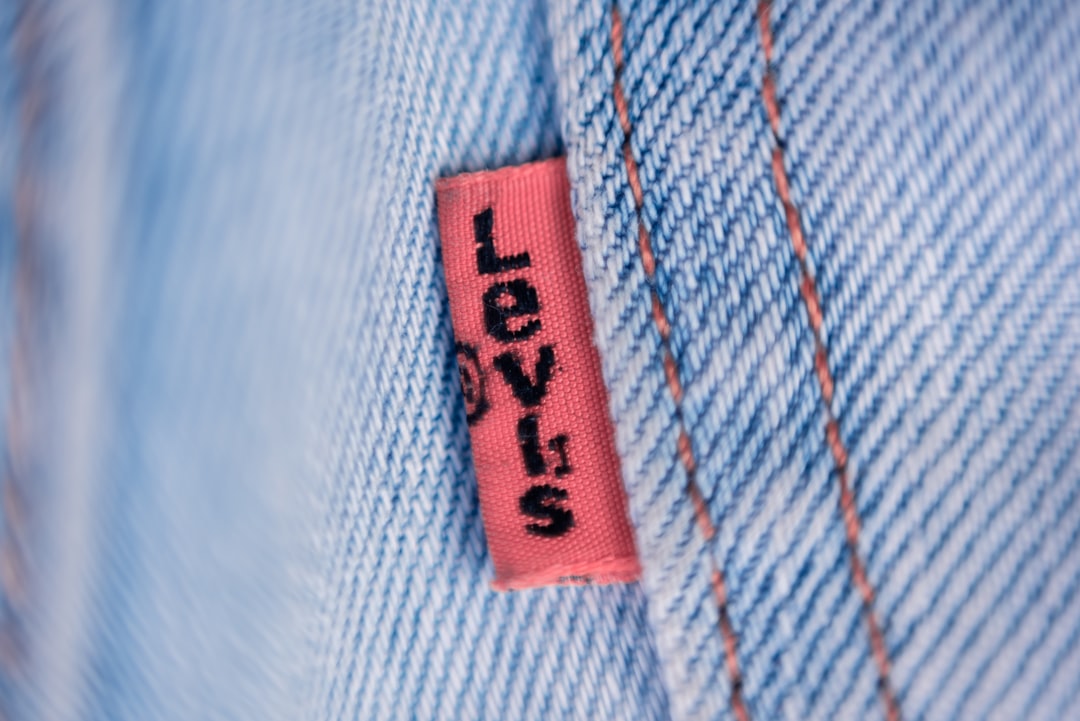
Levi’s filed for and won a trademark on the red tab itself as a design element, which required re-registering it. In the process the font was adjusted — “LEVI’S” became “Levi’s” with only the L capitalized, and this small change (small e is the colloquial name) dates every red tab piece after roughly March 1971. This is the single most useful dating marker in all of vintage Levi’s. Every resale listing should have a photo of the red tab — if they don’t, ask.
1971–1984: the redline era
Small e red tab, XX patch (leather-look, not real leather) continues reading “501XX,” Cone Mills selvage denim with the signature redline running through the outseam. Single-needle arcuate for most of this period. These are the pairs that collectors who actually wear their jeans chase hardest. Expect $200–$500 depending on size, wash, and condition.
1984–1988: the lot code shift
The XX patch format changes. Levi’s introduces lot codes on the care tag inside the back pocket — 11 or 12 digit strings beginning with 501. The first few digits of the lot code include factory and year data that collectors have mapped. The selvage denim continues through this period on most 501s. This is arguably the best value-to-quality window in vintage Levi’s right now: the jeans are undeniably vintage, the denim is Cone Mills, and they haven’t yet hit Big E prices.
1988–1993: selvage disappears from standard 501
Levi’s moved most 501 production away from shuttle looms to projectile looms. The redline selvage disappears. This is where a lot of buyers assume “no selvage = fake” — not true. A 1991 Valencia Street 501 with no selvage but an intact small e red tab, correct lot code, and chain-stitched inseam is 100% real vintage.
1993–2003: the Valencia years
The Valencia Street factory in San Francisco continues producing 501s alongside other Levi’s plants. Care tag format stabilizes. Pre-shrunk denim (often stamped “preshrunk” or “STF” for shrink-to-fit on the pocket flasher) is now standard in two variants. The market values Valencia-made pairs slightly higher than other US plants of the same era — the stitching quality was genuinely better. Look at the factory code on the care tag (three digits after the lot code); Valencia is 555.
2003: US production effectively ends
Valencia closes. Levi’s 501 production shifts to Mexico and Asia. The denim suppliers change. This is the line I draw for “true” vintage Levi’s. Everything after is Levi’s — still jeans, often fine jeans — but not what I’d pay vintage prices for.
Red tab vs Orange tab vs Big E: what each means on a real pair
The tab is the sewn-in cloth loop on the right-hand back pocket. Levi’s has used four tab colors in different periods:
Red tab: the flagship. 501, 505, 517, 550. Always read “LEVI’S” in some form. If it’s all caps LEVI’S, pre-1971. If it’s Levi’s with lower case e, post-1971.
Orange tab: a separate line running 1969 to 1999. Orange tab pieces were originally more fashion-driven — Levi’s Panatela, Action Slacks, and lower-grade denim pieces. Late 1980s and early 1990s Orange Tab 505s and 517s are genuinely good jeans and sit at roughly 40 to 60 percent of equivalent Red Tab prices.
Silver tab: a 1990s baggy-fit sub-brand. Extremely hot on resale right now because of Y2K cosplay. I’d push back on the pricing — these were not premium jeans when made. Construction quality is noticeably lower than Red Tab.
Black tab: short-lived 1990s fashion line, rare, mostly cotton/poly blends. Not what you want.
For vintage Levi’s buying, Red Tab is the default, Orange Tab is the value pick, Silver and Black are speculative plays I wouldn’t recommend unless you’re shopping a specific aesthetic.
Shrink-to-fit vs pre-shrunk: the one that gets beginners
Through 1985 or so, every 501 was shrink-to-fit — raw, rigid, unsanforized denim that would shrink roughly 10 percent in waist and inseam when first washed hot. Levi’s introduced pre-shrunk in the mid-1980s as a customer-friendly option. By the early 1990s, pre-shrunk was default and STF became a specialty product, often labeled with a “shrink-to-fit” flasher on the back pocket or the hem.
If you buy a vintage pair and don’t know which you have: look for the flasher paper (usually gone on thrifted pairs), or look at the inseam number on the stamped red tag or interior tag. A 36″ inseam labeled STF will measure closer to 32.5″ after a first hot wash and dry. A 36″ pre-shrunk will measure 35.5″ or so after. Wetting the hem and measuring shrinkage is actually a reasonable test if you suspect you’ve got raw denim — 8 to 10 percent shrinkage confirms STF.
My honest take: shrink-to-fit is worth it if you want the deepest, sharpest fades and you’re willing to get the sizing math right the first time. Pre-shrunk is worth it if you want a pair you can wear immediately without the ritual. I own both. I wear pre-shrunk more.
Valencia Street vs Cone Mills White Oak: the two factories people argue about
Cone Mills’ White Oak plant in Greensboro, North Carolina was the fabric supplier — they wove the denim cloth itself. Valencia Street was a Levi’s factory in San Francisco — they cut and sewed the finished jeans. These are different steps.
Cone Mills White Oak denim is what most collectors mean by “real Levi’s denim.” The mill opened in 1905, wove selvage denim for Levi’s on Draper X3 shuttle looms for most of the 20th century, and closed in December 2017 after losing the LVC contract. A pair woven from White Oak cloth, regardless of where it was sewn, has denim with a specific hand — slightly slubby, irregular, dense, and it fades in a honey-tinged way that modern projectile-loom denim doesn’t quite replicate.
Valencia Street was Levi’s premium US sewing operation. The factory closed in 2002 and the fit and finish details were genuinely sharper than other US factories. A 1995 Valencia-sewn 501 with Cone Mills cloth is the combination most collectors pay up for.
On a care tag, Valencia Street is identified by factory code 555 (sometimes 524). Cone Mills is harder to identify from the tag alone; you’re looking at the denim itself — selvage presence, weight (typically 12 to 14 oz), slight irregularity in the weave. If the pair is pre-1988, the denim is almost certainly Cone Mills White Oak. After that, it’s a case-by-case read.
Authenticity markers that actually matter
Here’s what I check, in order, before buying any pair of vintage Levi’s.
1. Red tab letter case. Big E (pre-1971) or small e (post-1971). This takes two seconds and rules out most modern counterfeits immediately — most fakers don’t bother aging the tab correctly.
2. Care tag in the back pocket. Inside the back pocket, upper left corner. A printed lot code starting with the style number (501, 505, 517) followed by fabric code and factory code. No care tag means either pre-1971 or the tag was removed — be cautious. A computer-printed barcode style care tag means post-2000.
3. Button stamp. The top button on a button-fly 501 has a factory number stamped on the back side. Common numbers: 555 (Valencia), 501 (generic), 524, 6, 2, 16. The number itself isn’t a date, but consistent stamping depth and a patina of honest wear on the face of the button signals an old pair.
4. Arcuate stitching. The V-curve on back pockets. Single-needle (looks slightly irregular, individual stitches visible) is standard through the late 1970s. Double-needle chain stitch (cleaner, perfectly regular) after. On the back of the pocket, you should see the arcuate stitching actually going through both layers — modern fakes sometimes skip the underside.
5. Chain-stitched inseam. Turn the pair inside out. The inseam from knee to hem should be chain-stitched, which creates a rope-like puckered effect after washing. A flat, lock-stitched inseam is a red flag on anything pre-1998.
6. Selvage (if claimed pre-1988). Outseam, below the knee, inside out. A self-finished edge, often with a red thread running through it. If a pre-1988 pair doesn’t have selvage, either it’s been hemmed above the knee or it’s not what the seller claims.
7. Size stamp on the back leather-look patch. Pre-shrunk pairs will say “preshrunk” or “shrunk-to-fit” on the patch itself in the 1990s. STF pairs from the 1970s just say “501XX.” Absence of all text on the patch (just the horse drawing) is a strong signal the patch has been heavily worn — often a good sign of age, not a fake.
Where to buy vintage Levi’s jeans without getting burned
I’ve spent most of my vintage Levi’s budget on Poshmark, Depop, and eBay. The tradeoffs:
Poshmark: best measurement culture, most transparent pricing. Search with a waist range filter. Vintage Levis 501 on Poshmark is where I’d start. Sellers generally respond to measurement questions within a day.
Depop: higher markup, better styled photography, stronger for specific rare cuts. If you want a 646 or a 684 flare, Depop has them. Filter by price and be willing to message three sellers to get one accurate measurement set.
eBay: the deepest catalog. Sold listings are public — search “vintage Levi’s 501 Big E sold” and you’ll see actual transacted prices by size, which is the single best way to calibrate what’s fair. Bid late, not early.
Vinted: strong for European-market pairs. The 501s sold in France and Italy in the 1990s have subtle differences (metric inseam printed on tags, slightly different care tag wording) and can be had at decent prices.
Etsy: curated sellers markup significantly. I use Etsy when I know the exact lot number I want and can filter to a specific listing.
Amazon: you cannot buy actual vintage Levi’s on Amazon. What you can buy is Levi’s Vintage Clothing reissues (the LVC line), which are excellent reproductions of specific year cuts — 1947 501, 1954 501Z, 1955 501, 1966 501. Levis Vintage Clothing 501 on Amazon is the entry point. These are new jeans made to vintage spec, priced at $200–$320, and they’re worth it if you want the fit and finish without chasing a 35-year-old pair in your size.
Thrift stores in person: still the ceiling. I pulled a 1987 501 Big E from a rural Goodwill in 2021 for $14. That kind of buy is still out there; it’s just rare.
The broader comparison of resale apps — including which have the best seller vetting for vintage specifically — is covered in Resale & Thrift Store Apps.
Current price reality for vintage Levi jeans in 2026
Prices have moved noticeably in the last two years. Here’s what I see consistently:
- 1990s Valencia-made 501 pre-shrunk, good condition, common size (32–36 waist): $85–$140
- 1980s small e red tab 501, Cone Mills selvage present: $180–$350
- Pre-1971 Big E 501, wearable condition: $400–$1,200
- 1970s 517 bootcut, small e: $90–$180
- 1990s 505 Orange Tab: $40–$80
- 1990s 550 relaxed: $40–$70 (if the seller isn’t charging Y2K tax)
- 1970s 684 flare: $200–$450 when you can find them
These are realistic paid prices, not asking prices. Asking prices on Depop and Etsy often run 30 to 50 percent above these. Poshmark counter-offers typically land close to the ranges above. eBay sold comps usually come in a touch under.
Fit, sizing, and what to expect on the body
Vintage Levi’s run differently from modern Levi’s. A 1992 501 in a stated 32 waist often measures 32.5″ flat across the top (so 33″ circumference) when new, and stretches to about 34″ after a month of wear. A modern Levi’s 501 in a stated 32 runs closer to 31.5″ true and stretches less because of the cotton-elastane blend.
The rule I use: measure your own waist snugly with a soft tape at the point you’d actually wear the jeans. Buy that number, or that number minus half an inch on shrink-to-fit. Ignore the printed size tag entirely. The inseam is more reliable because vintage inseams were cut to measured length, but always ask for a measurement photo.
The rise on vintage Levi’s is the part that sells people on them. A 1990s 501 has an 11.5″ to 12.5″ front rise depending on size. That’s substantially higher than most modern “high-rise” jeans, which typically sit at 10–11″. If you’ve ever felt like modern high-rise still isn’t high enough, vintage 501s are probably the fix.
For anyone under 5’4″, though, vintage inseams are long. A 1990s 501 in a 30 inseam is genuinely rare. 32 and 34 dominate. You’ll likely be tailoring. Our notes on short-body fit in Petite Jeans (2026) apply — find a tailor who preserves the original chain-stitch hem. The fade at the hem is a real part of what you’re paying for.
Styling old Levis without looking in costume
The 501 straight leg is flattering, versatile, and ages well. Wear it with a boxy sweater, an oversized oxford, a cropped knit, a cotton tee tucked at the front hem only. Avoid the full 1995 mall outfit unless that’s your genuine aesthetic. Vintage denim reads best when the rest of the outfit is modern — a current shoe, a recent silhouette on the top, minimal accessories.
Shoes that work: loafers, western boots (not costume-western, just any Frye or Tecovas boot), white sneakers, Mary Janes, flats, Blundstones. Shoes that break the look: chunky dad sneakers with elaborate tooling, anything that reads as “aggressive trend.” The whole idea is that the jeans carry the outfit.
Tops: a fitted ribbed tank, an oversized button-down, a gray hoodie, a boxy tee. Nothing elaborate. The denim is the statement; don’t compete with it.
For women who want vintage Levi’s but not the slouchy-fit thing, buy a smaller waist and belt it rather than buying a looser cut — the straight leg of a 501 tailored closer to the body is the best version of these jeans on most frames. The broader denim-silhouette conversation is in Denim Styles.
Three pairs I actually own and what they cost me
1989 501 pre-shrunk, 33×36, Cone Mills denim: $22 at a thrift store in Oakland, 2019. Hemmed at the time of purchase (chain stitch intact). Worn roughly twice a week for four years. Still in rotation. Zero repairs needed so far. Honey-colored whiskers at the hips, faded back pockets exactly where my phone lives. This is the pair that convinced me.
1976 517 bootcut, 30×32, small e red tab: $95 on Poshmark, 2022. Bought for my partner, who wears them constantly. The flare was subtle enough to read modern with a short boot. Some fading at the seat, acceptable given age. Fit true to waist measurement.
1994 501 STF, 31×34, Valencia factory code: $140 on Depop, 2023. Overpaid slightly but I wanted the Valencia stamp. Shrank to roughly 30×30 after first hot wash. Has become my darkest, crispest pair; fade development is just starting. Would buy again at $120 or less.
The pattern across all three: measured against body, asked for seller photos of care tag and red tab, bought in sizes I knew I could wear. That’s the whole method.
The verdict
Vintage Levi’s are still worth it — but the window for thrift-store bargains is closing, prices are up across the board, and sellers are more sophisticated than five years ago. Buy a 1990s pre-shrunk 501 from Poshmark in your measured size, under $120, with clear photos of the red tab and care tag. That’s the starting point. If you love them, work your way toward a small e selvage pair from the early 1980s. Don’t chase Big E until you know exactly what you want it for. Don’t buy Levi’s Vintage Clothing at vintage prices — it’s great product, but it’s new, and should be bought at LVC pricing. And if you see a 684 flare in your size for under $200, buy it. You won’t see another one for a while.
The brand will make jeans forever. The specific pairs from specific years, with Cone Mills cloth and Valencia stitching and honest wear, are finite and getting rarer. That’s the whole argument.
Shop the look on Amazon
Everything you need to build a secondhand-style wardrobe, delivered. We may earn a commission on purchases.
FAQ
How can I tell the year of vintage Levi’s?
Combine four data points: red tab (Big E pre-1971, small e post), care tag format (no tag pre-1971, basic print 1971–1985, lot code with fabric info 1986+, computer barcode post-2000), button factory stamp, and denim characteristics (selvage pre-1988, pre-shrunk labeling from mid-1980s). No single marker dates a pair precisely, but together they’ll narrow to a 3–5 year window.
What’s the difference between Big E and small e Levi’s?
The red tab lettering. Pre-1971 Levi’s tabs read “LEVI’S” in all caps (Big E). After Levi’s re-registered their tab trademark in 1971, the lettering became “Levi’s” with only the L capitalized (small e). This is the single most reliable dating marker for any tab-bearing piece.
Are vintage Levi’s worth the money?
Pre-shrunk 1990s pairs at $80–$120 are genuinely good value — Cone Mills denim, US construction, and a rise no modern retail 501 offers. Big E pairs at $400+ are collectibles first, wearable jeans second. Levi’s Vintage Clothing reissues are excellent new product at $200–$300 and a reasonable alternative if you can’t find vintage in your size.
Where is the best place to buy vintage Levi’s?
Poshmark for measurement transparency and price. eBay for sold-listing data and deep catalog. Depop for rare cuts and styled photography. Thrift stores in person for bargains if you have the patience. Avoid Instagram reseller accounts that charge boutique markups on common 1990s pairs.
How do I know my vintage Levi’s are real, not counterfeit?
Check red tab lettering, care tag format against known date ranges, single-needle or chain-stitch construction, button factory stamp, and selvage presence on pre-1988 pairs. Most “fake vintage Levi’s” listings are actually modern Levi’s being sold as vintage, not fabricated counterfeits. Confirm the era markers match the claimed decade before paying vintage prices.


