
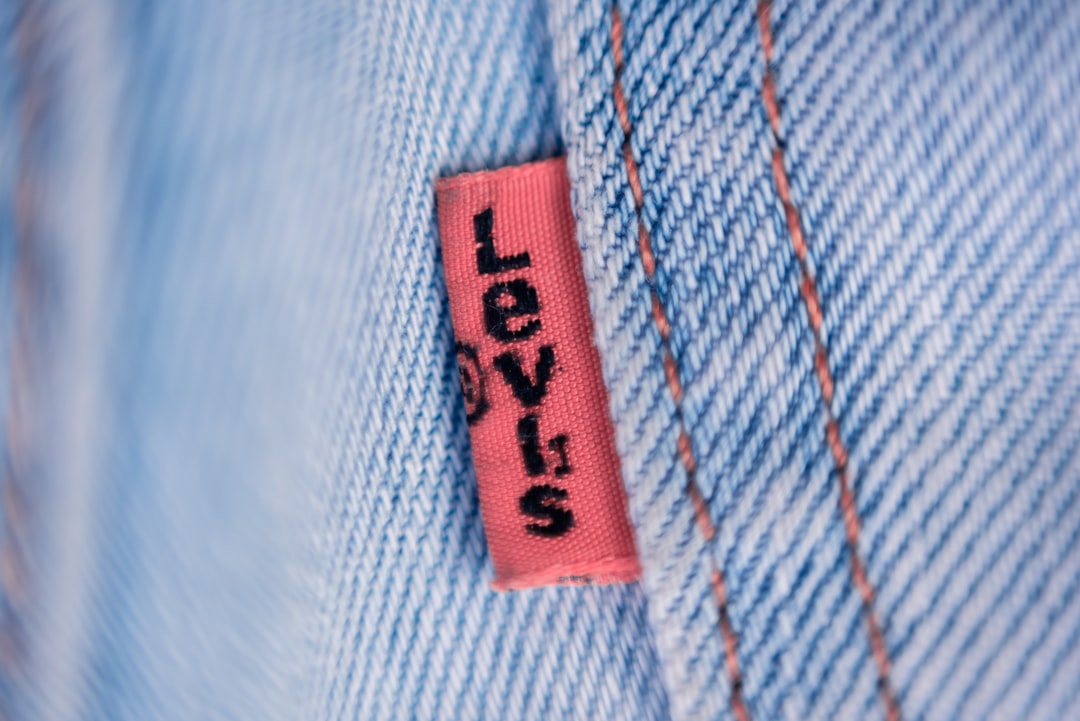
The patch is the single most useful authentication tool on a pair of vintage Levi’s — and it’s also where 90% of fakes and replicas get it wrong. Once you know what to look at, you can date a pair within five years from across a thrift aisle.
I’ve handled hundreds of vintage Levi’s patches across 501s, 517s, 550s, and Type II and III jackets. The patch material, the two-horse image detail, the font, and the care information have all changed across decades in predictable ways. This piece is what I wish I’d had on my phone the first time I tried to identify a pair. For the full fits guide and dating reference, Vintage Levi’s pairs well with this, and the Brand Guides hub covers the pillar.
Leather vs paper: the first question
Vintage Levi’s used a leather patch from the 1880s through 1954. After 1954, Levi’s introduced a paper (actually “jacron” — a paper-plastic composite) patch for most production lines to cut cost and improve durability in the washing machine era.
If you’re holding a pair of vintage Levi’s with a real leather patch, you’re either looking at pre-1954 jeans (very rare, collector territory, easily $500+) or later LVC (Levi’s Vintage Clothing) reissues that use leather for authenticity. Modern non-LVC Levi’s do not have leather patches. Any modern-looking pair with a leather patch is either LVC, a premium collab, or a fake.
Jacron patches dominate the vintage market from 1954 on, which covers essentially everything most buyers are shopping for — 70s, 80s, and 90s pairs. This is what I’ll focus on, because this is where the real dating work happens.
The two-horse image — decade clues
The two-horse pulling apart a pair of Levi’s image has been on the patch since the 1880s and has changed in subtle ways over the decades. The dateable tells I use:
Detail quality. 60s and 70s patches have sharp, detailed horses with clearly-drawn manes and visible musculature. The men pulling the jeans have detailed features. 80s patches start simplifying. 90s patches (especially mid-to-late) have flatter, less detailed horses — still recognizable but less crisp. 2000s patches further simplified. The easiest read: if the image looks like a pencil sketch with shading, you’re looking at 60s–70s. If it looks like a screen print with clear outlines but no shading, you’re looking at 80s–90s.
Patch background. Vintage jacron patches are tan to light brown. Very old pairs fade toward off-white. Modern patches are a more uniform brown. The texture of old jacron — slightly crinkled, slightly shiny in places — is hard to fake.
Border and embossing. 70s and earlier patches have raised borders and embossed text. Later patches became flatter. If you can run a fingernail over the text and feel it, you’re in older territory.
Waist x length printing
The patch prints the waist and length (e.g., W32 L34) on the bottom. How this prints is a useful dating clue:
Pre-1970s: Numbers were often stamped in ink over the patch — sometimes crooked, sometimes faded. The numbers can be hard to read on very old pairs. This is a sign of real age, not a problem.
1970s–80s: Numbers became more consistently applied, still inked, still in the same sans-serif font family Levi’s used on the care tag.
1990s: Sizes are cleanly printed, reliably visible, and sit neatly in the designated lower panel of the patch.
2000s and later: Sizes are sharp, sometimes in a slightly different typeface. On pairs made outside the US, the font can look subtly wrong to someone who’s seen hundreds of USA-made pairs.
One giveaway for repros and fakes: the sizing font is too clean, too crisp, and the numbers look computer-printed rather than ink-on-jacron. Real vintage has ink that soaked slightly into the jacron surface. Fakes often have a sharp, almost laser-printed look.
The “EVERY GARMENT GUARANTEED” line and lot number
Most vintage Levi’s patches read along the bottom: “EVERY GARMENT GUARANTEED” or similar text, and above that, the lot number (501, 517, 550, etc). The font used for the lot number has changed in ways that help date a pair:
Big-E era (pre-1971 on most lines): The number is often in a slightly thicker serif or semi-serif. The “501” on a 1968 patch looks different from a 1988 patch if you compare side by side.
Small-e era (1971+): Font standardization. The 501 on most small-e patches is consistent across 70s, 80s, and early 90s.
The text “EVERY GARMENT GUARANTEED” and the Quality Never Goes Out of Style language also shifted slightly across decades. I won’t catalog every variation here — entire Reddit threads exist for this — but if you’re about to drop $300 on a “Big-E” pair, compare the patch to verified photos of known-dated pairs before you commit.
Patch condition and what’s acceptable
Vintage jacron patches take damage. This is normal. What’s acceptable:
Fading and discoloration: Very common, part of vintage. A faded patch is not a flaw; it’s age.
Cracking: Common on jacron from the 70s and older, especially around folds. Minor cracking is fine. Major cracking that splits the patch is a problem.
Partial tearing: Some collectors actively prefer a slightly torn patch as a sign of honest wear. As long as the lot number and sizing remain readable, a small tear doesn’t hurt resale.
Complete patch loss: Knocks value substantially. A pair of 1978 Big-E 501s with no patch is still wearable but loses maybe 40% of its market price. You also lose your best authentication tool, which makes reselling that pair down the line much harder.
Ink transfer: Old patches sometimes leak ink into the waistband fabric around them. Not a flaw unless severe.
What’s not acceptable: a patch that looks suspiciously clean on a pair with heavy leg wear. Real vintage pairs wear evenly. A pristine patch on distressed jeans usually means the patch was replaced — sometimes innocently by a previous owner, sometimes deliberately to fake age.
Patch placement and stitching
The patch sits on the back right waistband, just behind the belt loop. It’s stitched on with a consistent bar-tack pattern. Things to look at:
Stitch color: Should match the waistband’s original construction — typically a sandy gold or off-white thread. Bright white or gray stitching is a red flag.
Stitch density: Vintage bar-tacks are tight and consistent. Cheap replicas often have sparse or uneven bar-tacks.
Alignment: Real patches are mostly aligned but not laser-perfect. They can sit slightly askew on old pairs because they were stitched by humans at speed. A perfectly square patch on a “1975” pair is a suspicious sign.
Under-patch fabric: If you lift the patch edge slightly, you should see the same waistband material underneath without discoloration or glue residue. Discoloration or glue suggests the patch is a replacement.
Reproductions and LVC patches
Levi’s Vintage Clothing (LVC) makes reproductions of specific vintage models — 1933 501XX, 1947 501, 1966 501, etc. — that use accurately-reproduced leather and jacron patches. These are not fakes; they’re legitimate Levi’s products sold at premium prices ($200–$400 new). If you’re buying second-hand and the seller lists a pair as “Vintage Levi’s 1947 501,” and the patch looks too clean and too accurate, you may be looking at an LVC pair that’s been resold as vintage.
LVC pairs have their own tells: a “Levi’s Vintage Clothing” tag on the back inner waistband, specific care tag language, and often “Made in Italy” or “Made in Turkey” on the inside (LVC manufactures internationally for specific cuts). LVC is great product. It is not vintage. It shouldn’t be priced as vintage.
Non-jacron and fabric patches
Some Levi’s lines use a different patch material. Orange Tab pairs (502, 517, 519) in the 70s and 80s sometimes have the same jacron but in different proportions. Student fits and some specialty lines from the 80s had canvas or fabric patches. Women’s cuts from various decades sometimes had smaller, more decorative patches. If you’re shopping outside standard 501s, don’t expect a standard patch — double check with known photos of that specific fit and year.
Quick dating cheat sheet
Using only the patch, the fastest way I sort a pair by decade:
– Leather patch, very old jacron with ink-stamped sizing, detailed horses: pre-1970s, possibly pre-1954 if leather. Collector territory.
– Tan jacron, sharp horse detail with shading, Big-E tab nearby, possible redline selvedge on inseam: 1960s–early 1970s.
– Tan jacron, moderately detailed horses, small-e tab, Care instructions present: 1970s–1980s.
– Browner jacron, flatter horse image, small-e, Care instructions with wash codes: 1990s (the bulk of what’s in the market).
– Clean jacron, simplified image, Mexican or other non-US country of origin on care tag: post-2003, not really vintage in the meaningful sense.
This isn’t definitive on its own — combine with the red tab, care tag, selvedge inspection, and back pocket stitching to really lock in the year. But it’s a fast first-cut filter when you’re standing in front of a rack of 40 pairs in a thrift shop with 20 minutes to spare.
The verdict
The vintage Levi’s patch is the single fastest read for authentication and decade. Learn to spot leather vs jacron, study the two-horse detail across decades, check the lot number font, and pay attention to the patch condition against the rest of the pair’s wear. A patch that looks clean while the jeans look heavily worn is a red flag — real vintage ages together. Combine patch reads with tab color (Big-E vs small-e), care tag, and selvedge check, and you’ll rarely overpay for a repro or a misdated pair. Vintage Levi Tag Identification covers the care tag side of this in detail, and How to Identify Vintage Levi’s is the broader authentication piece. For buying, Levis Vintage Clothing on Amazon and Vintage Levis 501 on Poshmark are where I spend most of my research time.
Shop the look on Amazon
Everything you need to build a secondhand-style wardrobe, delivered. We may earn a commission on purchases.
FAQ
Are all vintage Levi’s patches leather?
No. Leather patches were phased out in 1954. Most vintage Levi’s you’ll find in the resale market (60s onward) have jacron paper patches, not leather.
Why do some vintage Levi’s patches look fake?
Because some are. Common fakes have patches that are too crisp, too new-looking on otherwise distressed pairs, or have the wrong font on the sizing numbers. Compare any suspicious patch to verified photos from the same decade before buying.
Is it okay if the vintage Levi’s patch is partly torn?
Yes. Minor tearing is normal aging on jacron. As long as the lot number and sizing remain readable, it doesn’t significantly hurt value. Complete patch loss does hurt value.
How do I know if a patch has been replaced?
Check stitch color, alignment, and the fabric under the patch. Pristine patches on heavily-worn jeans are suspect. Bright white stitching on an otherwise aged pair is suspect. Glue residue under the patch is a clear replacement.
Does patch condition affect price?
Yes. A pair with a clean, readable, original patch commands a premium. A pair with no patch or a replaced patch sells for 30–40% less, especially in the collector Big-E and redline selvedge segment where authentication matters most.


