
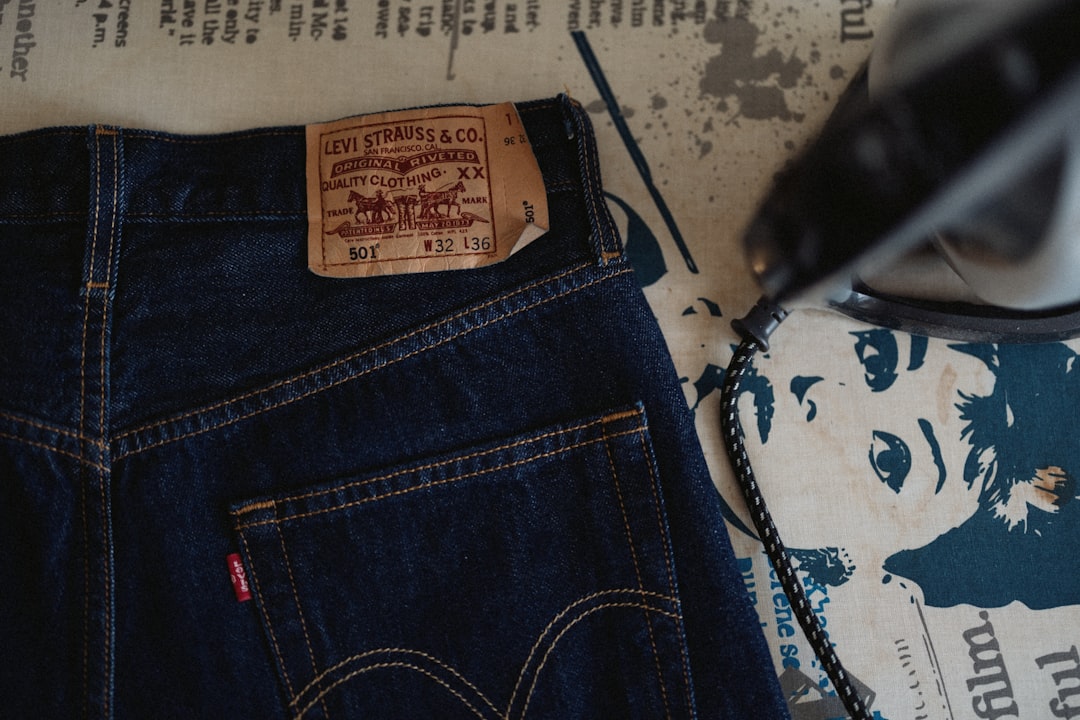
If there’s one pair of jeans that’s worth learning to buy well, it’s the vintage Levi 501. Everything else in denim is measured against it, and most of what’s sold as “vintage 501s” on resale is either mislabeled, overpriced, or both.
I own seven pairs of vintage 501s right now: two from the 70s, one from the 80s, four from the 90s. I’ve handled probably fifty more across shops, thrift, friends’ closets, and returns. This is the practical guide — what actually matters, what gets oversold, and how to buy without getting burned. For authentication specifics, How to Identify Vintage Levi’s pairs well with this, and Brand Guides covers the full pillar.
What makes a 501 vintage
The 501 has been continuously produced since 1873. “Vintage 501” in common usage means pre-2003 (when 501 production moved from the USA to Mexico) and typically 70s, 80s, or 90s pairs. The cutoff isn’t arbitrary — pre-2003 pairs share specific construction details that later pairs don’t:
– Made in USA
– Cone Mills denim (through 1996 for most 501 production)
– Straight original-cut fit
– Button fly (always, across all 501 eras)
– Specific back pocket arcuate stitching
A 2008 Mexico-made 501 is a fine pair of jeans but it’s not vintage in the way denim buyers mean it. Know the difference before paying vintage prices.
The key 501 eras, briefly
Pre-1966: XX model. Collector territory. Hidden rivets, leather patch, specific construction details. $500–$5,000+ depending on year and condition. Not a practical category for most buyers.
1966–1971: Big-E transition. Capital E tab, Cone Mills denim, single-stitch construction on some seams. Still collector-priced but wearable. $300–$800 for clean pairs.
1971–1986: Small-e with redline selvedge. The transition era. Small-e tab (lowercase E in Levi’s), red selvedge line visible on the inner inseam. Redline 501s are the heritage sweet spot — collectible but still functional. $150–$400 for wearable pairs.
1986–1996: Small-e, Cone Mills, no redline. Levi’s moved 501 production off redline selvedge looms mid-80s. Denim still Cone Mills. This is the “workhorse” era — excellent vintage pairs at reasonable prices. $75–$150.
1996–2003: Transition from Cone Mills. Still USA-made, but denim sourcing shifted. Construction remains quality. $55–$95. Most common vintage 501 on the resale market.
Post-2003: Mexico, Sri Lanka, other. Not vintage in the usable sense of the word. Priced as regular used jeans, $30–$50.
Cone Mills — why it matters
Cone Mills White Oak plant in Greensboro, NC supplied denim to Levi’s for most of the 501’s history. The plant closed in 2017, but for 501 purposes, Cone Mills supplied through approximately 1996. Pairs from before this cutoff are genuinely different fabric from post-1996 pairs.
What makes Cone Mills denim special:
Weight: 13–14 oz, heavier than most modern denim (9–11 oz).
Selvedge on older pairs: Pre-1986 pairs often have redline selvedge from the original shuttle looms. This is a visible red line running up the inner inseam.
Fade character: Cone Mills denim fades with distinct vertical “slub” patterns from irregular yarn thickness — the kind of character modern uniform yarn can’t replicate.
Hand: Crisp when new, softens into a specific feel with wear that’s different from modern ring-spun or open-end yarn denim.
You can feel the difference in your hand. I have a 1993 pair (Cone Mills) and a 2005 pair (post-Cone-Mills, still USA) and they feel materially different — the 1993 is heavier, denser, and holds shape better.
Shrink-to-fit and wet-shrinking
Original 501s were sold as “shrink-to-fit” — unwashed denim that buyers shrunk at home by wearing wet or soaking in hot water. The shrink:
– Waist: ~1.5 inches
– Length: ~2–3 inches
– Thigh and seat: tighten 5–10%
Most vintage 501s on resale today have already been washed, so what you buy is at final size. But occasionally you’ll find genuinely unwashed or deadstock pairs. For those:
Wet-shrink process:
1. Fill bathtub with hot water.
2. Put on the jeans.
3. Get in the bathtub.
4. Stay in there for 45 minutes to an hour.
5. Get out, let drip-dry on your body, then sit in them until dry.
The result is a shrink custom-fit to your body. Sounds ridiculous. I’ve done it. It works.
Alternatively, soak the jeans in a hot bath without wearing them, then tumble dry hot. You get the shrink without the fit customization.
How 501s actually fit
I’m 5’9″, 155 lbs, 31 waist, and my vintage 501s are W32 L32 shrunk. The fit:
Rise: Mid-rise by vintage standards, high-rise by modern standards. Sits at or just above the navel.
Seat: Roomy, not baggy. The straight leg cut gives a column silhouette.
Thigh: Relaxed-straight. Not skinny-tight. A slight touch of space at the inseam.
Knee to ankle: Straight, no taper. The hem opening is essentially the same width as the knee.
Length: Shrunk to your inseam. I hem 2″ off a L32 for my 30″ inseam.
Comparison: a modern Levi’s 501 Original in the same size sits an inch lower on the waist, is slightly slimmer through the thigh, and has marginally more taper at the ankle. The silhouettes are similar but not identical.
Dating a vintage 501 quickly
My rapid-fire dating process in a thrift store with 30 seconds per pair:
Flip the back right waistband: Look for the patch. Jacron (paper) = post-1954. Check the sizing font; if printed clean and the horse image is flat, likely 90s.
Check the red tab: Capital E = pre-1971. Lowercase E = post-1971.
Turn the jeans inside out and look at the inner inseam at the cuff: Red selvedge line = pre-1986. No redline = post-1986.
Check the care tag: Made in USA + multi-language text with care codes = 80s–90s. Simpler text without care codes = 70s. No tag at all = pre-1972 or tag fell off.
Check back pocket stitching: Double-stitch arcuate with hidden rivets (pre-1937) is unicorn territory. Double-stitch no hidden rivets is standard post-1937. Single-stitch on some seams dates older.
Combine these and you can date a 501 to within 5 years reliably. With practice, 2–3 years.
What to check before buying
Crotch. The #1 failure point on vintage 501s. Check the crotch seam carefully in any listing. Ask for a direct photo if not shown. Thinning is fine; a hole is a repair job.
Back pocket corners. Pockets get pulled and stressed. Loose threading at the corners is common and usually fine.
Button fly integrity. All buttons present, turning freely, sewn securely. Replacement buttons are easy but it’s a hassle.
Waistband shape. Vintage waistbands stretch. A well-worn pair will have a slightly wavy waistband — it’s character. Severe stretching that doesn’t return to shape is a belt requirement.
Leg fade symmetry. Some pairs fade asymmetrically (one leg more than the other). Character if you like it; uneven-looking if you don’t.
Measurements. Get them before buying. Flat waist, inseam, thigh, knee, leg opening. Compare to your reference pair.
Where to buy vintage 501s
eBay: The deepest market. Set up saved searches for your size and target decade. Check sold comps before every bid.
Poshmark: More curated, higher list prices. Offers work. Vintage Levi 501 on Poshmark is my weekly scroll.
Thrift in person: Goodwill, Salvation Army, estate sales. Best prices if you have time.
Vintage shops: Convenience with markup. Fair trade if the shop’s eye is good and you value the curation.
Wornwear (Levi’s Secondhand): Authenticated, priced at the top of fair market. Good if you want no hunting and no risk.
Specialist dealers: For pieces over $300. Provenance matters for high-value Big-E pairs.
What I pay for vintage 501s
My actual purchase prices over three years:
– 1975 Big-E redline 501s, W32 L32: $380 (bought from a specialist, good condition)
– 1982 small-e redline 501s, W32 L32: $140 (eBay)
– 1989 small-e 501s, W32 L32: $85 (estate sale find)
– 1993 Cone Mills 501s, W32 L32: $62 (eBay)
– 1996 501s, W32 L32: $55 (Poshmark offer accepted)
– 1998 501s, W32 L32: $48 (eBay)
– 1994 501s in black, W32 L32: $72 (Poshmark)
Average: $120. Median: $72 (closer to what you’d pay typically). Total: $842 for seven pairs across decades.
The honest negative
Vintage 501s require tolerance for imperfection. They have quirks — uneven fade, stretched waistbands, thinning crotches, missing buttons, irregular shrink. If you expect perfect condition, you’ll be frustrated. If you accept honest wear as character, you’ll love them.
Also: they’re not for everyone’s body. The high-rise straight-leg silhouette flatters some bodies and not others. If you’ve only worn skinny jeans or tapered fits, a 501 may feel boxy at first. Give it three wears before deciding.
The verdict
Vintage Levi 501 jeans are the reference point in American denim for good reason — the combination of Cone Mills denim, straight-cut silhouette, and era-specific construction delivers a wearing experience no modern pair matches. Start with a 90s USA-made pair ($60–$85), verify the care tag says Made in USA, check the crotch before buying, and don’t overpay for Big-E unless the collector premium matters to you. My 1993 pair has been in weekly rotation for four years and still looks better than any new pair I own. The upfront cost is higher than buying new, but the cost per year of wear is lower and the jeans only improve with time. For specific 501 men’s sizing, Mens Vintage Levi’s covers that, and Best Price for Vintage Levi’s Jeans covers buying discipline. For browsing, Vintage Levi 501 Jeans on Amazon and Vintage Levi 501 on Poshmark are the starting points.
Shop the look on Amazon
Everything you need to build a secondhand-style wardrobe, delivered. We may earn a commission on purchases.
FAQ
What makes a Levi’s 501 vintage?
Pre-2003 production (Made in USA), typically 70s, 80s, or 90s. Cone Mills denim through 1996. Button fly. Original straight cut. Pairs meeting these criteria are genuinely vintage; later pairs are just used jeans.
How do I know if my vintage 501s are Cone Mills?
Made in USA, pre-1996. The inside care tag often doesn’t specify the mill, but production dates line up. Heavier hand, denser weave. Red selvedge line on pre-1986 pairs confirms it.
Are vintage 501s worth the price?
Yes, if you pay market rate and not shop markup. A $70 vintage 501 outperforms a $120 new 501 in fabric quality, construction, and longevity. The math favors vintage.
Should I buy shrink-to-fit 501s?
Only if you’re prepared to wet-shrink them yourself. Most vintage pairs are already washed and at final size. If the listing says “STF” or “unwashed,” size up one in waist and two in length, and plan to shrink.
How do I know what decade my 501s are?
Tab (Big-E/small-e), selvedge (red line/no red line), care tag format, back pocket stitching, and overall patch condition. Each gives you a clue; combine them for a confident date within 5 years.


