
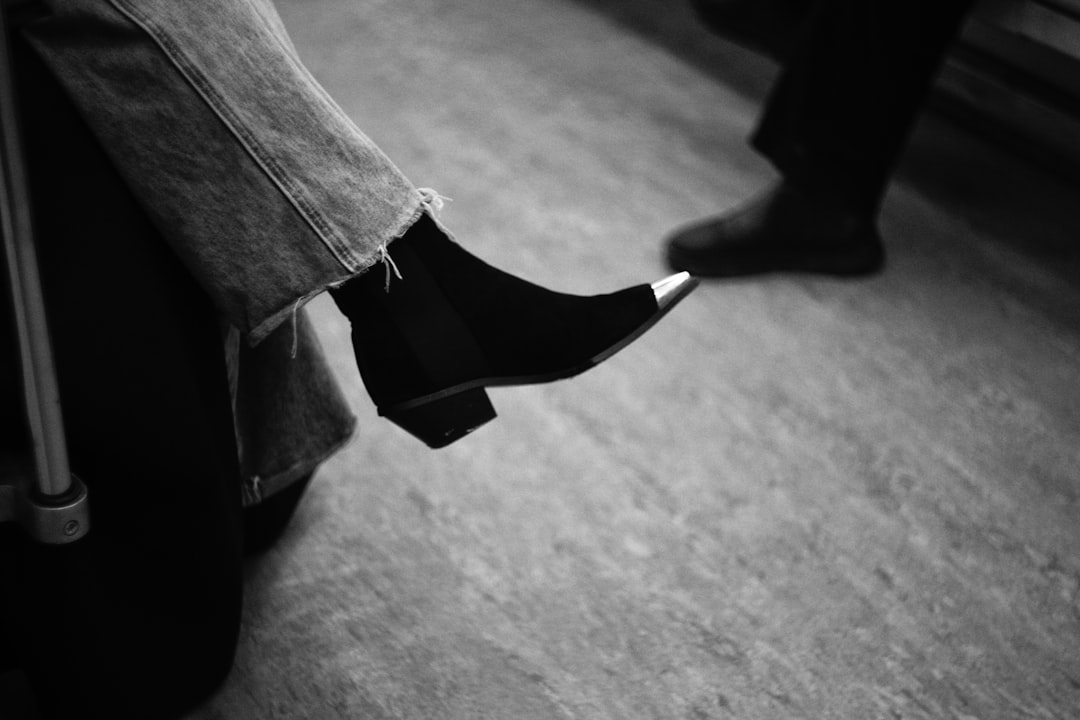
Short western boots bridge the gap between ankle boots and cowgirl boots — enough shaft to show the western lineage, not enough to demand an outfit built around them. Here’s what to know before you buy.
I own three pairs of short western boots and I wear them the way other people wear ankle boots — daily, without thinking about whether they “match” what I’m wearing. That’s the entire case for the category. A mid-calf cowgirl boot is a commitment. A short western boot integrates into a normal wardrobe, the way a pair of black ankle boots does, but carries the stitched vamp, the Western heel, and the pull-straps that place it in the western family. If you want the boots to read western without shouting it, short is the shaft to consider. For the broader category picture, start with our Western Boots anchor for brand tiers and silhouettes. This piece focuses specifically on the short shaft. The wider Brand Guides collection has more on related decisions.
Short western boots vs. related silhouettes
The terminology overlap can confuse shopping. Three adjacent categories:
Short western boots: 7-10 inch shaft, ending on the lower calf. The focus of this piece.
Short cowgirl boots: Same shaft range, but “cowgirl” implies slightly more decorative detailing in common usage. In practice the two categories overlap heavily. Our Short Cowgirl Boots guide covers the decorative short pairs.
Ankle western boots / booties: Under 7 inches, ending at or near the ankle bone. Our Ankle Cowgirl Boots piece covers these.
If you’re searching for “short western boots,” you likely want the 7-10 inch range with more traditional construction and less ornamental decoration. That’s the framing below.
What a short western boot gives up, and what it keeps
Compared to a full mid-calf western boot, the short version gives up:
Visual drama. A mid-calf boot is an announcement. Short western boots are a footnote. For daily wear this is a feature; for occasions where you want the statement, it’s a limitation.
Calf protection. The original western boot shaft protects the calf from brush, snake bites, stirrup wear. Short western boots have none of that. If you actually ride or work around livestock, a short shaft is the wrong tool — get a real working boot. For city wear, the protection is irrelevant.
Real-estate for decoration. A tall shaft carries embroidery, stitched patterns, inlay work. A short shaft has much less room. Plain short western boots look best; overly decorated short pairs look crowded.
What the short shaft keeps:
The stitched vamp pattern, the pointed or squared toe, the stacked Western heel, the pull-straps. These are the visual cues that identify a boot as western. A well-made short western boot retains all of them in miniature.
The construction. A legitimate short western boot is built on the same bones as a full cowgirl boot — leather upper, stitched or welted sole, leather insole. Short doesn’t mean inferior construction; it just means less leather in the shaft.
Shaft height decisions
The short western boot shaft range of 7-10 inches is narrow but the differences matter. Three specific subcategories:
7-inch shaft
Ends just above the ankle bone, on the lower calf. The most ankle-boot-like of the short shafts. Works with all pant cuts, including skinny jeans tucked in. Good for someone who wants minimum visual western impact.
8-9 inch shaft
The sweet spot. Tall enough to clearly read western, short enough to avoid calf-fit problems. Pairs with cropped jeans, midi dresses, and straight-leg trousers without friction. If you’re buying one short western boot, this is the range.
10-inch shaft
The borderline with mid-calf territory. Reads as a real western boot from across the room but starts interacting with calf circumference if you have fuller calves. Test fit carefully at this end of the range.
On most body proportions, 8-9 inches flatters the leg line and avoids the optical-illusion issue where shorter shafts can shorten the leg. If you’re particularly tall (5’9″+) you can push the shaft shorter without losing proportion. If you’re shorter (under 5’4″), a taller short shaft works better than a 7-inch pair, which can visually truncate the leg.
Toe shape and heel height for short western boots
The short shaft changes the proportions enough that toe and heel decisions need re-thinking from mid-calf defaults.
Snip toe: Works especially well on short shafts. The sharp point pulls the eye down, visually lengthening the leg and adding definition the shaft height has lost. My favorite short western boot is a snip toe. Our Pointed Toe Cowgirl Boots piece covers snip/pointed in depth.
Round toe: Safe and comfortable. Less dramatic than snip but works with every outfit. If you want all-day wear, round is the most forgiving. See our Round Toe Cowgirl Boots guide.
Square toe: Tricky on short shafts. The blunt toe plus short shaft can look stumpy, particularly on shorter legs. Works on taller wearers and with shorter pants. If you love square toe, pair it with a 9-10 inch shaft rather than 7 inches.
For heels, keep them under 2 inches on short western boots. A Low Heel Western Boots Ladies height of 1.25-1.75 inches keeps the boot proportional and comfortable. Taller heels on short shafts read fashion-forward rather than western-traditional, which may or may not be what you want.
Brands worth buying for short western boots
Most cowboy boot brands carry short versions. The question is which ones deliver real construction at the short shaft rather than cutting corners.
Ariat
Ariat’s short western pairs share the same construction as their full-length boots. Real leather, Pro Crepe footbed, stitched sole. The Dixon and similar models hit the 8-9 inch sweet spot and are my most-worn short pair. $200-260. Worth the price for the comfort alone; the western authenticity is a bonus.
Tony Lama
Tony Lama’s short lineup skews dressier than Ariat’s. The leather is premium, the proportions are refined, and the boots integrate into tailored wardrobes well. Better for office or dressier contexts than weekend wear. $280-380. The Tony Lama Boots review covers the brand in full.
Durango
Durango’s short western boots run $140-180 and deliver legitimate construction at that price. Less refined than Ariat but honest — real leather, real stitching, a proper shank. Good first pair or budget pair. The Durango Western Boots piece covers their lineup. For the cheapest end, our Cowgirl Boots Cheap guide has budget picks.
Lucchese
Lucchese’s short pairs are premium — $400+ for the entry models. The leather is noticeably more supple than any of the above, and the craftsmanship is a step up. For a short western boot you’ll wear daily for a decade, Lucchese is worth the investment.
Check Short Western Boots Women Leather on Amazon for current options across brands.
Fit notes for short western boots
The short shaft sidesteps calf-circumference problems but introduces its own fit considerations:
The top opening is usually tighter than on mid-calf pairs. A shorter shaft doesn’t benefit from the taper a longer shaft has. If you have wider ankles or a higher instep, the tight top opening can dig. Read sizing reviews specifically for this concern.
Heel slippage is common on new short western boots. The shorter shaft gives the boot less purchase on the leg, so the heel slips during break-in. Usually resolves after 3-5 wears as the leather softens around the foot. If it persists after break-in, the size is likely too big — half-size down if returns are available.
The instep is the pain point to watch. Short shaft means less room for a high instep to accommodate. If you’ve had instep pinch in other boots, size up in length to get more vamp room, or choose a brand known for a higher-volume fit (Ariat runs wider than Tony Lama in my experience).
Styling short western boots
The short shaft opens up styling options that mid-calf pairs don’t allow.
With dresses: Midi dresses and maxi dresses pair naturally. Mini dresses work too — the short boot reads as a grounded base for a shorter hem, rather than competing with it.
With cropped jeans: Straight-leg cropped jeans ending just above the boot’s top is the cleanest pairing. Let 1-3 inches of ankle show for an intentional break.
With tailored trousers: Ankle-length tailored trousers with short western boots reads sharp and editorial. Great for dressier occasions or office contexts.
With skirts: Midi and A-line skirts work well. Pencil skirts can work if the hem falls below the knee and there’s a gap of leg between hem and boot.
Skip: Very baggy pants that overwhelm the shorter shaft. The whole point of a short western boot is that the shaft reads visible — baggy pants hide it entirely.
Care and maintenance
Short western boots take more foot-level abuse than mid-calf pairs because they’re constantly in the splash zone and strike zone.
Waterproof before first wear with a beeswax-based treatment. The leather at the foot level sees more water than the protected shaft of a taller boot.
Brush after each wear. Short boots collect grit and dust at the foot area faster than tall pairs.
Condition every 3 months with a neutral leather conditioner. Short western boots lose oils faster from ground contact and abrasion.
For scuffs on the vamp (the front of the foot), a touch of matching leather cream buffed with a soft cloth usually restores the finish. Scuffs on the vamp are more visible on short boots because the vamp is a larger percentage of the visible boot area.
The verdict
Short western boots are the most practical entry into the western boot category for anyone with a contemporary wardrobe. They carry the western character without demanding the outfit conform, they fit wider calf ranges because the shaft ends before the widest point, and they travel well in a way tall boots don’t.
For most buyers, Ariat’s Dixon or a similar 8-9 inch shaft from their lineup will be the best short western boot they own. Spring for real leather and stitched sole construction — skip the sub-$120 pairs that cut material corners. If budget allows, Lucchese’s short pairs are the forever option; if budget is tight, Durango delivers real construction at a fair price. Check Short Western Boots Ariat Dixon on Amazon for current options, and our Short Cowgirl Boots guide if you want the more decorative side of the category.
Shop the look on Amazon
Everything you need to build a secondhand-style wardrobe, delivered. We may earn a commission on purchases.
FAQ
What’s the difference between short western boots and western booties?
Shaft height. Western booties end at or just above the ankle bone, under 7 inches. Short western boots run 7-10 inches, reaching the lower calf. The taller shaft on short western boots reads more clearly western from across a room; booties can look like regular ankle boots with decorative details.
Are short western boots comfortable for all-day wear?
Generally more comfortable than mid-calf pairs for long days — less leather rubbing the calf, less break-in pain on the shaft. A good short western boot with a Pro Crepe or similar footbed (Ariat’s standard) handles 8-10 hour days on pavement without pain.
Can short western boots be worn with dresses?
Yes. Midi and maxi dresses pair especially well, and mini dresses work with the right styling. The short boot grounds the dress without the visual weight of a tall shaft. Avoid dresses with hems that land right at the boot’s top opening — the transition reads awkward.
Do short western boots run true to size?
Brand-dependent. Ariat and Durango run true to size for me. Tony Lama runs half a size small. Most western boots run narrower than mainstream fashion footwear at the same nominal size, so if you have wider feet, check for wide width options. Always consult brand-specific sizing guides.
How long do short western boots last?
A quality pair in regular rotation lasts 5-8 years with proper care. The shorter shaft sees more abrasion at the foot area than mid-calf pairs, so the leather on the vamp shows wear slightly faster, but structurally they hold up as well. Resoling extends life significantly when the outsole wears out.


